Let’s be honest—life moves fast, and sometimes it’s hard to see the good when everything feels overwhelming. But even in the chaos, there’s one habit that can genuinely shift your mindset: gratitude journaling.
This isn’t about faking joy or ignoring your problems. It’s about finding real moments of light in the middle of the mess. And it’s backed by science. According to research from UC Berkeley’s Greater Good Science Center, people who practice gratitude regularly experience less stress and depression, stronger relationships, and greater life satisfaction. A study published in Psychological Science even found that writing about gratitude improves physical health—like better sleep, reduced inflammation, and lower blood pressure.
So, if you’re ready to stop spiraling and start seeing the good in your day-to-day, this is your sign. Let’s get into how gratitude journaling actually works.

What Even Is Gratitude Journaling?
Gratitude journaling means writing down what you’re thankful for—plain and simple. It’s like zooming in on the highlights instead of only seeing what’s stressful or annoying. Over time, it helps you focus on what’s working, not just what’s missing.
This kind of emotional reflection also ties into journaling for mental health, making it a gentle way to ground yourself and release daily tension.
Why It’s So Damn Powerful
Here’s what happens when you make this practice part of your routine:
- It Boosts Your Mental Health: Gratitude lowers stress levels and helps your brain lock into positive patterns.
- It Helps You Sleep (Seriously): Writing things down calms your mind, making it easier to wind down at night.
- Your Relationships Get Better: When you focus on the people you appreciate, you start to treat them (and yourself) with more kindness.
- You Stop Comparing Yourself: Noticing your own blessings helps you stay in your lane and build real self-confidence.
- You Become More Resilient: It doesn’t erase hard things, but it helps you face them with more emotional energy.

How to Start a Gratitude Journal Without Overthinking It
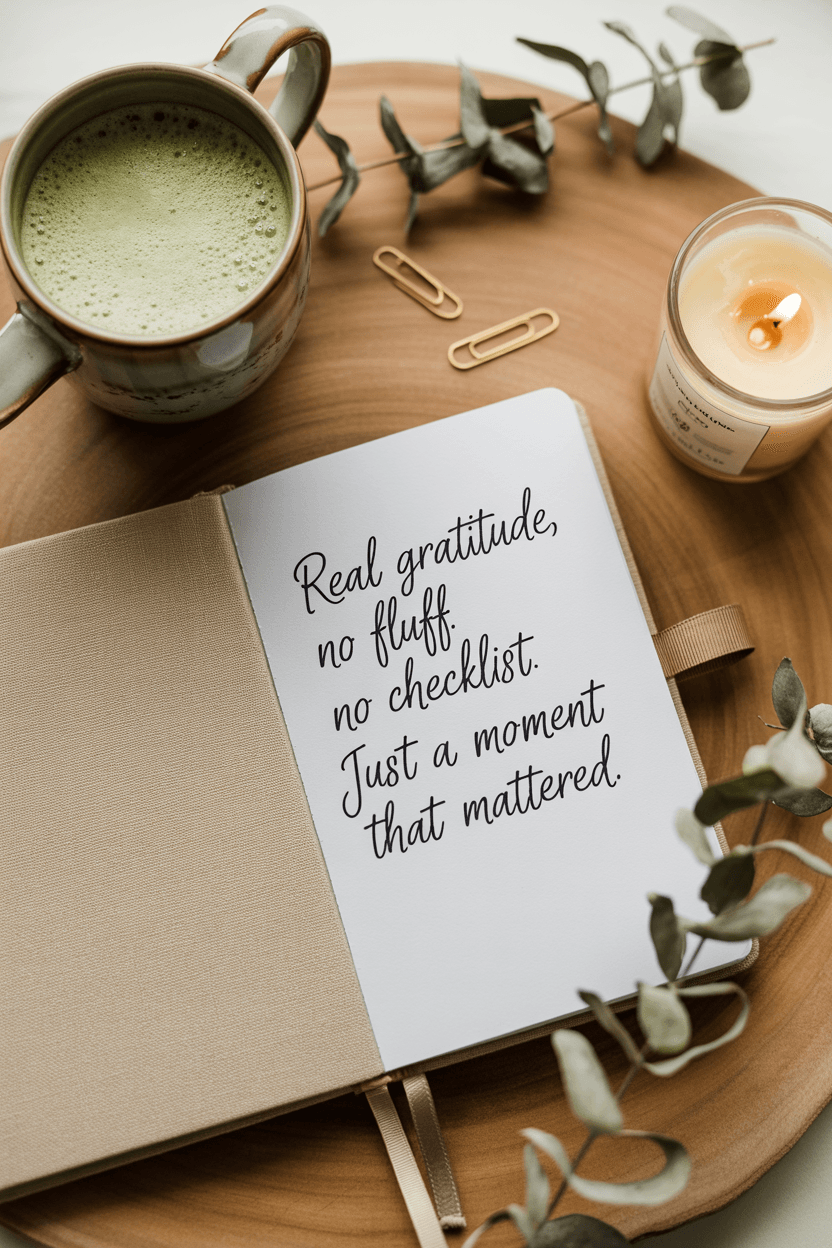
You don’t need aesthetic notebooks or perfect handwriting. This isn’t school—it’s for you.
1. Pick What Works for You
Grab a journal, a blank notepad, or even your phone. What matters most is that it’s something you’ll actually use.
2. Set a Time That Makes Sense
Morning = set your mood for the day.
Evening = reflect and release.
It doesn’t have to be long—just consistent.
3. Keep It Simple, Not Deep™
Don’t pressure yourself to be poetic. Even basic stuff counts:
- “Sun felt warm today.”
- “The dog curled up next to me.”
- “Coffee hit different this morning.”

4. Use Prompts When You’re Blank
Feeling stuck? Try one of these:
- What’s one thing that made you smile today?
- Who are you thankful for—and why?
- What’s something small you’re happy about?
- How did nature surprise or comfort you today?
For more inspo, check out our journaling prompts for beginners that go beyond just gratitude.
5. Flip Back and Reflect
Every so often, re-read old entries. You’ll start to notice patterns, growth, and quiet wins you may have forgotten.
You can also explore different journaling styles for beginners if this one doesn’t click right away.
Gratitude Isn’t Just a Habit—It’s a Mindset Shift
Over time, this practice starts to sneak into everything. You pause more. You say thank you out loud. You notice what feels good without brushing it off. That’s what real gratitude looks like—it’s not loud or fake. It’s grounding.

Final Thoughts: Gratitude AF Energy, Always
Gratitude journaling isn’t about perfection—it’s about paying attention. It helps you feel more present, less stressed, and way more connected to what’s good in your life.
So, try this tonight:
Write down three things that made you feel a little better today. Even if it’s just a clean pair of socks or your playlist coming through at the exact right moment.
This isn’t just a journal entry. It’s a mindset. And honestly? You deserve that kind of peace.