Journaling Styles for Beginners: Find the One That Actually Fits You
Journaling is supposed to help you clear your head not make you wonder whether you’ve bought the right notebook, chosen the right prompts or made your handwriting aesthetically acceptable.
But when you’re new to journaling, it can look like there’s one correct way to do it.
There isn’t.
Some people need an unfiltered brain dump. Some want lists, symbols and somewhere to keep track of life. Others would rather answer one good question than fill three blank pages.
The best journaling style for you is the one that gives your brain what it needs and feels realistic enough to use again.
This guide breaks down five beginner-friendly journaling styles, who each one works best for and exactly how to try it without turning journaling into another project.
If you’re completely new to the habit, you might also want to start with my beginner’s guide to journaling.
What Are the Different Styles of Journaling?
The five beginner-friendly journaling styles covered in this guide are:
- Brain-dump journaling
- Bullet journaling
- Prompted journaling
- Gratitude journaling
- Reflective journaling
You don’t need to choose one forever. You can use bullet journaling during a busy week, switch to a brain dump when your thoughts feel noisy and use a prompt when you want to understand something more deeply.
Your journal is allowed to change because your needs change.
Which Journaling Style Is Right for You?
Here’s the quick version:
| If you usually think… | Try this journaling style |
|---|---|
| “There’s too much in my head.” | Brain-dump journaling |
| “I need somewhere to keep track of everything.” | Bullet journaling |
| “I want to journal, but I never know what to write.” | Prompted journaling |
| “I want something quick that shifts my attention.” | Gratitude journaling |
| “I need to understand what happened and how I feel about it.” | Reflective journaling |
Still unsure? Start with the sentence that sounds most like your brain today.
Why Try Journaling in the First Place?
Journaling isn’t magic, and it doesn’t “rewire your brain” after three beautifully written entries.
What it can do is give you somewhere to put thoughts that have been circling without resolution. Writing can help you slow those thoughts down, name what you’re feeling and see patterns that are harder to notice when everything stays in your head.
Research into expressive writing has found potential emotional and physical health benefits, although the results differ between people and depend on the type of writing being used. The American Psychological Association’s discussion of expressive writing offers a useful explanation of how writing may help us work through difficult experiences.
But your journal doesn’t have to begin with your deepest emotional pain.
It can begin with:
- I have too many things to remember.
- I’m annoyed about something small.
- I don’t know why I feel off today.
- Here are three things I need to do.
- This is what happened.
- I don’t know what to write.
That still counts.
1. Brain-Dump Journaling: For the Person With 47 Tabs Open
Brain-dump journaling is exactly what it sounds like: taking whatever is occupying your head and putting it on paper.
It doesn’t need a theme, a lesson or a proper beginning. You’re not trying to produce an insightful piece of writing. You’re creating somewhere for the mental clutter to go.
One line might be about an appointment you need to make. The next could be about a strange conversation from three days ago. Then you might remember that you need laundry detergent.
That apparent mess is the point.
Brain-dump journaling is best for:
- Overthinkers
- People carrying a lot of mental admin
- Anyone feeling distracted or mentally cluttered
- Beginners who dislike rules and structured prompts
- People who need to unload before they can work out what matters
How to try it
Set a timer for five minutes and begin with:
Everything taking up space in my head right now:
Then write without organising it.
You can use sentences, fragments, lists or a chaotic mixture of all three. Don’t stop to correct spelling or make the page look better.
When the timer ends, look over what you wrote and circle:
- One thing you can act on
- One thing you can let go
- One thing that needs more thought
This tiny step turns a brain dump into something useful without expecting you to solve your entire life in one sitting.
If your thoughts regularly feel tangled, my guide to stream-of-consciousness journaling takes this style further.
2. Bullet Journaling: For Lists, Tasks and Keeping Life in One Place
Bullet journaling is often presented online as a highly decorated planner filled with hand-drawn calendars, elaborate trackers and suspiciously perfect lettering.
That’s the internet version not the original requirement.
At its simplest, bullet journaling is a flexible system for recording tasks, events, notes and things you want to remember. You use short entries and a few symbols so you can see what needs attention without writing full paragraphs.
A basic daily entry might look like this:
- Pay electricity bill
- Book dentist appointment
- Sam called about Saturday
- Move website photos to the correct folder
- I’m avoiding the email because I don’t know how to answer it
That last note is what makes a bullet journal more than a to-do list. It can hold what you need to do and what is going on underneath it.
Bullet journaling is best for:
- List-makers
- People who forget tasks unless they write them down
- Anyone who wants a journal and planner in the same place
- People who prefer short notes to long entries
- Beginners who like some structure but need it to remain flexible
How to try it
Start with three simple symbols:
- • Task
- – Note
- ○ Event
At the end of the day, mark completed tasks and move anything unfinished to another day if it still matters.
You do not need a habit tracker, index, future log and twelve coloured pens on day one. Start with one page and today’s date.
My guide, Bullet Journaling Isn’t What You Think It Is, explains the stripped-back system and why it works particularly well for messy minds.
Want the structure without drawing every layout yourself?
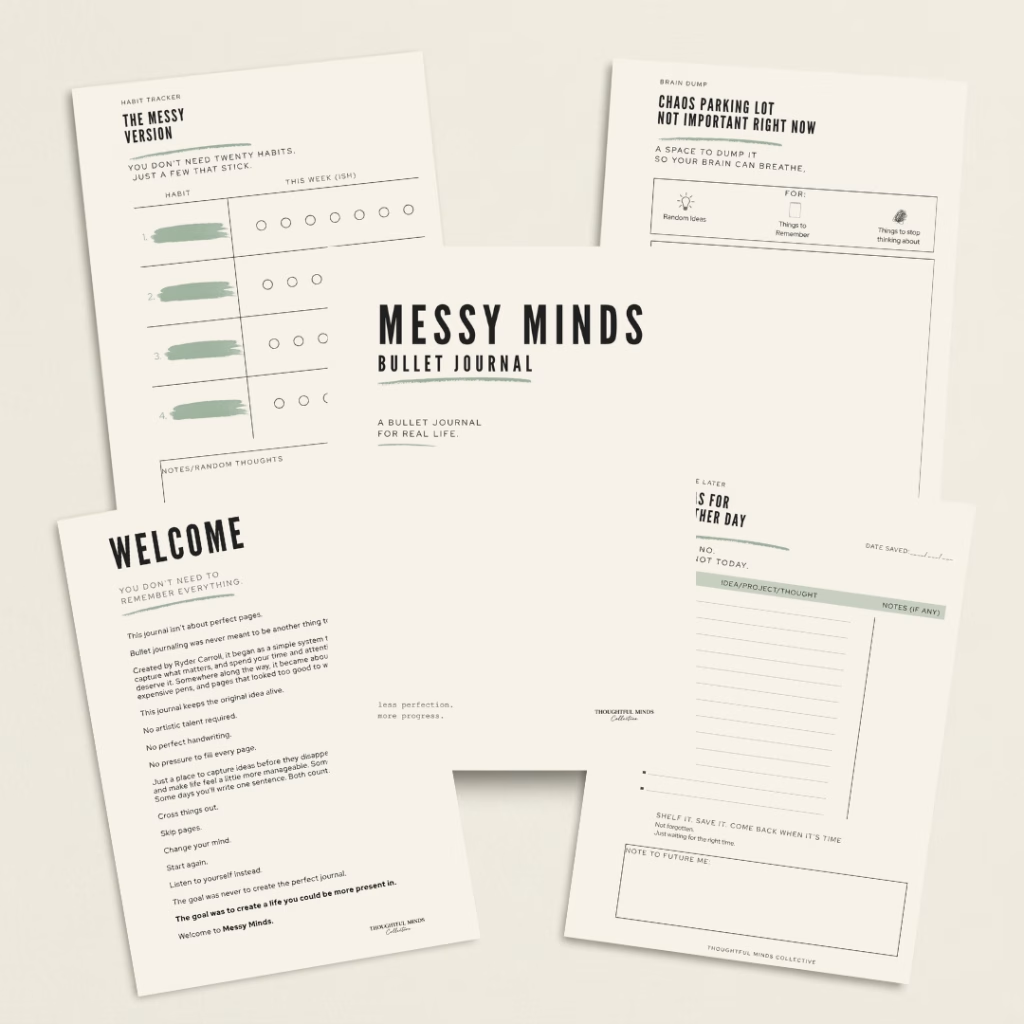
The Bullet Journal for Messy Minds keeps the practical parts of bullet journaling and removes the pressure to make every page from scratch.
Simple layouts. Useful places to put the chaos. No artistic talent required.

3. Prompted Journaling: For When Your Mind Goes Blank
You sit down to journal.
You open the notebook.
Suddenly, despite having approximately nine thousand thoughts throughout the day, your mind offers you absolutely nothing.
This is where prompted journaling helps.
A journal prompt gives your thoughts somewhere to begin. Instead of facing an entire blank page, you only need to respond to one question or sentence starter.
Good prompts are specific enough to guide you but open enough to leave room for an honest answer.
Prompted journaling is best for:
- Beginners who don’t know what to write
- People who find blank pages intimidating
- Anyone interested in self-discovery
- People who like having a clear starting point
- Journalers who want to explore one subject more deeply
How to try it
Choose one prompt and give yourself permission to write only three lines.
Try:
- What has been taking more energy than I expected?
- What do I keep pretending doesn’t bother me?
- What felt easier this week?
- What am I currently avoiding?
- What do I need that I haven’t asked for?
- What would make tomorrow feel slightly more manageable?
You don’t need to answer every part of a prompt. You can disagree with it, change the question or write about why you don’t want to answer it.
The prompt opens the door. You decide where the entry goes.
If every prompt you see online seems to demand a full emotional excavation, try these journal prompts that aren’t about trauma.
4. Gratitude Journaling: For Noticing What Didn’t Go Wrong
Gratitude journaling can sound like an instruction to ignore everything difficult and concentrate on sunsets.
That isn’t the version we’re doing here.
Realistic gratitude journaling doesn’t require you to call a bad day a good one. It simply asks you to notice that a day can contain something difficult and something worth keeping.
Maybe your coffee was exactly right. Someone sent you a funny message at the right moment. You finished a task you’d been avoiding. The weather changed. Your bed felt particularly good after a long day.
Small things are not lesser things.
Gratitude journaling is best for:
- People who want a short journaling practice
- Beginners who feel overwhelmed by full pages
- Anyone who tends to remember what went wrong more easily than what went well
- People who want to record ordinary moments
- Journalers looking for something gentle rather than emotionally intense
How to try it
Write down one thing you appreciated and add one sentence explaining why it mattered.
Instead of:
I’m grateful for my friend.
Try:
I’m grateful that my friend sent me a completely ridiculous video while I was having a bad afternoon. It interrupted the mood for a minute.
Specific details make the entry feel real rather than performed.
You can also use these alternatives:
- Something that made today easier
- Something I want to remember
- Something that made me laugh
- Something ordinary that felt good
- Something I handled better than I expected
For more ideas without the forced positivity, read my guide to gratitude journaling for beginners.
5. Reflective Journaling: For Understanding What Actually Happened
Reflective journaling helps you look back at an experience and work out what it meant to you.
It’s useful when something keeps replaying in your head a conversation, decision, mistake, change or moment you can’t quite explain.
Unlike a brain dump, which focuses on getting thoughts out, reflective journaling slows down and looks more closely at one experience.
The goal isn’t to force a positive lesson out of everything. Sometimes the most honest reflection is:
That hurt. I understand why it hurt, and I’m not ready to make it meaningful yet.
That is still reflection.
Reflective journaling is best for:
- People who replay conversations
- Anyone navigating a change or decision
- People who want to understand emotional patterns
- Journalers interested in self-discovery
- Beginners who have a specific situation they want to process
How to try it
Use this simple four-part structure:
- What happened?
Describe the situation without trying to explain it yet. - What did I feel?
Include the uncomfortable, contradictory or “unreasonable” feelings too. - What did I need?
Think about what was missing in that moment. - What do I want to do with this now?
You might take action, set a boundary, have a conversation or simply leave it alone.
For a deeper look at recognising your patterns and preferences, try these self-discovery journal prompts.
What If More Than One Journaling Style Fits?
Good. That means you’re a person rather than a journaling category.
You can combine styles on the same page:
- Begin with a brain dump.
- Turn anything actionable into bullet points.
- Choose one thought and reflect on it.
- Finish with one thing you want to remember.
You can also use different styles at different times.
A busy Monday might need bullet journaling. A strange emotional Tuesday might need a reflective entry. By Friday, you may only have enough energy to write down one good thing that happened.
That isn’t inconsistency. It’s using your journal according to what you actually need.
How to Start Journaling Without Making It Another Obligation
The quickest way to abandon journaling is to create a routine that only works for an imaginary, extremely organised version of you.
Instead, make it deliberately easy.
Start with five minutes
You can keep writing if you want to, but five minutes is enough to begin. A small entry you actually write is more useful than the three perfect pages you keep postponing.
Keep your journal visible
Put it somewhere you already pause: beside your bed, near the kettle, on your desk or next to the place where you charge your phone.
You’re more likely to remember a habit when the cue is already in front of you.
Choose a minimum version
Decide what journaling looks like on a low-energy day.
It might be:
- One sentence
- Three bullet points
- One answered prompt
- A list of words
- “I don’t want to write today”
Yes, the last one counts.
Stop trying to catch up
You don’t owe your journal an explanation for the six days you missed.
Turn to the next page. Write today’s date. Continue.
Change styles when one stops helping
A journaling method is a tool, not a personality type. If gratitude journaling starts feeling repetitive, try prompts. If prompts feel like homework, write a messy brain dump.
You haven’t failed at the style. You’ve noticed that you need something different.
Frequently Asked Questions About Journaling Styles
What is the easiest journaling style for beginners?
Brain-dump journaling is often the easiest because it requires no special layout or preparation. If an open page feels too vague, prompted journaling may be a better place to begin.
The easiest style is the one that removes your particular reason for avoiding the page.
Do I have to journal every day?
No. You can journal daily, weekly, occasionally or only when you need it.
A regular practice can make journaling easier to remember, but forcing yourself to write every day can turn it into another unfinished habit you feel guilty about.
Choose a rhythm that fits your life.
Can I use more than one journaling style?
Absolutely. Most people naturally mix styles. You might use lists for planning, prompts for self-discovery and freewriting when you feel overwhelmed.
There’s no requirement to keep separate journals unless you want to.
Is typing considered journaling?
Yes. You can journal in a notebook, a notes app, a document, a voice-to-text app or any format that lets you record and explore your thoughts.
Handwriting may help some people slow down, but typing is often more accessible and realistic for others.
What should I write in my first journal entry?
Try this:
What made me want to start journaling and what do I hope it gives me?
If that feels too deep, write:
Here’s what has been occupying my brain today.
Then begin wherever you are.
There Is No Correct Way to Have a Journal
Your journal can be thoughtful, messy, practical, emotional, inconsistent, half-finished or mostly made of lists.
It doesn’t need to prove that you’re creative, disciplined or good at self-reflection.
It only needs to give you somewhere to put what you’re carrying.
Choose the style that sounds easiest today. Try it for five minutes. Keep what helps and leave the rest.
That’s not doing journaling incorrectly.
That’s making it yours.
Want to take this offscreen?
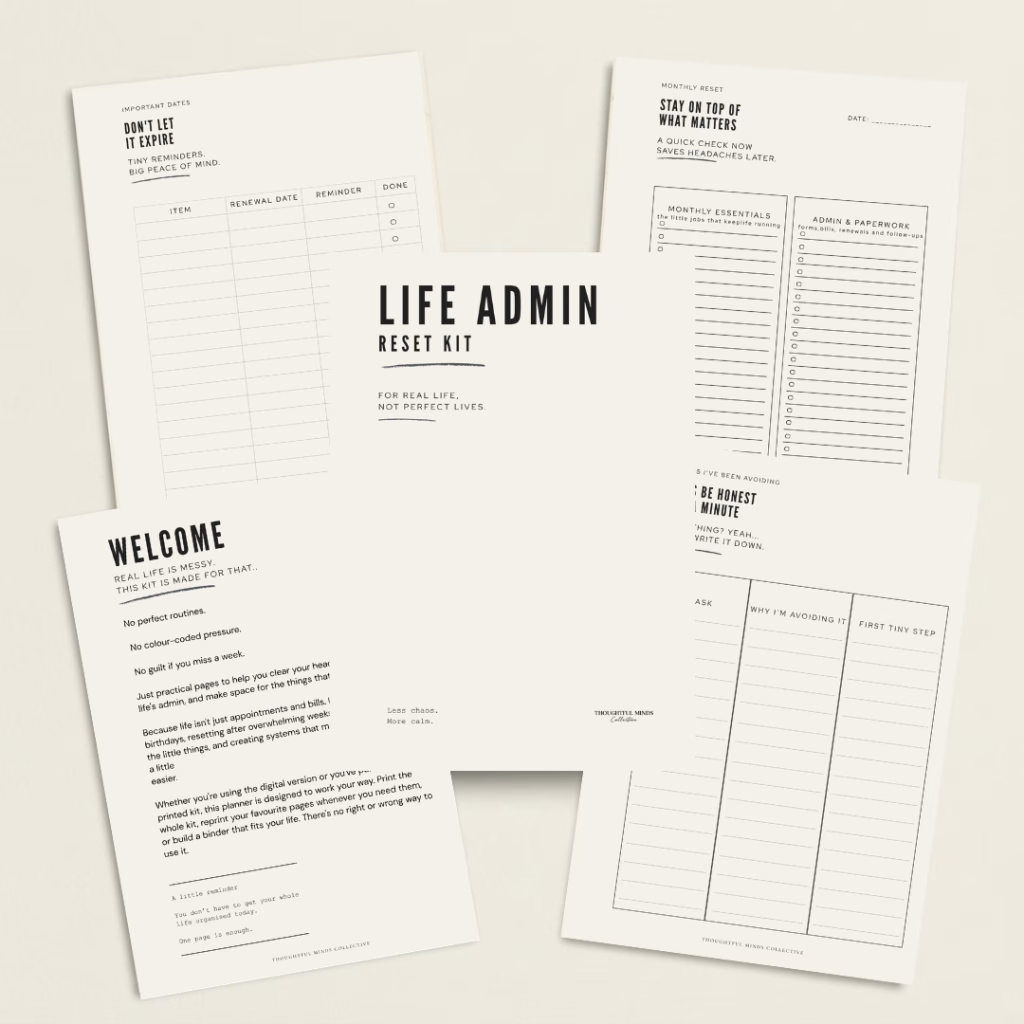
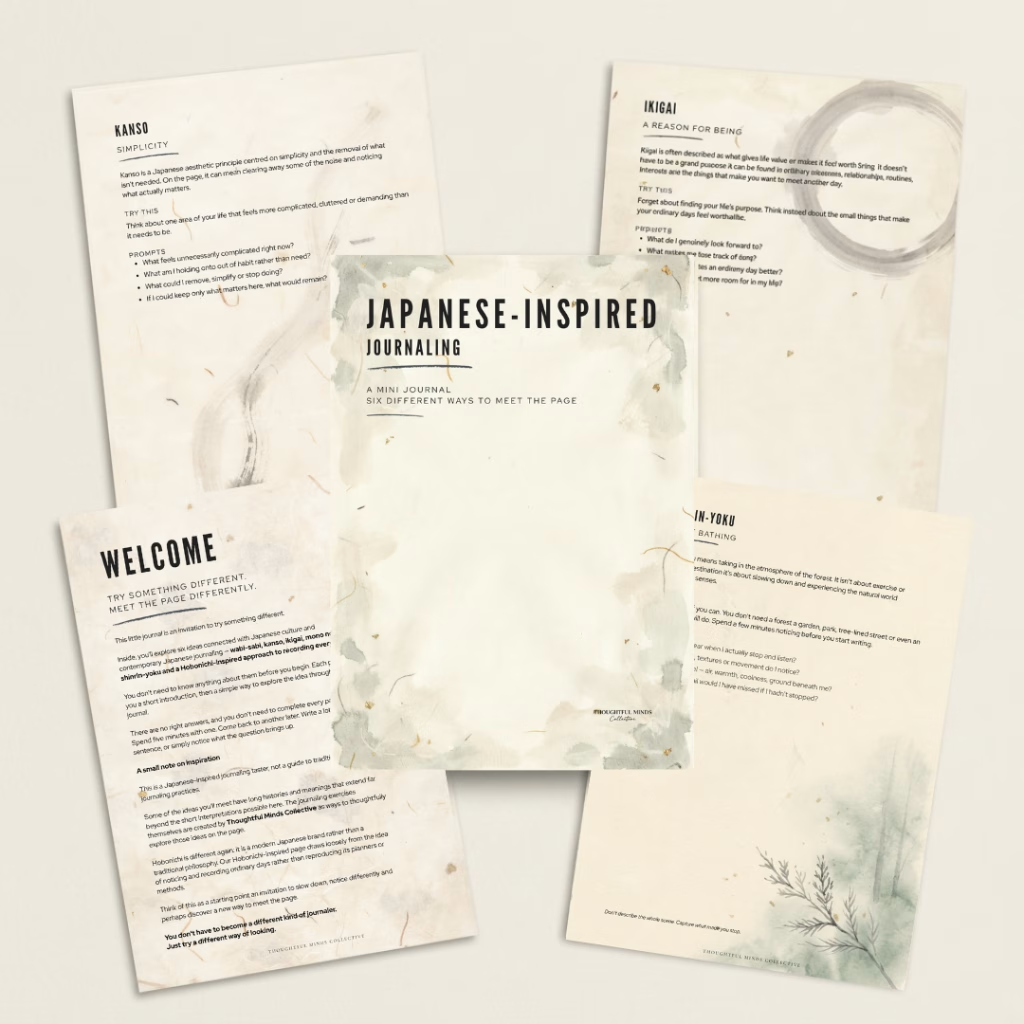
Not another journals. Something you can make your own. Printable journal kits for real life use the pages you need, skip the ones you don’t, use the ideas in your own journal and print them again whenever you want.
Make it yours.