Ever bought a beautiful notebook, written your name on the first page, and then never touched it again?
You’re not alone.
A lot of people love the idea of journaling. The fresh notebook. The cosy morning coffee. The feeling of becoming someone who has their life together.
Then they sit down to write and suddenly their brain goes completely blank.
What am I supposed to write?
Does this sound stupid?
Am I doing this right?
If that sounds familiar, take a breath. You’re already overthinking it more than you need to.
Journaling isn’t about perfect handwriting, profound thoughts, or creating pages worthy of Pinterest. It’s simply about giving your thoughts somewhere to land.
Whether you’re feeling overwhelmed, stuck, inspired, confused, or just curious, journaling can help you slow down and check in with yourself.
And the best part?
You don’t need to be a writer to do it.
Why So Many People Are Starting to Journal
Life can feel loud.
Between work, family, notifications, social media, endless to-do lists, and the twenty browser tabs permanently open in your brain, it’s easy to feel mentally cluttered.
Journaling gives all those thoughts somewhere to go.
Research has shown that expressive writing can help people process emotions, reduce stress, and gain clarity around difficult experiences. This podcast from the American Psychological Association explains how expressive writing may support both mental and physical wellbeing.
But honestly?
Most people don’t start journaling because they read a research paper.
They start because their brain feels full.
They want to feel less overwhelmed.
They want somewhere to untangle their thoughts.
That’s where journaling shines.
Psychology Today also highlights that journaling isn’t just about recording what happened during your day. A simple journaling practice can help you better understand your emotions, notice patterns in your thinking, and create more mindful responses to life’s challenges. Over time, regularly putting thoughts onto paper can help you feel more connected to yourself and more aware of what’s actually going on beneath the surface. In other words, journaling isn’t about creating perfect pages it’s about creating space to listen to yourself.

The Biggest Myth About Journaling
Let’s clear something up immediately.
There is no right way to journal.
Your journal doesn’t need:
- Perfect handwriting
- Fancy stationery
- Colour-coded layouts
- Deep reflections every day
- A strict routine
- Aesthetic photos for social media
Some people write pages every morning.
Some people write once a week.
Some people create beautiful bullet journal spreads.
Others write messy paragraphs that barely make sense.
All of it counts.
The best journaling method is the one you’ll actually stick with.
Find a Journaling Style That Fits You
One of the biggest reasons people give up journaling is because they’re trying to force themselves into a style that doesn’t suit them.
If you’re not sure where to start, explore a few different approaches.
You can also read our guide to Journaling Styles for Beginners to dive deeper into each method.
Free Writing
Open your journal and write whatever comes to mind.
No structure.
No editing.
No pressure.
This is often the easiest place for beginners to start.
Prompt Journaling
If blank pages make you panic, prompts are your friend.
Questions give your brain something to respond to and remove the pressure of coming up with a topic yourself.
Our Easy Journaling Ideas for Beginners article is packed with ideas if you’re feeling stuck.
Gratitude Journaling
A gratitude journal is simply a place to record things you’re thankful for.
It doesn’t need to be profound.
Good coffee.
A sunny morning.
A funny text message.
It all counts.
Morning Pages
Morning Pages involve writing a stream of thoughts first thing in the morning before the rest of the day takes over.
If you’ve never heard of this approach before, check out our guide to Morning Pages and how they work.
Bullet Journaling
Bullet journaling combines planning, goal setting, organisation, and reflection.
It’s perfect for people who enjoy lists, trackers, and a little structure.
If that’s your thing, our Bullet Journal Era guide is a great place to begin.
Travel Journaling
Travel journaling helps you capture the little details that photos often miss.
The conversations.
The smells.
The tiny moments you’d otherwise forget.
Even a weekend away can become something worth remembering.

What If I Have No Idea What to Write?
This is probably the most common beginner question. The answer is simple. Write about what’s already taking up space in your head.
You can journal about:
- Your day
- Your goals
- Things you’re worried about
- Relationships
- Work
- Travel
- Habits
- Dreams
- Memories
- Decisions you’re trying to make
You don’t need an exciting life to keep a journal.
You just need an honest one.
Try one of these beginner prompts:
- What’s taking up most of my mental energy right now?
- What made me smile today?
- What am I avoiding?
- What would make tomorrow easier?
- What am I grateful for this week?
- What do I need less of right now?
- What do I need more of?
- What challenge am I facing?
- What am I proud of lately?
- What would I tell a friend in my situation?
You don’t need to fill an entire journal today.
Sometimes one page is enough.
Start Smaller Than You Think
One of the fastest ways to quit journaling is to set unrealistic expectations. You do not need to write three pages every day. You do not need a perfect morning routine. You do not need an hour of uninterrupted silence.
Try:
- One sentence a day
- Five minutes before bed
- Three things you’re grateful for
- A quick brain dump after work
That’s enough.
Some of the strongest journaling habits start ridiculously small. Mine started with listing 3 good things that happened that day.
Make Journaling Part of Real Life
Instead of trying to create the perfect routine, connect journaling to habits you already have.
You might journal:
- With your morning coffee
- After your evening shower
- Before bed
- After a walk
- During a Sunday reset
The goal isn’t perfection.
The goal is making journaling feel natural enough that you keep coming back to it.
Feeling a Bit Stuck?
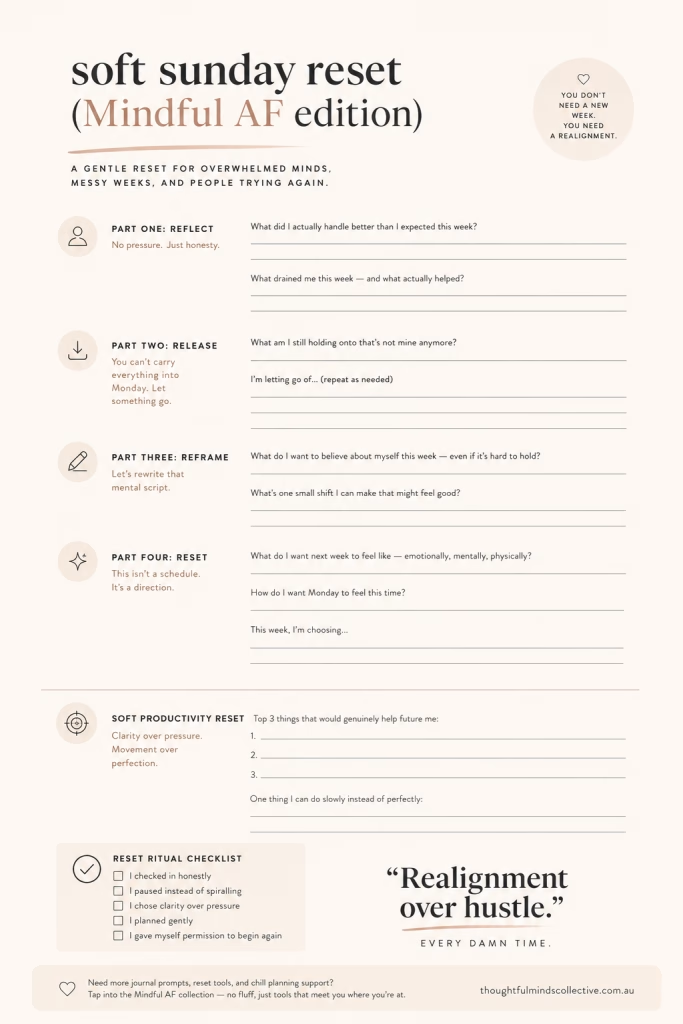
If you’re not sure where to begin, grab my free Sunday Reset Journal Card. It’s a simple printable designed to help you clear your head, organise your thoughts, and check in with yourself without overthinking it.
The Sunday Reset
Free Download
New to journaling? Start here. A simple one-page reset designed to help you untangle your thoughts and feel more organised in minutes.
If you want extra support, our Mindful AF Journal Practice Hub contains simple ways to build journaling into everyday life without turning it into another chore.
Beginner Mistakes to Avoid
Waiting Until You Feel Motivated
Motivation is unreliable.
Small habits create momentum.
Momentum creates consistency.
Comparing Yourself to Pinterest
Pinterest is full of beautiful journals.
Your journal doesn’t need to look like that.
Your journal exists to help you, not impress strangers on the internet.
Thinking Every Entry Needs to Be Meaningful
Some entries will be life-changing.
Others will be:
“I’m tired.”
“My kitchen is a disaster.”
“I need groceries.”
Those entries count too.
Buying Supplies Instead of Writing
A notebook and a pen are enough.
Don’t spend six months searching for the perfect journal instead of actually journaling.
Giving Up After Missing a Few Days
Life gets busy.
You will miss days.
Everyone does.
Just pick it back up and keep going.
Looking Back Is Where the Magic Happens
One of the most rewarding parts of journaling doesn’t happen today.
It happens months later.
You’ll flip back through old pages and realise how much you’ve changed.
You’ll see problems you survived.
Goals you achieved.
Lessons you learned.
You’ll notice patterns you couldn’t see at the time.
Your journal becomes a time capsule of who you were and who you’re becoming.
Ready to Start?
If you’re feeling overwhelmed by the idea of journaling, start small.
One sentence.
One thought.
One honest moment.
That’s all.
And if you’d like a little help getting started, download our free Sunday Reset Journal Card or explore Journaling for Beginners: The Ultimate Guide to Starting and Sticking With It for more prompts, ideas, and beginner-friendly resources.
Your journal doesn’t need to be perfect.
It just needs to be yours.