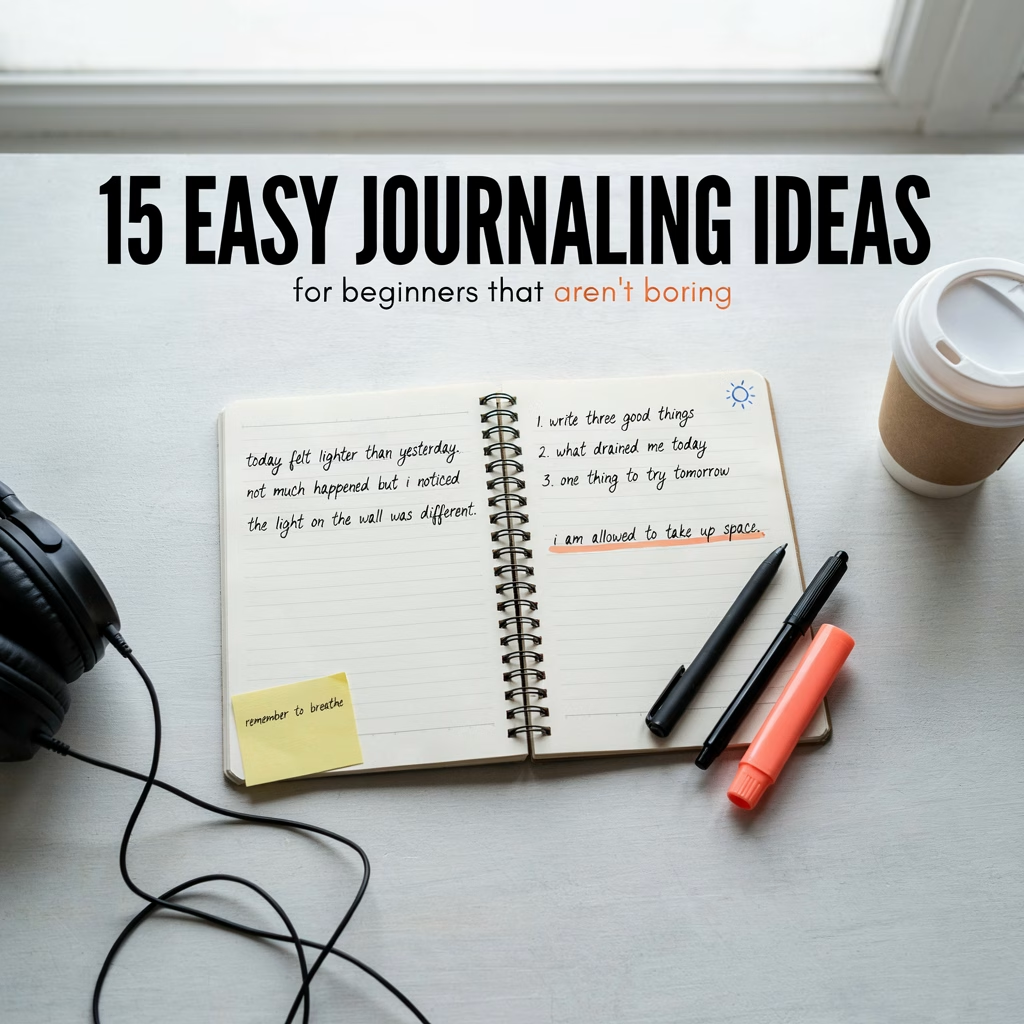
15 Easy Journaling Ideas for Beginners Who Don’t Know What to Write
You bought the notebook. You found a pen. You opened to the first page.
And then… absolutely nothing.
Starting a journal sounds simple until you’re staring at a blank page trying to think of something meaningful enough to write.
Here’s the good news: it doesn’t need to be meaningful. It doesn’t need to be long, beautifully written or part of an impressive morning routine.
Some days, journaling might be three pages of thoughts.
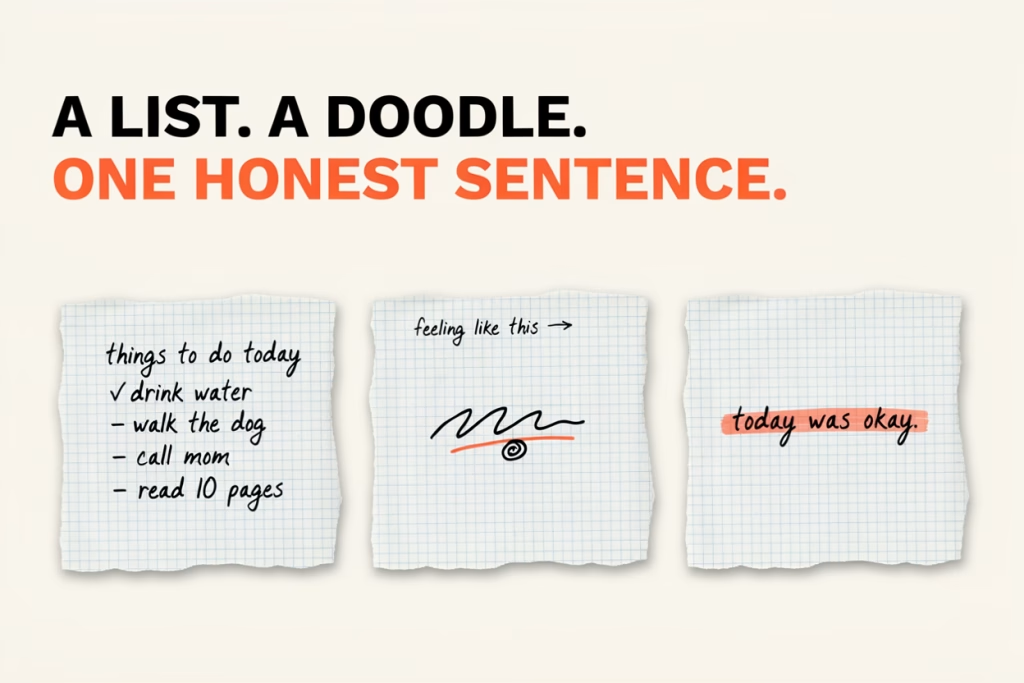
Other days, it might be one sentence, a list of songs or a slightly wonky drawing of your mood.
It all counts.
These easy journaling ideas for beginners are designed to help you start writing without turning journaling into another thing you have to do perfectly.
Choose the one that feels easiest today. Ignore the rest until you need them.
Before You Begin: Make It Smaller
One of the easiest ways to begin journaling is to make the task almost ridiculously small.
You don’t need to:
- Write every day
- Fill an entire page
- Use thoughtful journal prompts
- Have good handwriting
- Buy special stationery
- Understand exactly how you feel
- Turn every entry into a profound personal revelation
You only need somewhere to begin.
Set a timer for two minutes, choose one idea from this list and stop whenever you want. You can always keep writing if something begins to unfold.
If the empty page itself is the problem, read Overcoming the Blank Page: Simple Ways to Start Journaling first.

1. Write a One-Sentence Recap of Your Day
Summarise the entire day in a single sentence.
It can be thoughtful:
Today felt quieter than I expected, and I think I needed that.
Or completely honest:
I answered three emails, reheated my coffee twice and somehow that was the whole day.
A one-sentence journal is particularly useful when you want to remember your life but don’t have the time or energy to write a full entry.
If this approach suits you, try one-line-a-day journaling as a simple ongoing practice.
2. Make a “Right Now” List
Write down what is happening in your life at this exact point in time.
You could include:
- What you’re watching
- What you’re reading
- The song you keep replaying
- Your current favourite food
- What you’re looking forward to
- What has been annoying you
- Something you can’t stop thinking about
These small details might not seem important now, but they often become the most interesting things to reread later.
3. Empty Your Brain onto the Page
A brain dump is exactly what it sounds like: taking everything circling your mind and putting it somewhere else.
Write down unfinished tasks, random worries, reminders, ideas, questions and anything else competing for your attention.
Don’t organise it while you write. Don’t try to make it sound good.
The point isn’t to produce a beautiful journal entry. It’s to stop carrying every thought at once.
Try beginning with:
The things taking up space in my mind right now are…
4. Record Three Things That Didn’t Suck
If traditional gratitude journaling feels forced, lower the bar.
Write down three things that didn’t suck today.
Maybe:
- Your coffee was good
- Someone sent you a funny video
- The weather finally cooled down
- You found clean socks
- A difficult task was slightly less awful than expected
Gratitude doesn’t need to turn a bad day into a good one. It can simply help you notice that a difficult day contained a few tolerable or even lovely moments too.
5. Draw Your Mood
You don’t always need words to record how you feel.
Draw your mood as:
- A weather forecast
- A battery level
- A scribble
- A colour
- A tiny facial expression
- An abstract blob
- A completely unnecessary pie chart
Artistic talent is not required.
Add a word or two if you want, but let the picture be enough if that’s all you have the energy for.
6. Write the Message You Won’t Send
Write the text, email or conversation you wish you could have.
Say what you’re actually thinking without editing it to protect someone else’s feelings or make yourself sound reasonable.
You don’t have to send it. In fact, it’s usually better if you don’t.
This can help you work out what you really want to say before deciding whether a real conversation is necessary.
Try beginning with:
What I wish I could tell you is…
7. Choose the Three Moments You Want to Remember
Pick three moments from your day.
They don’t have to be the “best” moments. They could simply be the ones you don’t want to lose.
For example:
- Something someone said
- A tiny win
- A strange interaction
- A meal you enjoyed
- A moment that made you laugh
- The way the light looked at a particular time
- Something ordinary that felt unexpectedly comforting
This is an easy way to journal when a full chronological account of the day feels like too much work.
8. Capture a Sensory Snapshot
Pause and notice what is around you.
Write down:
- Five things you can see
- Four things you can feel
- Three things you can hear
- Two things you can smell
- One thing you can taste
You can also turn it into a short paragraph:
The washing machine is humming in the next room. My tea has gone cold. There’s late-afternoon light across the floor, and I can hear someone mowing several houses away.
A sensory snapshot places you inside a particular moment instead of asking you to explain your entire emotional life.
9. Make a Current Obsessions Page
Dedicate a page to everything you’re currently obsessed with.
Include books, shows, foods, creators, hobbies, outfits, topics, products, podcasts, places or random internet rabbit holes.
It can be messy. Add notes, ratings, doodles, screenshots or tiny reviews.
This is especially good for beginners who want their journal to feel like a record of their life rather than a daily analysis of their feelings.
10. Give Your Day a Soundtrack
Choose one song that matches the mood of your day.
Write down the title and artist, then add:
- The lyric or moment that stood out
- What it reminded you of
- Where you heard it
- Why it fit today
- What memory you associate with it
Or just record the song and leave it there.
Over time, your journal becomes a strange little soundtrack of your life.
Want a Little More Structure?
If you like the idea of journaling but struggle to know what to write each day, the free 21-Day Soft Reset gives you one small, manageable place to begin.
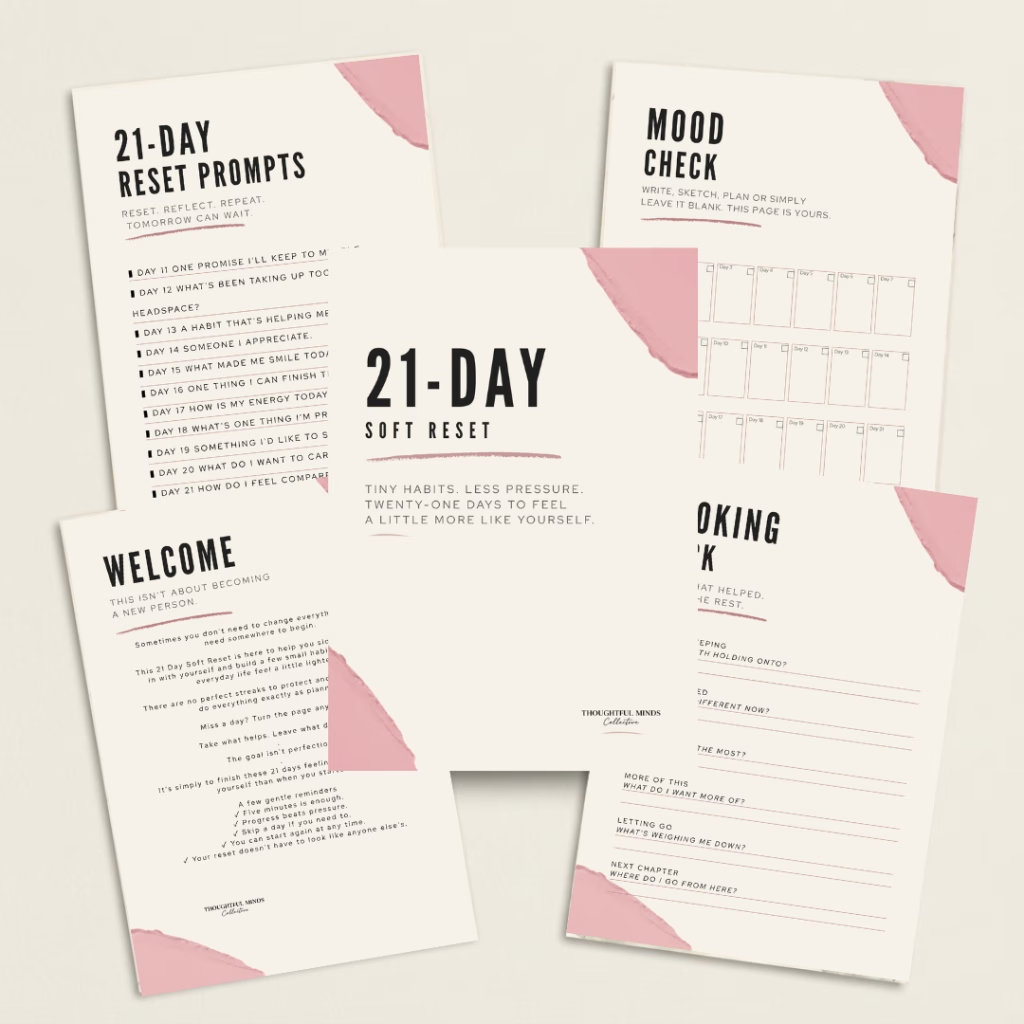
No intense routines. No pressure to reinvent yourself. Just gentle prompts to help you check in, clear some mental space and find your way back to yourself one day at a time.
11. Write Down What’s Looping in Your Mind
What thought keeps returning today?
It might be a worry, a decision, an imagined conversation, something embarrassing you did seven years ago or an idea you don’t want to forget.
Write it at the top of the page.
Then ask:
- Why does this keep coming back?
- Is there anything I can do about it?
- What part of this is within my control?
- What do I need right now?
You don’t need to solve it. Sometimes naming the loop is enough.
12. Keep an Unfiltered Wish List
Create a list of things you would like to do, try, learn, own or experience.
Mix the enormous wishes with the tiny ones:
- Visit Japan
- Learn how to make dumplings
- Take a solo weekend away
- Find a moisturiser I actually like
- See the northern lights
- Go to bed before midnight
- Try the café I keep driving past
This doesn’t need to become a productivity plan. It can simply be a collection of things that make you curious.
13. Explore a “What If?”
Begin with a possibility and follow it wherever it goes.
For example:
- What if I moved somewhere new?
- What if I stopped trying to be good at this?
- What if I took one month away from social media?
- What if I said no?
- What if I let myself change my mind?
- What if things worked out better than I expected?
Write for five minutes without worrying about whether the scenario is realistic.
“What if?” journaling gives your mind room to explore possibilities without requiring you to make an immediate decision.
14. Record One Tiny Win
Write down one thing you managed today.
It might be finishing a difficult task, making an appointment, going for a walk, replying to a message or getting through a day that was harder than anyone else realised.
Try not to dismiss it because someone else might find it easy.
Your tiny win only needs to matter in the context of your life today.
Finish with:
This mattered because…
That second sentence often reveals more than the win itself.
15. Begin with “Lately, I’ve Been…”
When you genuinely don’t know what to write, finish this sentence:
Lately, I’ve been…
Then keep going.
You might write about what you’ve been thinking, avoiding, enjoying, noticing, questioning or quietly hoping for.
Don’t correct your spelling. Don’t go back and improve the first sentence. Follow the thought that arrives next.
This simple opening can become a two-line check-in or an unexpectedly honest journal entry.
15 Easy Journal Prompts for Beginners
If you would rather answer a direct question, choose the one that feels easiest today.
You don’t need to work through the entire list. One prompt, one honest sentence and two quiet minutes is enough.
- How am I feeling right now and what might be contributing to it?
- What is taking up the most space in my mind today?
- What has felt easier or harder than usual lately?
- What is one small thing I’m looking forward to?
- What went better than I expected recently?
- What do I want more of in my everyday life?
- What do I need less of right now?
- What am I putting pressure on myself to figure out?
- What is one small thing I could do to make tomorrow easier?
- What is something I’m proud of that nobody else might notice?
- When have I felt most like myself lately?
- What have I been avoiding and why?
- If I could spend tomorrow however I wanted, what would I do?
- What would make today feel slightly gentler?
- What do I need to hear right now?
Bonus Beginner Journal Prompt
Finish this sentence:
Lately, I’ve been…
Then keep writing for five minutes without correcting, editing or trying to make sense of it.
If you only write one sentence, that still counts. If it turns into three pages, let it.
How to Choose a Journaling Idea
Still not sure where to begin? Match the idea to the amount of energy you have.
| If you feel… | Try… |
|---|---|
| Tired | A one-sentence recap |
| Overwhelmed | A brain dump |
| Restless | A “right now” list |
| Emotional | The message you won’t send |
| Disconnected | A sensory snapshot |
| Creative | Draw your mood |
| Nostalgic | Three moments to remember |
| Stuck | “Lately, I’ve been…” |
| Flat | Three things that didn’t suck |
| Curious | A “what if?” entry |
There is no best journaling method. There is only the one you are willing and able to use today.
What If You Don’t Journal Every Day?
Nothing happens.
The journaling police do not arrive. Your notebook does not become invalid. You haven’t failed at the habit.
You can write every morning, once a week, during difficult periods or only when something interesting happens.
Consistency can help you build a habit, but consistency doesn’t have to mean daily. Returning to your journal when you need it is a perfectly legitimate practice.
If you want more help finding an approach that fits your life, read Journaling for Beginners: How to Start Without Overthinking It.
Your First Journal Entry Can Be Tiny
You don’t need to begin with your life story.
Start with:
Today, I noticed…
Write one sentence.
If another sentence comes, let it. If it doesn’t, close the notebook. You still journaled.
That is how most sustainable journaling practices begin not with a perfect routine, but with one small entry that felt easy enough to make.