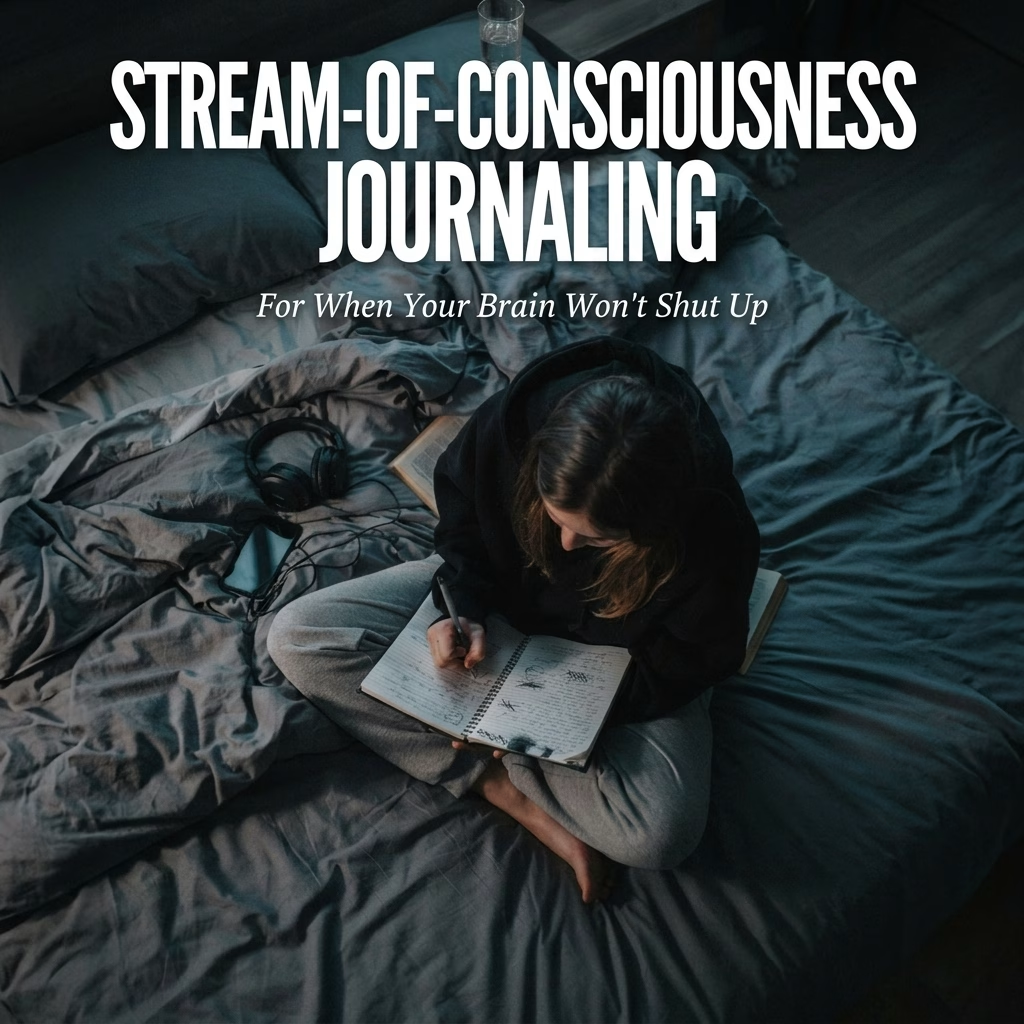
Stream-of-Consciousness Journaling: How to Empty Your Brain Without Overthinking It
You don’t need a perfect morning routine.
You don’t need a beautifully coordinated notebook, a list of meaningful prompts or something profound to say.
Sometimes, you just need somewhere to put the absolute pile-up happening inside your head.
The unfinished thought.
The thing someone said three days ago that you’re still replaying.
The appointment you cannot forget.
The imaginary argument you’ve already won six different ways.
The fact that you need toothpaste.
All of it can go on the page.
That’s stream-of-consciousness journaling: writing whatever enters your mind, in whatever order it arrives, without trying to tidy it up first.
No prompts. No rules. No self-help performance.
Just you, a page and the unedited contents of your brain.
Stream-of-consciousness journaling was actually where journaling began for me. I started doing it as a teenager, long before I knew it had a name or thought of it as a proper practice. I just knew that when my head felt too full, writing everything down helped.
Even now, after trying all kinds of prompts, layouts and journaling styles, this is the one I keep returning to. When I don’t know what I’m feeling or I simply can’t be bothered following a structure I open a notebook and let the mess come out exactly as it is.
What Is Stream-of-Consciousness Journaling?
Stream-of-consciousness journaling is a free-flow writing practice where you record your thoughts as they appear without editing, organising or deciding whether they’re important enough to include.
You might write about how you’re feeling, what you need to do, something awkward you said in 2017 and why the kitchen bin is already full again.
One thought leads to another, which leads to something completely unrelated. That’s not a mistake. That’s the method.
It can look like this:
I need to remember to send that email and I don’t know why I keep avoiding it. Maybe because I think they’re annoyed with me. They probably aren’t. I’m tired. I should have gone to bed earlier. Why is the neighbour’s dog barking again? I need coffee.
There is no polished conclusion waiting at the bottom of the page. You aren’t writing an essay or creating content for your future biographer.
You’re letting your brain speak before it has time to censor, improve or explain itself.
Some people call it:
- Brain-dump journaling
- Freewriting
- Automatic writing
- Unfiltered journaling
- Mind-dump journaling
These practices aren’t all technically identical, but in everyday journaling they share the same basic idea: keep the pen moving and let the thoughts come out as they are.
Stream-of-Consciousness Journaling vs Morning Pages
Stream-of-consciousness journaling is often confused with Morning Pages.
Julia Cameron popularised Morning Pages in The Artist’s Way. The practice involves writing three longhand pages first thing in the morning, using a stream-of-consciousness style.
Stream-of-consciousness journaling is much more flexible.
You don’t have to:
- Write three full pages
- Do it every morning
- Use longhand
- Follow a daily routine
- Reach a particular word count
- Keep writing once it stops feeling useful
You can write for five minutes in the afternoon, type into a private document at midnight or fill half a page while sitting in your car before work.
Morning Pages are one way to practise stream-of-consciousness writing. They are not the only way.
Why Does Stream-of-Consciousness Journaling Help?
The page gives your thoughts somewhere to exist outside your head.
That doesn’t mean writing instantly fixes anxiety, resolves every decision or reveals the secret meaning of your life. Sometimes you finish a page and still don’t know what to do.
But the thoughts are no longer quite as tangled.
It lowers the pressure to write something “good”
A blank page becomes intimidating when you believe you need to fill it with something thoughtful.
Stream-of-consciousness journaling removes that job.
You don’t have to be insightful. You only have to write the next thought. Even “I don’t know what to write” is a perfectly acceptable place to begin.
If perfectionism regularly stops you from starting, read this judgement-free guide to journaling next.
It gets the mental clutter out of circulation
Your brain may be trying to hold tasks, worries, reminders, ideas and unresolved conversations simultaneously.
Writing them down doesn’t magically complete your to-do list, but it can make the mental pile feel more visible and manageable.
You may realise:
- Three worries are actually about the same problem
- One unfinished task is creating most of the noise
- You’re upset about something you hadn’t acknowledged
- Half the things occupying your brain aren’t urgent
- You desperately need food, sleep or ten minutes without anyone speaking to you
That last one is still useful information.
If your page reveals more tasks than feelings, you might prefer this practical method for journaling to organise your thoughts.
It can reveal patterns
One chaotic page might not tell you much. Several pages can.
You may notice that you repeatedly write about the same situation, feel especially overwhelmed on certain days or keep avoiding a decision you claim not to care about.
The point isn’t to analyse every sentence. It’s simply to notice what keeps returning.
Repeated thoughts aren’t automatically true but they may show you where your attention, fear or frustration is getting stuck.
Writing can help you process difficult experiences
Stream-of-consciousness journaling isn’t exactly the same as the structured expressive-writing exercises used in psychological research. However, both involve putting internal experiences into words.
Research into expressive writing suggests that writing about emotionally significant experiences can help some people process what they’re carrying, although the effects vary and journaling isn’t a replacement for mental health care. The American Psychological Association’s discussion of expressive writing offers a useful explanation of the research without pretending that writing is a cure-all.
Sometimes the benefit is less dramatic: you feel slightly less full after writing than you did before.
That counts too.
How to Start Stream-of-Consciousness Journaling
There is very little setup required, but these steps can make the first attempt less awkward.
1. Choose a notebook you aren’t afraid to ruin
This is not the time for a pristine notebook that makes you feel like every sentence needs to deserve the paper.
Use the cheap spiral notebook. Use loose paper. Use the notebook with three abandoned pages from 2022.
Your journal needs to feel usable, not precious.
Digital writing is fine too. The best format is the one that allows you to write freely without immediately editing every sentence.
2. Give yourself a small limit
Forget three pages if three pages already feels exhausting.
Begin with:
- Five minutes
- Half a page
- Ten sentences
- One song
- As long as it takes to finish your coffee
A small boundary makes the exercise feel containable. You can always continue if you want to.
3. Write the first thing that enters your head
Don’t wait for a better opening.
Try:
I don’t know what to write, but right now I’m thinking about…
Or:
My brain feels full of…
Then follow whatever appears next.
It doesn’t have to stay on topic. You can move from work stress to dinner plans to childhood memories in three sentences. That wandering is part of the practice.
4. Don’t edit while you write
Leave the spelling mistake.
Abandon the sentence halfway through.
Use capital letters, fragments, dot points, swearing or dramatic punctuation if that’s what comes out.
Editing changes the question from “What am I thinking?” to “How should I present this?” Stream-of-consciousness journaling works best when presentation temporarily stops mattering.
5. Keep moving through the stuck moments
If your mind goes blank, write that down:
I have nothing else to say. This feels weird. I can hear the washing machine. I don’t know whether this is helping.
Usually, another thought appears.
If it doesn’t, you can stop. The journaling police will not arrive because you only wrote four lines.
6. Decide what happens to the page
You are allowed to:
- Keep it
- Close the notebook without rereading it
- Tear it up
- Delete it
- Highlight one useful sentence
- Turn a practical thought into a task
- Never look at it again
Writing something down does not obligate you to preserve it forever.
Do You Have to Write by Hand?
No.
Writing by hand may slow you down enough to stay connected to each thought, and a notebook can create distance from the distractions on your phone. But typing may work better if your thoughts move quickly, handwriting is uncomfortable or privacy is easier to manage digitally.
You could use:
- A physical notebook
- A locked note on your phone
- A blank document
- A journaling app
- A private voice-to-text note
- Scrap paper that you destroy afterwards
There is no morally superior journaling format.
The only real question is: Where are you most likely to be honest?
Do You Need to Read It Back?
Not necessarily.
If the purpose was release, closing the notebook may be enough. You don’t have to investigate every messy page like it contains evidence.
Reading it back can be useful when you’re trying to understand a recurring problem or make a decision. But doing it immediately can also wake your inner critic back up.
If you want to reflect, wait until later and ask:
- What kept coming up?
- Was there one feeling underneath everything else?
- Is anything here asking for action?
- Is there something I need to accept, discuss or let go?
- What can safely remain unfinished today?
You don’t need to turn every page into homework. One observation is enough.
When Stream-of-Consciousness Journaling Is Most Useful
This kind of journaling works particularly well when:
- Your thoughts feel too tangled for a prompt
- You’re overthinking a conversation
- You’re emotionally irritated but don’t know why
- You have too many small tasks competing for attention
- You’re struggling to fall asleep
- You feel creatively blocked
- You need to rant without sending a regrettable message
- A decision keeps looping without going anywhere
- You want to journal but have almost no motivation
On especially flat days, even freewriting might feel like too much. These low-motivation journal prompts give you a smaller place to begin.
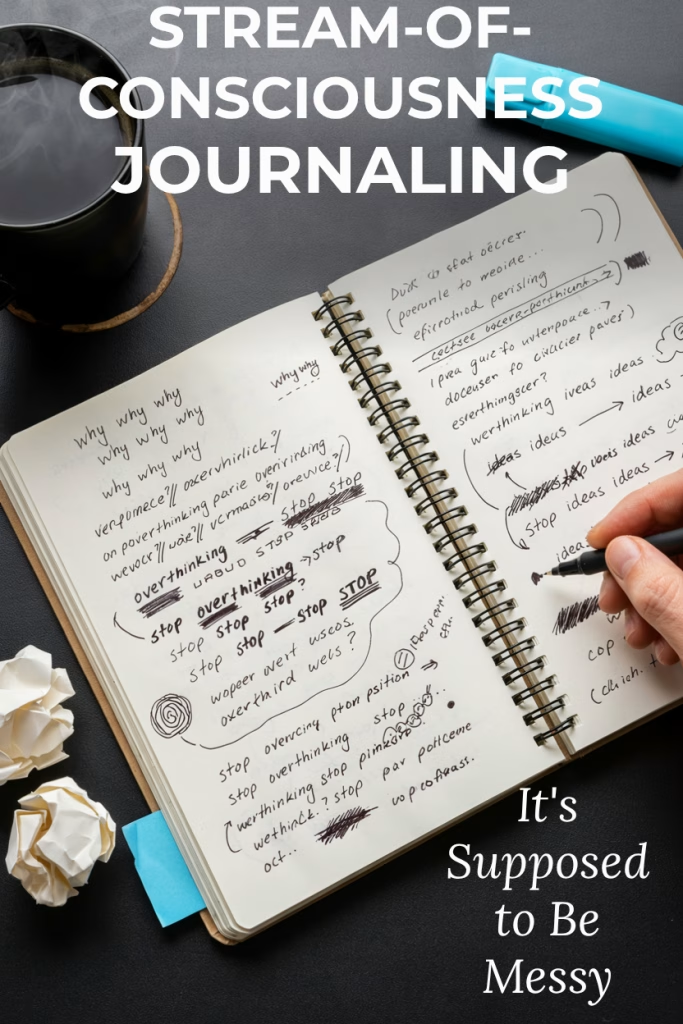
What If You Only Write Gibberish?
Excellent. You have understood the assignment.
Not every page needs to contain an emotional breakthrough. Sometimes your brain needs to complain about traffic, list five unrelated errands and announce that your socks feel wrong.
The value isn’t always hidden in what you wrote.
Sometimes the useful part is that you stopped carrying it for five minutes.
A page can be messy, repetitive, petty, boring or completely incoherent and still have served its purpose.
This is private writing not a performance review.
What If Writing Makes You Feel Worse?
Stream-of-consciousness journaling isn’t helpful in every moment.
Unstructured writing can sometimes turn into rumination: repeating the same painful thought without gaining distance, relief or a next step. If you notice yourself becoming more distressed, panicked or stuck, stop writing.
Try shifting from “Why is this happening to me?” to something more grounding:
- What do I know for certain right now?
- What is outside my control?
- What does my body need in this moment?
- What is one small action available to me?
- Who could I talk to about this?
You can also close the notebook, move around, drink some water or focus on what you can see and hear around you.
Journaling is a tool, not a test of endurance. You do not have to keep digging simply because you opened the page. If writing regularly brings up distress that feels difficult to manage alone, consider talking with a qualified mental health professional.
How to Make It a Habit Without Making It a Chore
You do not need to turn journaling into a new identity.
Instead, attach a few minutes of writing to something that already happens:
- While drinking your first coffee
- After closing your laptop
- Before checking social media
- While waiting in the school pickup line
- After getting into bed
- Before a weekly planning session
Keep the notebook somewhere visible and let the routine be imperfect.
You might write every day for a week and then forget for a month. You’re still allowed to come back. Your notebook will not ask where you’ve been.
If a little atmosphere helps you return to the page, create a journaling ritual you’ll actually want to keep. Just remember that the candle is optional. The writing still counts under aggressive overhead lighting with the dishwasher running.
Try This Five-Minute Brain-Dump Method
If “write whatever comes to mind” still feels too vague, use this loose structure:
Minute one: What is taking up space?
Write every thought currently demanding your attention.
Minute two: What am I feeling?
Name the feelings without trying to justify them.
Minute three: What keeps looping?
Write the thought, conversation or decision your brain keeps returning to.
Minute four: What actually needs action?
Pull out anything practical you can do, schedule, ask or decide.
Minute five: What can I put down for now?
End by identifying what does not need to be solved today.
It’s still free writing. The structure simply gives your thoughts somewhere to begin and somewhere to land.
You Don’t Need a Prompt. You Need a Page.
Stream-of-consciousness journaling isn’t lazy, pointless or a lesser version of “proper” journaling.
It is journaling before the thoughts have been cleaned up for public viewing.
You don’t need structure.
You don’t need a lesson.
You don’t need to be in the mood.
You only need somewhere to put the thought that is here right now.
Start with the complaint. Start with the shopping list. Start with “I don’t know what to write.”
Let it be repetitive. Let it wander. Let it make absolutely no sense.
Because sometimes clarity doesn’t come from thinking harder.
Sometimes it begins when you finally stop trying to hold everything at once.