Journaling for Productivity: How to Boost Focus and Get More Done
Let’s clear something up first.
Being productive doesn’t mean waking up at 5am, drinking green juice, answering emails before sunrise, or colour-coding every minute of your day.
For most of us, productivity isn’t about doing more.
It’s about finally doing the things that actually matter.
If you’ve ever reached the end of the day wondering, “Why do I feel so busy but have nothing to show for it?” you’re not lazy. You’re probably overwhelmed.
Your brain is trying to remember appointments, deadlines, grocery lists, conversations, ideas, worries, and the fact you still haven’t replied to that text from three days ago.
That’s where journaling comes in.
A productivity journal isn’t another planner designed to make you feel guilty. It’s simply a place to unload everything that’s swirling around in your head so you can focus on what’s important.
Here’s how it works and why it can genuinely help.
What Is a Productivity Journal?
A productivity journal is any notebook or journal you use to organise your thoughts, priorities, ideas, and tasks.
Unlike a traditional diary, you’re not writing about every detail of your day.
Instead, you’re asking questions like:
- What actually needs my attention today?
- What’s taking up mental space?
- What’s one thing that would make today feel successful?
- What’s distracting me?
Some people use a bullet journal.
Not sure whether a bullet journal is right for you? My beginner’s guide to bullet journaling explains how the original system works and why it’s much simpler than the elaborate Pinterest spreads you usually see online.
Others use a notebook, printable planner, or even loose sheets of paper.
The format doesn’t matter nearly as much as the habit.
If you’re completely new to journaling and wondering how to get started, my guide on how to start journaling when you don’t know what to write walks you through simple techniques to overcome the blank page and build a habit that actually sticks.

Why We Feel Unproductive in the First Place
Most people assume productivity problems come from a lack of motivation.
Usually, that’s not true.
More often, it’s because your brain is overloaded.
Psychologists call this cognitive load the amount of information your brain is trying to juggle at once.
When everything feels equally urgent, nothing gets your full attention.
That’s why you can spend an hour switching between emails, social media, cleaning the kitchen, and starting five different jobs without actually finishing one.
Writing things down creates breathing room.
Research on the psychology of to-do lists suggests that unfinished tasks continue occupying our attention until we make a concrete plan. Simply writing tasks down and deciding what to do next can free up valuable mental space and make it easier to focus.
Instead of trying to remember everything, your brain can focus on solving one problem at a time.
If traditional productivity advice leaves you feeling exhausted, you might enjoy my guide to Type B productivity. It’s all about working with your natural energy instead of trying to force yourself into someone else’s perfect routine.
The Science Behind Writing Things Down
Research has consistently found that expressive writing and externalising thoughts can reduce mental overload and improve focus.
Writing by hand also slows your thinking just enough for your brain to organise information instead of reacting to it.
You’re no longer trying to hold every thought in your head.
You’re giving those thoughts somewhere to live.
That tiny shift often makes it much easier to prioritise what actually deserves your attention.
1. It Clears Mental Clutter
Imagine opening 37 tabs on your computer.
Eventually everything slows down.
Your brain works the same way.
A quick brain dump lets you write down:
- things you need to do
- random ideas
- appointments
- worries
- reminders
- unfinished tasks
Nothing has to be organised yet.
You’re simply getting it out of your head.
Psychologists call this the Zeigarnik Effect—our tendency to keep unfinished tasks active in our minds. Writing them down or making a simple plan can reduce that mental tension and help your brain move on.
Many people find they instantly feel calmer after just five minutes of writing.
2. It Helps You Prioritise
Long to-do lists can be surprisingly unhelpful.
When every task feels important, it’s difficult to know where to begin.
Instead of creating another overwhelming checklist, try asking:
- What’s the one task that would move me forward today?
- What can genuinely wait until tomorrow?
- What am I avoiding?
Sometimes the biggest productivity breakthrough isn’t adding another task.
It’s removing three that never needed doing.
3. It Reduces Decision Fatigue
Every decision uses mental energy.
What should I work on?
What should I cook?
Should I answer emails first?
Should I clean?
Should I start that project?
By writing tomorrow’s priorities today, you remove dozens of tiny decisions before they even happen.
Interestingly, research has even found that spending a few minutes writing tomorrow’s to-do list before bed may help people fall asleep faster, giving your brain permission to stop rehearsing everything it needs to remember.
Instead of wondering what to do next, you already know.
4. It Helps You Notice Patterns
One of the biggest benefits of journaling is seeing yourself more clearly.
After a few weeks, you might notice things like:
- You concentrate better in the morning.
- Meetings completely drain your energy.
- You always procrastinate when a task feels unclear.
- Social media steals an hour every afternoon.
Once you spot these patterns, you can actually change them.
Without writing things down, they’re easy to miss.
5. It Makes Progress Feel Real
We’re incredibly good at noticing what we haven’t done.
We’re much worse at recognising everything we have.
Ending your day with three small wins even if they’re tiny helps build momentum.
Maybe you finally booked the appointment.
Sent the email.
Walked for ten minutes.
Finished one page.
Progress isn’t always dramatic.
Small wins are still wins.

A Simple 10-Minute Productivity Journaling Routine
You don’t need an elaborate system.
Try this instead.
Minute 1–2: Brain Dump
Write down absolutely everything that’s on your mind.
No editing.
No organising.
Just get it onto paper.
Minute 3–5: Choose Your Top Three
Circle the three tasks that matter most.
Not fifteen.
Three.
If those three get done, the day was productive.
Minute 6–8: Remove Obstacles
Ask yourself:
- What’s likely to distract me?
- What could make these tasks easier?
- Is there anything I can prepare now?
Often the obstacle isn’t lack of motivation.
It’s lack of preparation.
Minute 9–10: Finish With One Intention
Complete this sentence:
Today I’ll feel proud of myself if I…
Keep it realistic.
Productivity Journal Prompts
Need somewhere to start?
Try these prompts:
- What’s taking up the most space in my mind today?
- What’s one task I’ve been avoiding?
- If I only completed one thing today, what should it be?
- What’s distracting me right now?
- What can I stop worrying about today?
- What’s something future me will thank me for?
- Where am I making life harder than it needs to be?
- What would a “good enough” day look like?
- What’s one small step I can take in the next fifteen minutes?
- What went well today?
Remember journaling isn’t about writing pages and pages.
Sometimes a few honest sentences are enough.
Common Productivity Mistakes
Waiting Until You Feel Motivated
Motivation comes and goes.
Habits stick around.
Journal first.
Motivation often follows action not the other way around.
Trying to Plan Every Minute
Life happens.
Leave room for flexibility.
Your journal should support you, not become another source of pressure.
Writing Massive To-Do Lists
More tasks don’t make you more productive.
They usually make you feel more overwhelmed.
Focus on what actually matters.
Comparing Yourself to Everyone Else
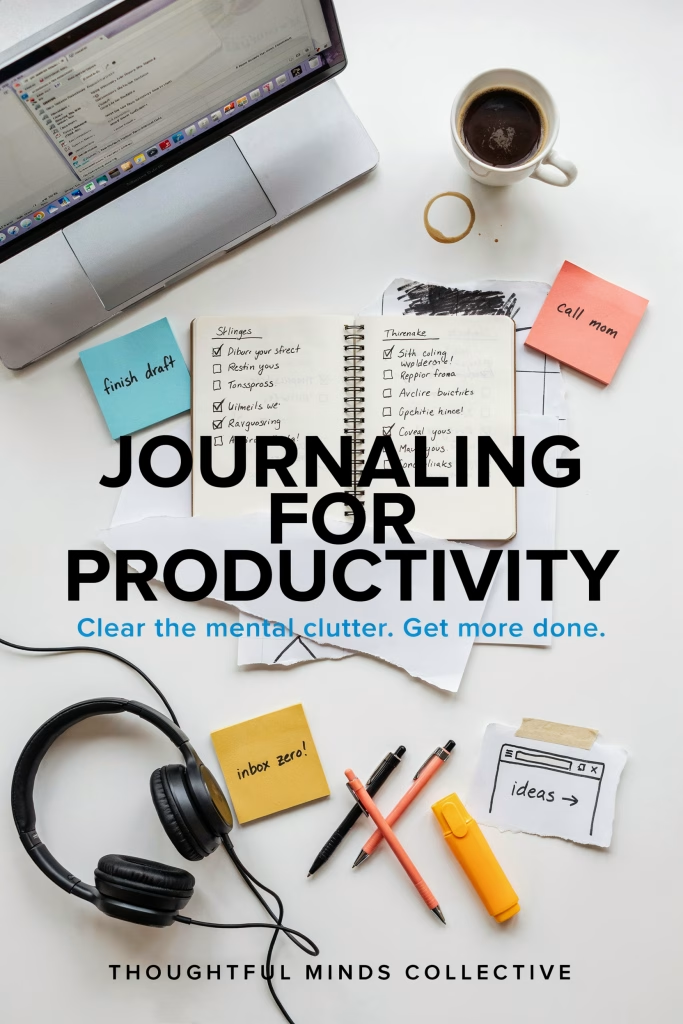
Social media loves showing colour-coded planners and perfectly aesthetic desks.
Real productivity often looks much messier.
It’s crossed-out lists.
Coffee rings.
Half-finished notes.
And still making progress.
Productivity Doesn’t Have to Be Perfect
Some days you’ll get everything done.
Some days you’ll barely manage the basics.
Both are normal.
A productivity journal isn’t there to judge you.
It’s there to help you reset, refocus, and move forward without carrying everything around in your head.
If you’ve been feeling scattered, overwhelmed, or constantly busy without making real progress, try spending ten minutes with a notebook before reaching for another productivity app.
You might be surprised how much lighter your mind feels.
Sometimes getting more done starts with trying to hold less.

Ready to Build a Simpler Productivity Routine?
If you’re looking for an easy place to begin, download the The Life Admin Reset Kit. It’s designed for people who want practical structure without perfectionism, with printable pages for brain dumps, weekly priorities, flexible planning, and gentle resets.
If you prefer a more open, custom approach, our Bullet Journal for Messy Minds helps you organise your life without turning journaling into an art project.
The goal isn’t becoming the busiest person in the room.
It’s creating a system that helps you spend more time on what matters and less time feeling overwhelmed.