

Money Journaling: 15 Prompts to Understand Your Spending, Guilt and Financial Goals
Money is never just about numbers.
It can represent safety, freedom, status, independence, generosity or the terrifying possibility that everything could fall apart.
Even when we know what we’re supposed to do with money, our emotions can get in the way. We avoid checking our account. Spend when we’re stressed. Feel guilty buying something we genuinely need. Set financial goals that sound sensible but don’t reflect the life we actually want.
That’s where money journaling can help.
It isn’t a replacement for a budget, professional financial advice or a plan for paying off debt. It’s a way to understand the thoughts, feelings and patterns sitting underneath your financial decisions.
Because sometimes the first step towards feeling more in control of your money isn’t another spreadsheet.
It’s being honest about how money makes you feel.
What Is Money Journaling?
Money journaling is the practice of writing about your financial thoughts, feelings, habits and goals.
You might use a money journal to:
- Notice what triggers unnecessary spending
- Explore guilt or anxiety around money
- Understand beliefs you learned growing up
- Reflect on purchases without judging yourself
- Define what financial security means to you
- Set goals connected to your actual values
- Make calmer, more intentional decisions
Unlike expense tracking, money journaling isn’t only concerned with what you spent.
It also asks:
What was happening when I spent it? How did I feel beforehand? What did I hope the purchase would give me? How do I feel about it now?
Those questions can reveal far more than the total at the bottom of a receipt.
Why Money Feels So Emotional
Long before we earned our own money, we were learning what it meant.
Perhaps money was openly discussed in your household or never mentioned unless something had gone wrong. Maybe spending was associated with care and generosity. Maybe it caused arguments. Perhaps you watched adults worry about every bill or heard that wanting more was greedy.
These early experiences can quietly become our adult money rules:
- I should never spend money on myself.
- Having savings is the only way to feel safe.
- If I earn more, people will expect more from me.
- I’m simply bad with money.
- Checking my account will only make me feel worse.
- Buying something will make this day feel better.
- Everyone else is coping more successfully than I am.
These beliefs are not always logical but that doesn’t make them easy to ignore.
Financial stress is also extremely common. ASIC research found that feeling overwhelmed and not knowing where to begin were major barriers for young Australians who wanted to feel more financially confident.
Money journaling gives you somewhere to examine those beliefs without immediately trying to fix everything.
What Money Journaling Changed for Me
For a long time, I thought being “better with money” meant becoming more disciplined.
I assumed the answer was stricter rules, fewer treats and more self-control. But when I started writing about money, I realised that many of my decisions weren’t coming from carelessness.
They were coming from emotion.
Sometimes spending offered relief after a difficult week. Sometimes I avoided looking at the numbers because I was scared of what I might find. Sometimes I felt guilty about perfectly reasonable purchases but barely questioned the small impulse buys that added up over time.
Writing helped me separate what was actually happening from the story I was telling myself about it.
Instead of:
I’m hopeless with money.
I could write:
I tend to avoid my bank account when I feel overwhelmed. Avoiding it gives me temporary relief, but it makes me more anxious later.
That is a much more useful observation.
It doesn’t excuse the behaviour, but it gives me something specific to work with. I can create a smaller, less intimidating next step instead of attacking myself for failing again.
That shift from judgment to curiosity is what makes money journaling valuable.

15 Money Journaling Prompts
You don’t need to answer all of these at once. Choose the question that makes you pause, write for five or ten minutes and see where it takes you.
Your Money Story
- What is my earliest memory of money? How did it make me feel?
- What did the adults around me teach me about spending, saving and debt directly or indirectly?
- Which financial beliefs have I inherited that may no longer be helpful?
- When I say someone is “good with money,” what do I actually mean?
- What do I believe my financial situation says about me as a person?
Spending and Avoidance
- When am I most likely to spend impulsively when I’m stressed, bored, lonely, tired or celebrating?
- What am I usually hoping a purchase will make me feel?
- Which purchases genuinely improve my life, and which tend to leave me feeling flat or regretful?
- What financial task am I currently avoiding? What is the smallest possible first step?
- Where does comparison influence how I spend or what I think I should own?

Guilt, Safety and Goals
- Which expenses make me feel guilty, even when I can afford them or genuinely need them?
- What does “enough” money feel like to me—not only as a number, but as an experience?
- What would financial safety look like in my ordinary daily life?
- If nobody else could see my lifestyle, what would I spend less on? What would I value more?
- What is one financial decision my future self would be relieved I made this month?
If these questions bring up broader thoughts about identity and what you want from life, try the prompts in our journaling for self-discovery guide.
Try a Weekly Money Check-In
Money journaling doesn’t need to become another elaborate routine.
A short weekly check-in can help you notice patterns before they disappear into the blur of everyday life.
Set aside ten quiet minutes and write:
1. What happened?
Record anything significant without adding a verdict.
Perhaps you paid an unexpected bill, bought something impulsively, reached a savings milestone or finally opened an email you had been avoiding.
2. How did it make me feel?
Try to be more specific than “good” or “bad.”
Did you feel relieved, resentful, embarrassed, restricted, proud, secure, deprived or overwhelmed?
3. What influenced my decisions?
Consider your energy, mood, environment and the people around you.
Did stress make convenience more appealing? Did social media make you feel behind? Did a sale create urgency? Did tiredness make it harder to think through a decision?
4. What do I need now?
You might need information, reassurance, a boundary, a realistic plan—or simply permission to stop punishing yourself for a past decision.
5. What is one useful next step?
Keep it small and concrete:
- Check one account
- Cancel one unused subscription
- Move a manageable amount into savings
- Open an overdue bill
- Write down your essential expenses
- Unsubscribe from promotional emails
- Ask about a payment plan
- Book an appointment with a financial counsellor
Reflection becomes most helpful when it leads to one realistic action not a complete financial reinvention by Monday.
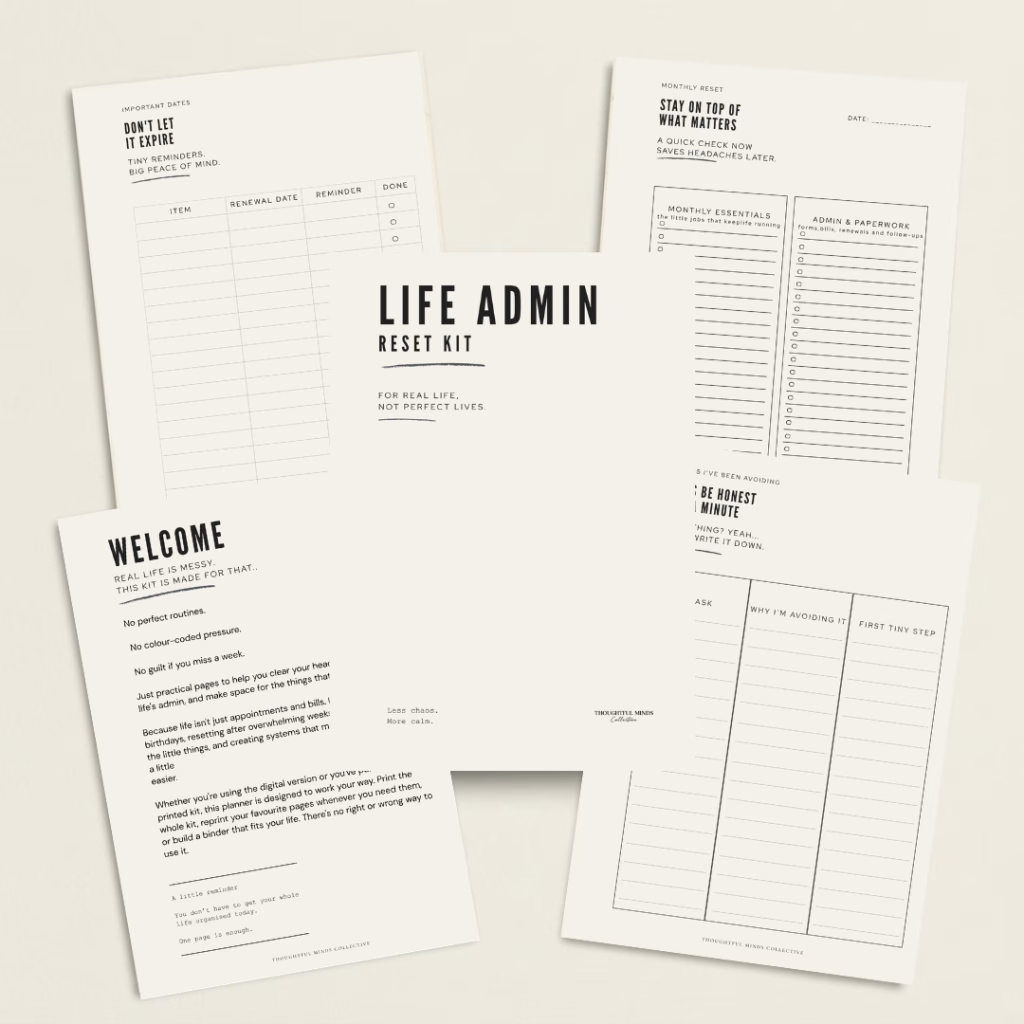
Want to turn reflection into a practical reset?
The Life Admin Reset Kit helps you get the important parts of everyday life out of your head and onto paper including the tasks, decisions and loose ends that can feel difficult to face when you’re overwhelmed.
Money Journaling Isn’t About Never Spending
The purpose of money journaling isn’t to make you feel guilty every time you buy a coffee or order takeaway.
It’s also not about dividing every purchase into “good” and “bad.”
A purchase can be unnecessary and still bring genuine joy. Something sensible can still feel uncomfortable. Saving is important, but so are pleasure, generosity, convenience and living your actual life.
The more useful question is:
Did this decision support what matters to me or was I reacting automatically?
That distinction can help you build financial boundaries that feel personal rather than punishing.
You might decide to say no to plans you can’t comfortably afford. You might also realise that one category you’ve been trying to eliminate is something you deeply value and want to deliberately include.
Your journal can help you stop following somebody else’s idea of what responsible money management should look like.
Connect Your Financial Goals to a Feeling
Financial goals often sound like this:
- Save $10,000
- Pay off the credit card
- Spend less on takeaway
- Earn more money
- Build an emergency fund
Those goals may be worthwhile, but numbers alone don’t always give us a strong reason to continue.
Try asking what the goal would make possible.
Maybe an emergency fund represents being able to sleep without mentally calculating every possible disaster. Paying off debt might mean having more choices. Earning more could allow you to reduce your hours, travel, help your family or leave work that is making you miserable.
Instead of writing only:
I want to save $10,000.
Try:
I want to create enough breathing room that an unexpected expense doesn’t feel like a catastrophe.
The number gives you something to measure. The feeling reminds you why it matters.
You can explore this further using our guide to creating a journaling vision board.
When Journaling Isn’t Enough
Money journaling can help you understand your behaviour, but it cannot solve financial hardship on its own.
If you’re struggling to pay essential bills, dealing with debt or feeling completely overwhelmed, you deserve practical support not another prompt telling you to think positively.
Free or nonprofit support is available in many countries:
- Australia: National Debt Helpline
- United Kingdom: MoneyHelper
- United States: National Foundation for Credit Counseling
- New Zealand: MoneyTalks
- Canada: The Government of Canada explains how to find a reputable credit counsellor.
If you live elsewhere, search for free nonprofit debt advice or government financial counselling in your country. Check that the service is independent and reputable before sharing personal or financial information.
This article is intended for reflection and general information. It isn’t personal financial advice.
If money worries are affecting your mental health or leaving you feeling unable to cope, you can also visit our mental health support resources page for places to find immediate, confidential support.
Start With One Honest Sentence
You don’t need a dedicated money journal, a complicated tracker or an hour-long ritual.
Open any notebook and complete this sentence:
Right now, money makes me feel…
Don’t correct the answer or try to make it sound responsible. Just write what is true.
Then ask:
What is one small thing that would help me feel slightly steadier?
That might be checking a balance. It might be gathering information. It might be asking for help. It might simply be recognising that one difficult financial decision does not define your character.
You are not your bank balance.
You are not the worst purchase you’ve ever made.
And you don’t have to feel completely confident before you begin paying attention.
One honest page is enough to start.

