7 Journaling Techniques for Beginners: Find a Method That Actually Works for You
You want to start journaling—but then you open a notebook, stare at the first blank page and immediately wonder what you’re supposed to write.
Your deepest thoughts? A summary of your day? Three things you’re grateful for? A beautifully organised list written in matching pastel pens?
Here’s the good news: there is no single correct way to journal.
You don’t have to be a good writer. You don’t need a perfect morning routine, expensive stationery or anything particularly profound to say. You simply need a journaling technique that works with the way your brain already thinks.
Below are seven beginner-friendly journaling techniques to help you get words onto the page—whether you want to clear your head, process something difficult, remember your life or feel slightly more organised.
Completely new to journaling?
Start with The Ultimate Beginner’s Guide to Journaling. It covers what you need, what to write and how to begin without turning journaling into another task you have to perform perfectly.
What Is a Journaling Technique?
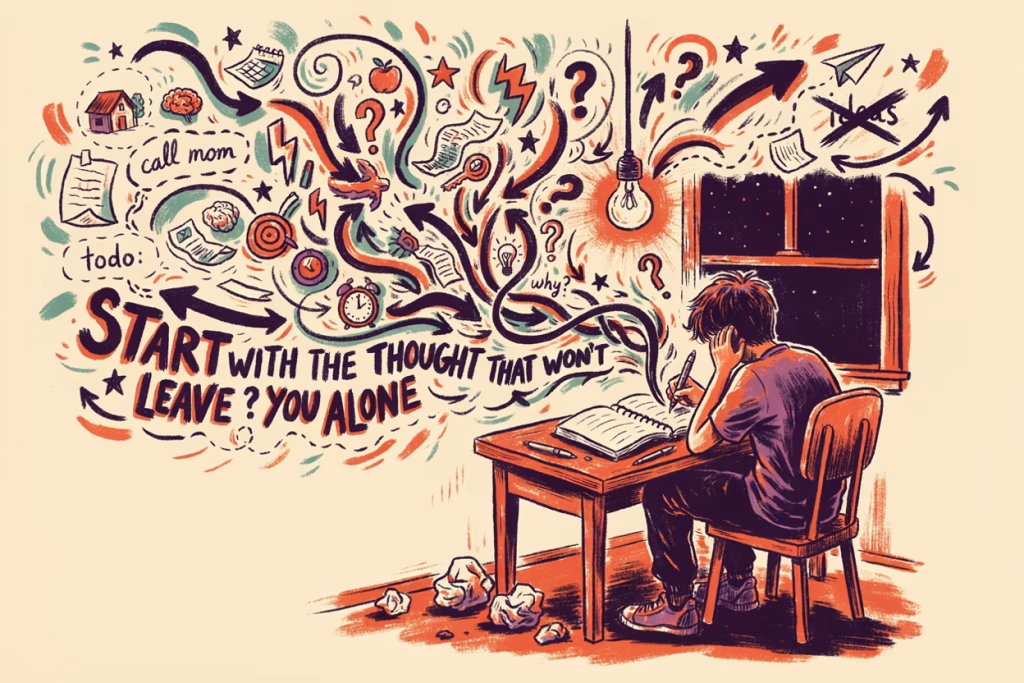
A journaling technique is simply a way of approaching the page.
Some techniques give you plenty of structure. Others let your thoughts wander wherever they need to go. You might use one method every day, switch between several or invent your own mixture.
For example, you could write a short list when you’re tired, use a prompt when you feel stuck and turn to expressive writing when something is weighing on you.
The goal isn’t to choose the “best” technique. It’s to find the one that makes starting feel easier.
Is Journaling Actually Helpful?
Journaling isn’t therapy, and it isn’t a guaranteed cure for stress or anxiety. But research suggests that some forms of expressive writing can help people explore difficult experiences and organise their thoughts and emotions. The effects vary between people, which is another reason to experiment rather than force yourself to use a method that doesn’t feel right.
Reflection can also help us make sense of what has happened, notice patterns and think about what we might do differently next time.
Most importantly, a journal gives you somewhere private to slow down and hear your own thoughts without needing to explain them to anyone else.
7 Journaling Techniques for Beginners
1. Freewriting
Freewriting is one of the simplest ways to start journaling. You choose a subject and write about it for a set amount of time without stopping to edit, correct or improve what you’ve written.
The subject can be broad:
- How I’m feeling today
- Something I can’t stop thinking about
- What I want from the next few months
- Why I’ve been avoiding a particular task
Your writing doesn’t have to sound good. In fact, it doesn’t have to make sense to anybody but you.
Try it:
Set a timer for five minutes and begin with:
The thing taking up the most space in my head right now is…
Keep your pen moving until the timer ends. If you get stuck, write “I don’t know what else to say” until another thought arrives.
Best for: exploring one idea, warming up creatively or getting past the pressure to write well.
2. Prompt Journaling
Prompts give you a question, sentence starter or idea to respond to. They’re useful when you want to journal but don’t know where to begin.
A prompt isn’t a test question. You can answer it directly, disagree with it or let it lead you somewhere completely unexpected.
Try one of these:
- What has felt harder than it needed to lately?
- What is something I handled better than I realise?
- What do I need more of this week?
- What am I pretending doesn’t bother me?
- What would make tomorrow feel a little easier?
You don’t need to answer several prompts in one sitting. One useful question is enough.
If you want something a little less predictable, try these journal prompts for when you’re spiralling.
Best for: blank-page moments, guided self-reflection and exploring subjects you might not think of yourself.
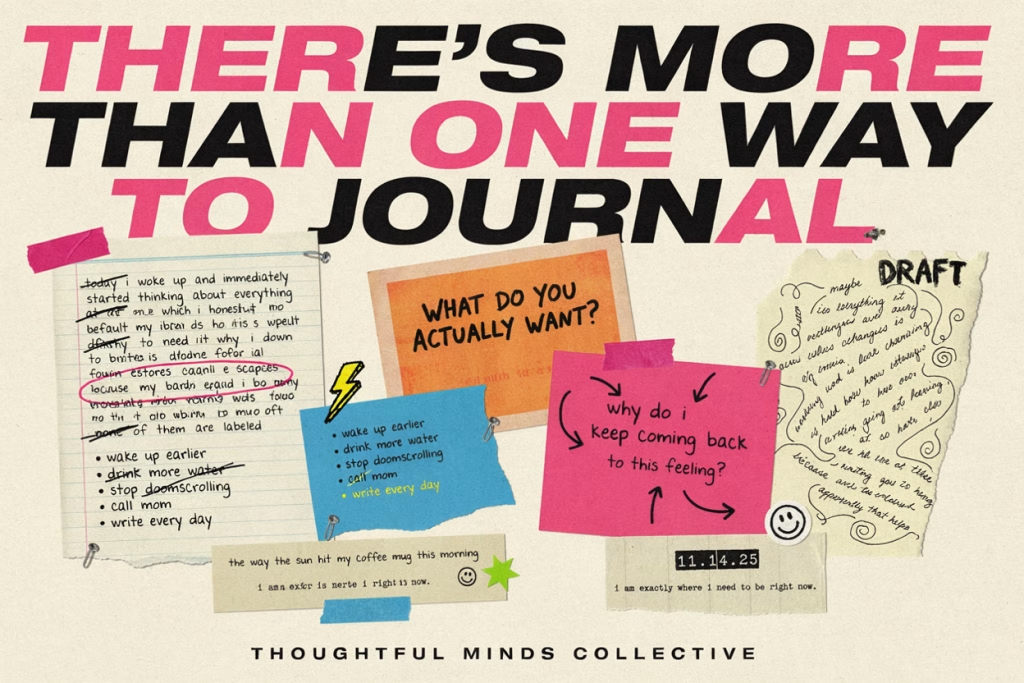
3. Bullet-Point Journaling
Bullet-point journaling is ideal if full pages of handwriting feel exhausting.
Instead of writing paragraphs, record your thoughts in short lines. You might include what happened, what you noticed, what you need to remember or how you’re feeling.
For example:
- Slept badly and felt scattered all morning
- Finally sent the email I’d been avoiding
- Walk after lunch helped
- Need to stop treating every unfinished task like an emergency
- Tomorrow: groceries, invoice, early night
This can be as organised or as messy as you like. You don’t need elaborate spreads, trackers or decorative headings. A few honest bullet points still count as journaling.
Best for: busy days, tired brains, life admin and people who naturally think in lists.
4. Gratitude Journaling
Gratitude journaling involves noticing and recording things you appreciate.
That doesn’t mean ignoring what’s difficult or pressuring yourself to find a positive lesson in everything. A gratitude journal should make room for reality—not paint over it.
The most meaningful entries are often small and specific:
- The dog waiting outside the bathroom door
- My sister sending me a ridiculous meme
- Clean sheets after a long day
- Finding $10 in an old coat pocket
- Someone remembering how I take my coffee
Instead of writing three things automatically every day, choose one and add why it mattered.
Try this prompt:
One small thing that made today softer was…
You can find more ideas in Gratitude Journaling for Beginners.
Best for: noticing ordinary moments, recording good memories and finding balance during complicated periods.
5. Reflective Journaling
Reflective journaling helps you look back at an experience and understand it more clearly.
Rather than only recording what happened, you explore your response to it. This can help you recognise patterns, identify what you need and decide what to do next.
Use this simple structure:
- What happened?
- How did I feel at the time?
- How do I feel about it now?
- What did this experience show me?
- Is there anything I want to do differently?
You can reflect on a difficult conversation, a decision, something that went well or even an ordinary day that left you feeling strangely unsettled.
You don’t have to force every experience into a life lesson. Sometimes understanding how something affected you is enough.
Best for: processing experiences, noticing patterns and making decisions with more clarity.
6. Stream-of-Consciousness Journaling
Stream-of-consciousness journaling is less focused than freewriting. Instead of choosing one subject, you let your thoughts move naturally from one thing to another.
The result might jump from an awkward conversation to your shopping list, then to a childhood memory, then back to the thing you’re worried about.
That wandering is the point.
Try it:
Set a timer for 10 minutes and write down each thought as it appears. Don’t organise it or try to stay on topic. Follow the mental detours.
If you’re curious about the difference between this and a regular brain dump, read the full guide to stream-of-consciousness journaling.
Best for: mental clutter, racing thoughts and discovering what is underneath the thought you started with.
7. One-Line-a-Day Journaling
Not every journaling session needs to fill several pages. A one-line-a-day journal records one sentence about your day—and that sentence can be as ordinary as you like.
You might write:
- Today felt long, but dinner with Mum was lovely.
- I finally started the thing I’ve been putting off.
- Nothing dramatic happened, and I think I needed that.
- The first properly warm afternoon of spring.
- I laughed until I couldn’t breathe at something that wasn’t even funny.
Over time, these tiny entries become a surprisingly detailed record of your life.
This is also a gentle way to build a journaling habit because the daily requirement is almost too small to avoid.
Best for: documenting everyday life, building consistency and journaling when you’re short on time or energy.
Which Journaling Technique Should You Try First?
Choose according to what you need today:
| If you want to… | Try… |
|---|---|
| Explore one thought without editing yourself | Freewriting |
| Have someone give you a starting point | Prompt journaling |
| Write without using full sentences | Bullet-point journaling |
| Notice small good things without denying the hard ones | Gratitude journaling |
| Understand an experience more clearly | Reflective journaling |
| Empty a busy, wandering mind | Stream-of-consciousness journaling |
| Create a tiny, sustainable habit | One-line-a-day journaling |
You aren’t choosing a permanent journaling identity. Try one technique for a few days, keep what helps and abandon what doesn’t.
How to Make Journaling Easier to Stick With
The easiest journaling habit is the one that fits into your actual life—not the imaginary version of your life in which you wake at 5 a.m. and write three elegant pages before breakfast.
Make the goal smaller
Start with five minutes, three bullet points or one sentence. You can always continue, but you don’t have to.
Keep your journal visible
Put it beside your bed, near the kettle or on your desk—somewhere you will naturally see it. A journal hidden neatly in a drawer is surprisingly easy to forget.
Attach it to something you already do
Write after making your morning coffee, while eating lunch or before plugging in your phone at night. An existing routine can act as your reminder.
Let missed days stay missed
You don’t need to catch up or fill blank pages. Simply begin again on the day you remember.
Change techniques when you’re bored
A journaling habit doesn’t have to mean repeating the same exercise forever. Use prompts on Monday, make a list on Wednesday and write one sentence on Friday. It all counts.
Keep some entries ordinary
You don’t need a breakthrough every time you open your journal. Record the weather, what you ate, what annoyed you or the show you can’t stop watching. Ordinary details are part of your life too.
What If Writing Makes You Feel Worse?
Journaling can sometimes bring difficult emotions closer to the surface. If an entry is making you feel overwhelmed, unsafe or increasingly distressed, you’re allowed to stop.
Try switching to something more grounding, such as listing what you can see around you, writing about what you need in the next hour or stepping away from the page completely.
A journal can be a useful personal tool, but it isn’t a replacement for professional mental-health care. If you need more support, visit our Mental Health Resources page for Australian and international services.
Start With the Technique That Feels Easiest
Journaling isn’t about proving that you’re thoughtful, disciplined or good with words. It’s simply a way to give your thoughts somewhere to go.
Start with the technique that feels least intimidating. Write one sentence. Make an untidy list. Answer a single prompt. Stop after two minutes if that is enough.
Your journal does not need to be impressive.
It only needs to be yours.