If you’ve ever searched “bullet journal ideas” on Pinterest, you’ve probably come away with the same impression I did.
Bullet journaling looks complicated.
There are elaborate monthly spreads, perfect handwriting, colour-coded trackers, custom illustrations, and enough stationery to stock a small office supply store.
For years I assumed that was what bullet journaling actually was.
I tried creating Pinterest-worthy spreads. I bought the pens. I copied layouts. I spent more time decorating pages than using them.
And every single attempt ended the same way: I stopped.
The irony is that bullet journaling only started working for me when I stopped trying to make it look like Pinterest.
Because here’s the truth:
Bullet journaling isn’t what most people think it is.
In fact, Pinterest accidentally turned a simple productivity and mindfulness system for messy brains into an aesthetic hobby.
There’s nothing wrong with artistic journals. They’re beautiful and inspiring. But they’re not the reason bullet journaling was created.
To understand what bullet journaling actually is, we need to go back to where it started.
The Original Idea Behind Bullet Journaling
Bullet Journaling was created by Ryder Carroll, a digital product designer who developed the system as a way to manage information, tasks, ideas, and reflections while living with ADHD.
His goal wasn’t to create a planner.
It wasn’t to create a journaling trend.
And it definitely wasn’t to create an art project.
The Bullet Journal Method was designed to help people pay attention to what matters, to clear and calm a messy mind/life.
At its core, it’s a system for organising your thoughts and being intentional with your time.
Carroll often talks about the difference between being productive and simply being busy. The philosophy behind the method is that many of us spend our lives reacting to everything demanding our attention rather than consciously deciding what deserves it.
A bullet journal creates space to slow down, capture what’s in your head, and make decisions more deliberately.
That’s a very different goal from creating a perfectly themed monthly spread.
If you’d like to learn more about the original system, the official Bullet Journal website is an excellent resource.
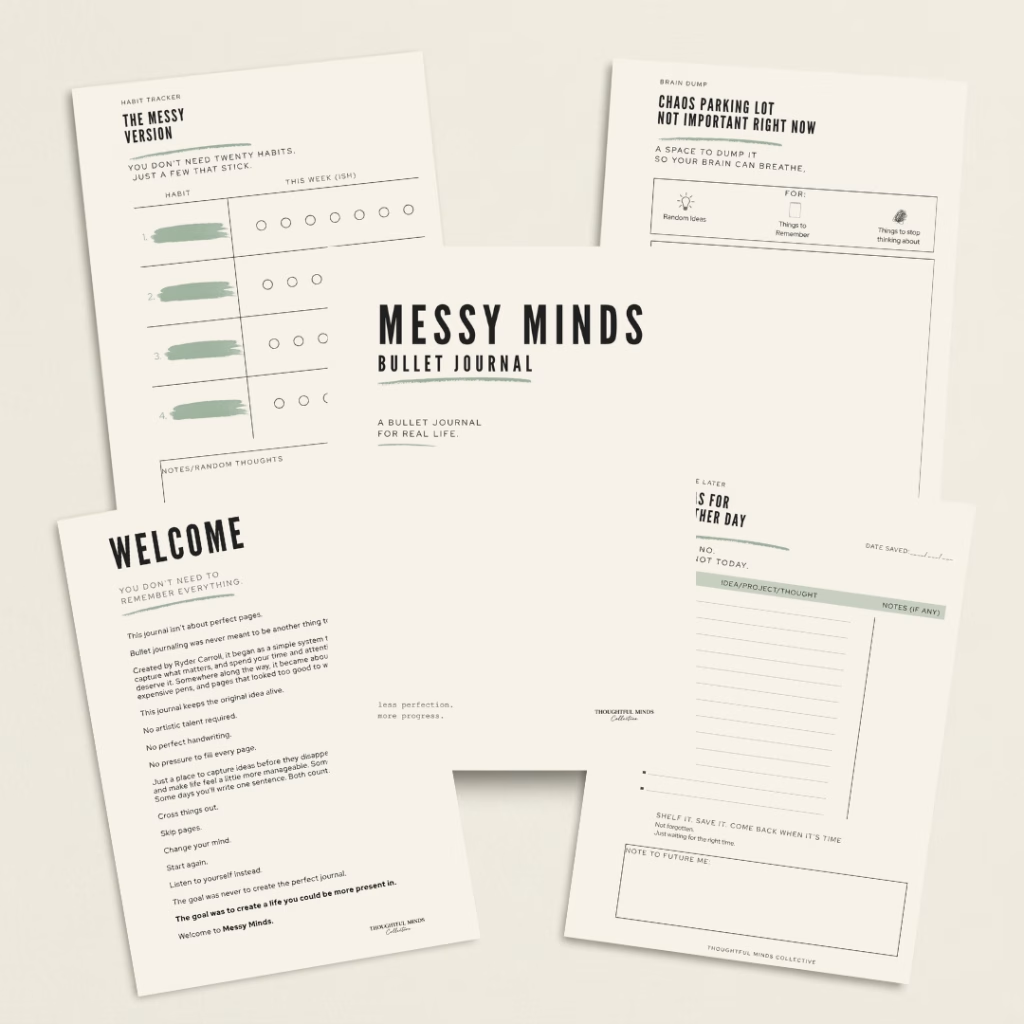
Messy Minds Bullet Journal
Instant Download A$9.95
Because your journal should help you live your life, not become another thing to get perfect.
Pinterest Made Bullet Journaling Look Hard
Somewhere along the way, social media got involved.
As bullet journaling became more popular, people naturally started sharing their notebooks online. The most visually impressive journals received the most attention, which makes complete sense. Beautiful pages are fun to look at.
The problem is that beginners rarely see the hundreds of ordinary bullet journals quietly helping people manage their lives.
Instead, they see the highlight reel.
The result is that many people assume bullet journaling requires artistic talent, expensive supplies, or hours of preparation each week.
I’ve lost count of how many people have told me they love the idea of bullet journaling but feel intimidated by the examples they see online.
Honestly? I don’t blame them.
If my first introduction to bullet journaling had been Pinterest, I probably would have convinced myself I wasn’t creative enough either.
The reality is much simpler.
A bullet journal can be a notebook containing tasks, appointments, notes, journal entries, brain dumps, goals, and random thoughts all living together on the same page.
No illustrations required.
No calligraphy required.
No aesthetic required.

My Failed Pinterest Bullet Journal Era
I have absolutely been guilty of trying to recreate the Pinterest version.
I carefully selected colour palettes. Bought the highlighters. Got the special ruler. I drew habit trackers. I created decorative headers. I spent an embarrassing amount of time trying to make pages look cohesive.
For about three days, it was great.
Then life happened.
I missed a tracker. A page looked messy. I skipped a week. Suddenly the journal felt ruined and I wanted to start over.
Looking back, I had accidentally turned a tool into a performance.
The notebook wasn’t helping me manage my life anymore. It had become another thing I felt pressure to do perfectly.
The breakthrough came when I gave myself permission to be messy.
These days my pages contain scribbled notes, unfinished thoughts, crossed-out tasks, journal reflections, and reminders that probably only make sense to me.
And somehow they’re far more useful than the beautiful spreads ever were.
Your Bullet Journal Doesn’t Need To Be Pretty
One of the most liberating things about bullet journaling is that there are very few rules.
The system is designed to adapt to you, not the other way around.
Some weeks you might create a structured layout. Other weeks you might simply write a list of things currently taking up space in your brain.
Both approaches are valid.
The best bullet journal is not the prettiest one.
It’s the one you actually use.
That’s particularly important if you’re someone who already feels overwhelmed by traditional productivity systems.
If that sounds familiar, you might also enjoy my article on Type B Productivity and The Life Admin Reset, which both focus on creating systems that work with real life rather than against it.
Why Bullet Journaling Works For Messy Minds
The reason so many people connect with bullet journaling is flexibility.
You can use it as a planner.
You can use it as a journal.
You can use it for reflection, goal setting, brain dumping, project planning, or all of the above.
Unlike traditional planners, you aren’t punished for missing a week. There are no wasted pages and no expectation that life will unfold according to a predetermined schedule.
The journal evolves as your needs change.
That’s why I often recommend combining bullet journaling with simple reflective practices like those discussed in my Journaling for Beginners and Morning Pages articles.
Together they create a system that helps clear mental clutter while keeping important information in one place.
This article by Kat Cuthbert, whose been bullet journaling for 7 years, talks about embracing the messy and inconsistent side journaling.
Final Thoughts
If Pinterest has convinced you that bullet journaling is only for artistic, organised people with beautiful handwriting, I’d like to gently challenge that idea.
The original Bullet Journal Method was never about perfection.
It was about attention.
It was about clarity.
It was about creating a space where you could capture your thoughts, understand your priorities, and be more intentional about how you spend your time.
Some people do that with gorgeous illustrated spreads.
Others do it with messy handwriting and a notebook that’s falling apart.
Both are bullet journaling.
And if you’re waiting until you’re organised enough, creative enough, or prepared enough to start, consider this your permission slip.
Grab a notebook.
Write something down.
That’s enough.