Your emotional life isn’t some curated Pinterest board or a perfectly color-coded planner. It’s text messages you didn’t send, voice notes you’re too scared to relisten to, and screenshots you keep for reasons even you don’t fully understand. But here’s the truth: messy doesn’t mean wrong. It means real. And journaling? It’s the one place where you can let it all exist without cleaning it up first.
You don’t need to be healed to start writing. You don’t need clarity. You just need somewhere to put it. Journaling isn’t about fixing yourself. It’s about noticing what’s going on underneath all the “I’m fine”s. Even research backs it up—expressive journaling has been shown to reduce stress and emotional overload, even when it’s not structured or polished. Writing is literally good for your nervous system (source).
“I don’t want to fix myself I want to understand myself.”
So let’s stop pretending our lives are neat and start writing the messy version instead.
Let the Chaos Land on the Page
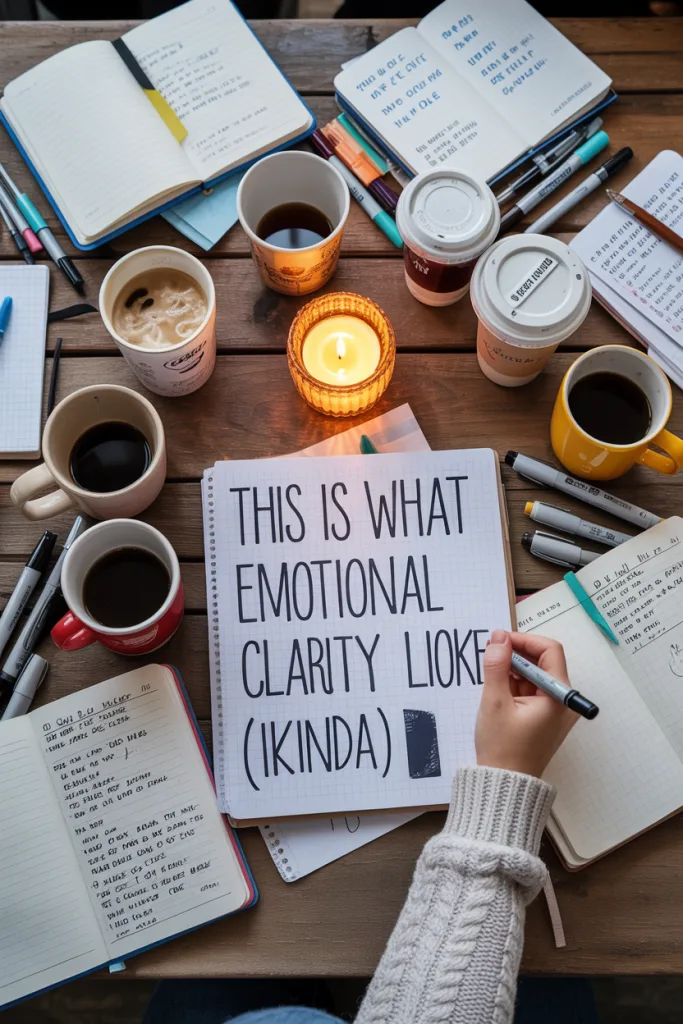
This is your permission slip to be dramatic in your journal. Go full rant mode. Doodle weird stuff. Write “I don’t know what I’m feeling” 37 times if you need to. The point is that it doesn’t need to make sense—it just needs to exist somewhere outside your head.
Try this freewrite prompt:
- What’s one emotion I’ve been ignoring lately?
- If that emotion had a voice, what would it scream, whisper, or demand?
Sometimes the messiest pages are the most honest. Your journal isn’t here to judge—it’s here to witness. And yeah, that might look like chaotic handwriting and arrows connecting thoughts all over the page. Let it be ugly-pretty. You don’t owe your journal aesthetic, you owe it truth.
“My journal knows versions of me no one else has met—and honestly, that’s sacred.”
For more permission to write imperfectly, check out this soft entry point in our Mindful AF journaling hub—it’s all about real life, not curated morning routines.
Self-Awareness > Perfection
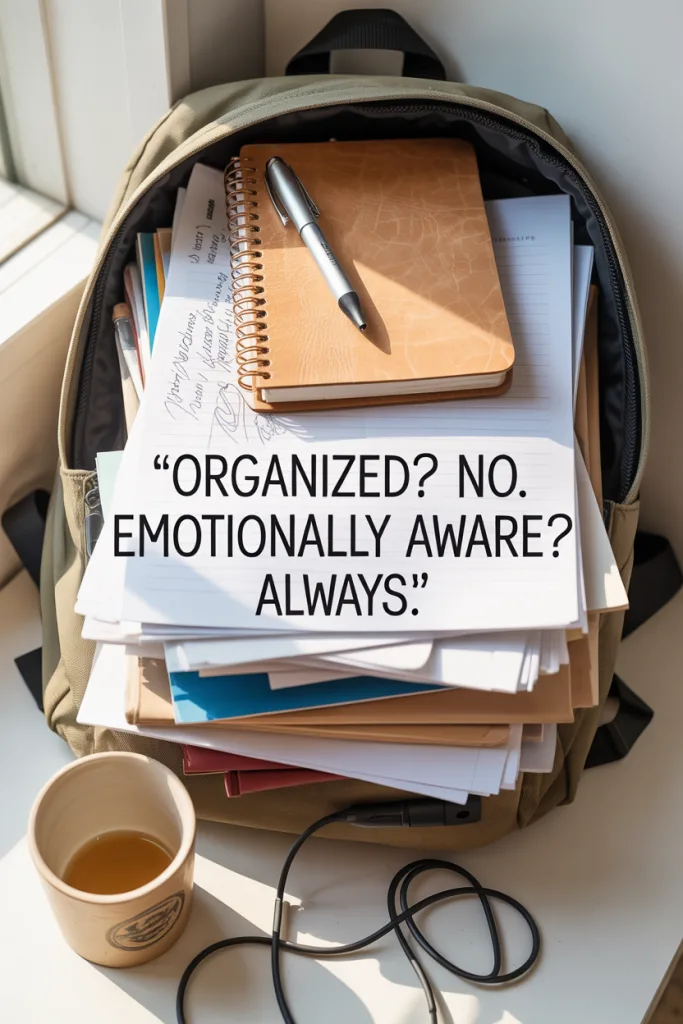
You’re not here to solve your emotions. You’re here to see them clearly—without filters. The cool thing about journaling is that it gives you enough space from your own thoughts to actually spot patterns. You get to say, “oh, I’ve felt this before,” and that is emotional intelligence.
Here’s a low-key weekly check-in you can reuse when things feel loud:
- What actually happened this week? (Like, factually.)
- What did I feel—and when did I stuff that feeling down?
- What drained me?
- What filled me up?
- What small win am I under-celebrating right now?
Your emotional life is a cycle, not a checklist
If you’ve ever felt like healing isn’t linear—and definitely not neat—you’re not wrong. And if you think the younger generations are simply embracing hustle culture, think again. Instead, Gen Z and Millennials are flipping the script on what “getting things done” looks like—including emotional clarity and boundaries.
📊 According to a June 2025 report from The Guardian, 94% of Gen Z professionals prioritize work‑life balance over career climb. They’re rejecting “always on” exhaustion and saying yes to rest, wellbeing support, and mental health initiatives The Guardian.
Industry insights from Deloitte and FFEM highlight that younger workers are demanding meaningful flexibility and mental health-centered workplaces—often walking away from roles that compromise that Sinar Daily.
For hourly roles, a major 2025 Deputy workforce study uncovered the rise of micro‑shifts—shorter, flexible work segments Gen Z uses to juggle multiple jobs or life responsibilities. This isn’t indifference to work—it’s emotional and logistical survival in action Forbes.
🔑 TL;DR
- Younger generations deeply value mental health, emotional regulation, and boundaries—even on the job.
- They’re demanding workspaces that recognize emotional clarity and wellbeing, not endless availability.
- What journaling offers—reflective space, emotional release—is now part of a broader cultural shift toward rest-based productivity.
So yes: Your journal knows you better than your checklist ever could—and so do many of your peers.
You don’t need to be emotionally consistent. You just need to be emotionally curious.
Create a Boundary Page in Your Journal
You know those moments where you know you should’ve walked away sooner, but didn’t? Or the times you gave someone too many chances when your gut was already screaming? That’s not failure—it’s a lack of practice in naming boundaries. Journaling helps with that too.
Try this:
“Stuff I’m Not Doing Anymore”
- Apologizing for how I feel.
- Shrinking to make someone else feel bigger.
- Explaining myself to people who aren’t listening.
- Chasing closure from people who already showed me who they are.
This is your emotional boundaries page. Come back to it. Rewrite it when it changes. Decorate it like a warning sign or a love letter. Bonus idea: make it a visual spread in your journal with sticky notes, tape, or chaotic scribbles. Make it yours.
And if you’re new to all this and thinking I don’t even know what to write, you’re not alone. We wrote a whole guide on how to start journaling when you don’t know what to write—because yes, that blank page can be emotionally terrifying.
Normalize the Emotional Hangover
There’s a reason you feel extra tired after a big cry or an intense vent session. Emotional hangovers are real. Your body holds on to stress—even the mental kind—and writing helps metabolize it.
On days like that, keep your journal prompts small and low-effort:
- What emotion is still lingering in my body today?
- What do I wish I could do about it?
- What feels soft right now? (Even if it’s just tea or socks.)
This is where your journal becomes your safe space—not a self-improvement project. You don’t need to “bounce back.” You just need somewhere to land.
We explore these slower journal practices more in this roundup of beginner journaling styles if you want a softer structure to work with.

Final Thought: Journal Like No One’s Watching
Your emotional life doesn’t need to be solved, explained, or made pretty for Instagram. It just needs space. And that’s what your journal is for. Not for quotes and structure (unless you want that), but for chaos, contradiction, clarity, and all the weird in-between feelings that don’t have names yet.
Let journaling be the place where you tell the truth, even if you don’t know what it means yet. That’s the kind of emotional work that actually moves things forward—not fast, but real.