Money Journaling for Beginners: A No-BS Guide to Saving and Staying Organised
Money management has a truly terrible marketing problem.
It’s usually presented as one of two things: an elaborate spreadsheet maintained by someone who enjoys colour-coding tax deductions, or a restrictive budget that expects you to stop buying every small thing that makes life bearable.
Money journaling for beginners offers a much more realistic middle ground.
It’s a simple way to keep your bills, spending, savings goals and upcoming expenses visible without turning your finances into a second job.
You don’t need to record every cent for the rest of your life. You don’t need a perfect budget. And you definitely don’t need to draw tiny dollar signs around an inspirational quote about abundance.
You need one place where you can see:
- What money is coming in
- What needs to be paid
- Where your money has been going
- What expenses are coming next
- What you’re trying to save for
- What small action you need to take now
That’s money journaling.
What Is Money Journaling?
Money journaling is the habit of recording and reviewing your everyday finances in a notebook, planner or digital document.
Unlike traditional budgeting, it doesn’t have to involve complicated categories, formulas or strict spending limits. You can use it to track as much or as little as you need.
Your money journal might contain:
- A list of monthly bills
- A weekly spending log
- Subscription renewal dates
- Savings goals
- Upcoming irregular expenses
- A payday plan
- Notes about purchases or cancellations
- A short financial to-do list
Think of it as a life-admin dashboard for your money.
A budgeting app can show you that a payment left your account. A money journal helps you notice that your car registration is due next month, your streaming subscription has increased again and you still haven’t transferred money into your travel fund.
It turns scattered financial information into something you can actually use.
Why Use a Money Journal Instead of an App?
You can absolutely use both.
Banking and budgeting apps are useful for collecting information, but they don’t always help you decide what to do with it. They can also give you so many charts, alerts and categories that managing your money begins to feel more complicated than it needs to be.
Writing down the important parts forces you to slow down and identify what actually requires your attention.
A money journal can help you:
- Remember bills before they become emergencies
- See spending patterns that are easy to miss
- Prepare for expenses that don’t happen every month
- Break a large savings goal into manageable steps
- Keep financial tasks out of your head
- Make one clear plan for your next payday
This isn’t about documenting every financial decision you make. It’s about creating enough visibility to make your next decision easier.
How to Start a Money Journal
You don’t need to buy a specialist budget planner. Start with whatever you will genuinely use: a notebook, loose printable pages, a notes app or a section in your existing planner.
Create these five basic sections.
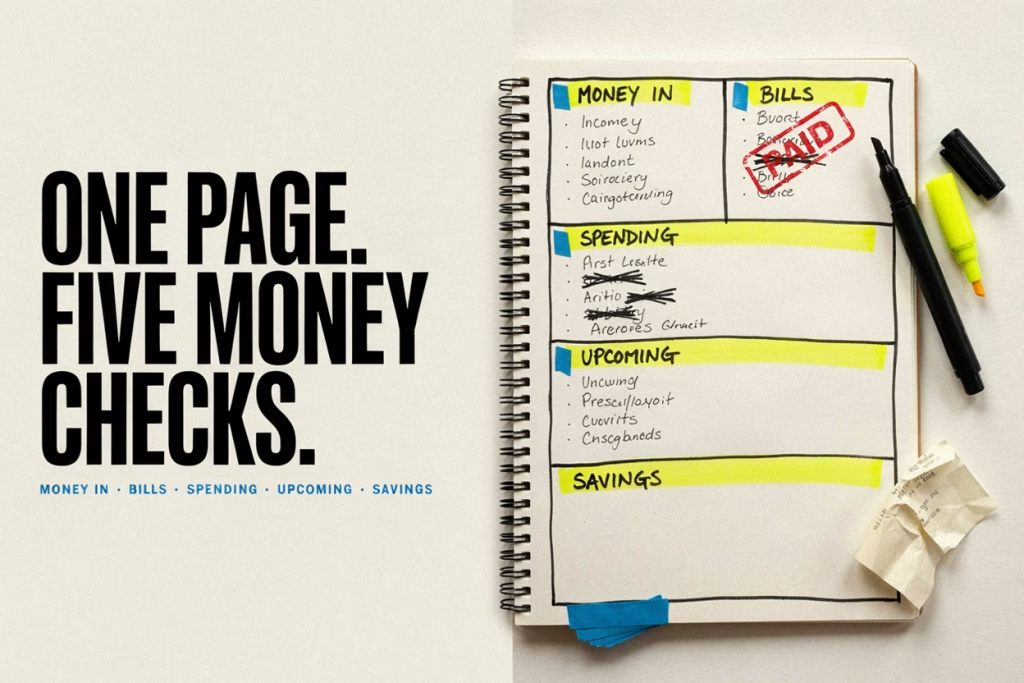
1. Money In
List your expected income for the month.
This might include:
- Wages
- Freelance income
- Government payments
- Child support
- Side-hustle income
- Any other regular payments
If your income changes from week to week, use a conservative estimate rather than planning around your best possible month.
The purpose isn’t to predict everything perfectly. It’s to give the rest of your plan a realistic starting point.
2. Fixed Bills
Write down the bills that arrive regularly and are reasonably predictable.
Include the amount and due date for things like:
- Rent or mortgage
- Electricity and gas
- Phone and internet
- Insurance
- Loan repayments
- School or childcare fees
- Streaming services
- Software subscriptions
- Memberships
This section answers one important question: what money is already spoken for?
You may also discover subscriptions you forgot you had, duplicate services or bills that could be renegotiated.
3. Flexible Spending
These are the expenses that change from week to week:
- Groceries
- Petrol or transport
- Takeaway
- Entertainment
- Clothing
- Household purchases
- Personal spending
You don’t have to track these forever. Try recording them for two weeks and see what becomes obvious.
MoneySmart also has a straightforward guide to tracking your spending, including reviewing transactions, identifying patterns and separating essential costs from optional spending.
You might find that the problem isn’t one dramatic purchase. It’s the seven little convenience purchases you barely noticed.
Or you might discover that your grocery spending is perfectly reasonable and the real issue is an annual bill you never planned for.
The journal gives you evidence instead of guesses.
4. Upcoming Expenses
This is the page that can save you from the greatest amount of last-minute chaos.
Keep a running list of expenses that are coming but aren’t part of your normal weekly routine:
- Car registration and servicing
- Birthdays
- School expenses
- Medical appointments
- Annual subscriptions
- Holidays
- Christmas
- Vet bills
- Replacing appliances
- Insurance renewals
Add an approximate amount and the month it will be needed.
An expense isn’t necessarily unexpected just because it doesn’t happen every month. Once you can see it coming, you have more options.
5. Savings Goals
Give each savings goal its own small section rather than putting all your savings into one vague pile.
For example:
- Emergency buffer
- Travel
- Christmas
- New laptop
- Car repairs
- Concert tickets
- House deposit
Write down the total amount you want, what you have already saved and the next contribution you plan to make.
A goal becomes far more useful when it changes from “I should save more” to “I’m transferring $25 to the travel fund on Friday.”
MoneySmart’s free Savings Goals Calculator can help you estimate how much you need to save regularly and how long it may take to reach a particular goal.
If you want to check all your figures digitally, you can also use the Australian Government’s free MoneySmart Budget Planner to compare your income and expenses.
The 10-Minute Weekly Money Reset
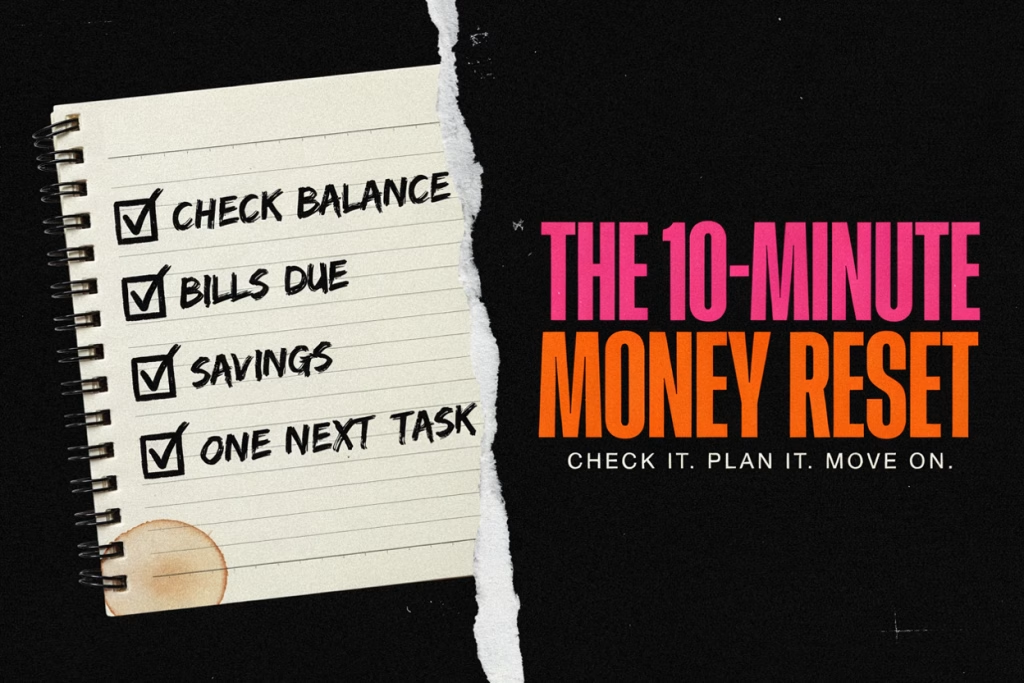
The easiest way to make money journaling work is to attach it to a short weekly reset.
This does not need to become a Sunday-night financial summit. Ten minutes is enough.
It’s the same low-pressure approach I use in my guide to journaling for productivity: create a small system that makes the next useful action easier to see.
Once a week:
- Check your current account balance.
- Look at the bills due over the next seven days.
- Record any spending you want to keep an eye on.
- Check whether an unusual expense is approaching.
- Move money into savings if you can.
- Write down one financial task for the coming week.
That task might be:
- Cancel the subscription
- Compare electricity plans
- Pay the school invoice
- Submit a reimbursement claim
- Transfer $20 to savings
- Check when the insurance renewal is due
- Return something before the refund period ends
One completed task is more valuable than three pages of financial guilt.
Try a Payday Plan
If monthly budgeting feels too abstract, plan one payday at a time.
Before the money arrives, divide it into four simple groups.
Must Pay
Bills and essential expenses due before your next payday.
Everyday Spending
Groceries, transport and normal day-to-day costs.
Future You
Savings, upcoming annual expenses or extra debt repayments.
Life Is Still Allowed
Money you can spend without having to hold an internal court case over every coffee.
This doesn’t need to be a rigid percentage system. The amounts will change depending on your income, responsibilities and what is happening that fortnight.
The goal is simply to decide where the money needs to go before it quietly disappears.
Practical Money Journal Page Ideas
You don’t need dozens of elaborate spreads. Start with the pages that solve an actual problem.
The Bills-at-a-Glance Page
Create four columns:
- Bill
- Amount
- Due date
- Paid
Keep the entire month visible on one page.
The Subscription Audit
List every subscription, its cost and how often you actually use it.
Mark each one:
- Keep
- Cancel
- Review later
Even if you cancel nothing, you will finally know what you are paying for.
The “Not This Month” List
Write down things you want but don’t need immediately.
Revisit the list after 30 days. Some items will still matter. Others will look like messages sent by a completely different version of you.
This isn’t a punishment list. It simply creates a pause between wanting something and automatically buying it.
The Annual Expenses Calendar
Give each month a small box and add any non-monthly expenses you expect.
January might include school supplies. March might include car registration. December will inevitably contain more than December has any right to contain.
Seeing these costs across the year makes them easier to prepare for.
The Savings Ladder
Choose one goal and divide it into small milestones.
If you want to save $500, create ten $50 steps. Colour in or tick off each one as you go.
Small visible progress is much more motivating than repeatedly staring at the full amount.
The Money Admin List
Keep a running list of all those tiny financial jobs that are easy to avoid:
- Find the missing invoice
- Update payment details
- Claim a rebate
- Cancel a free trial
- Check a suspicious charge
- Download a statement
- Compare insurance prices
Choose one during each weekly reset.
Useful Money Journaling Prompts
Because this is a productivity tool, your prompts should lead somewhere practical.
Try:
- What bills are due before my next payday?
- What expense is most likely to catch me off guard this month?
- Which subscription or recurring payment should I review?
- What did I buy recently that wasn’t worth the cost?
- What purchase made everyday life noticeably easier?
- Where could I save money without making myself miserable?
- What financial task have I been avoiding?
- What do I need to start putting money aside for now?
- What is one realistic savings action I can take this week?
- What information do I need before making my next money decision?
You don’t need to answer all of them. Pick the question that helps you take the next useful step.
Don’t Turn It Into Another Impossible Routine
The danger with any new planning system is building something so detailed that maintaining it becomes the job.
Your money journal does not need:
- Every transaction copied from your bank account
- Fifteen perfectly defined spending categories
- A daily update schedule
- Decorative trackers you’re scared to mess up
- A flawless plan for the entire year
If you miss two weeks, open it again.
If tracking every purchase becomes annoying, stop and keep only the bills and upcoming-expenses pages.
If your circumstances change, change the system.
A useful money journal should reduce mental clutter, not give you another reason to feel behind.
Money Journaling and Life Admin
Money tasks rarely exist on their own.
A bill might require a phone call. A refund might need a receipt. A renewal might involve comparing providers. A savings goal might depend on booking leave, checking prices or making a larger household plan.
That’s why money journaling fits naturally into a broader life-admin routine.
Your money journal tells you what needs attention. Your weekly planning system gives you somewhere to put the task.
Ready to Get Your Money Admin Out of Your Head?
You don’t need another complicated budgeting system. You need somewhere to put the bills, dates, priorities and small tasks that keep circling your brain.
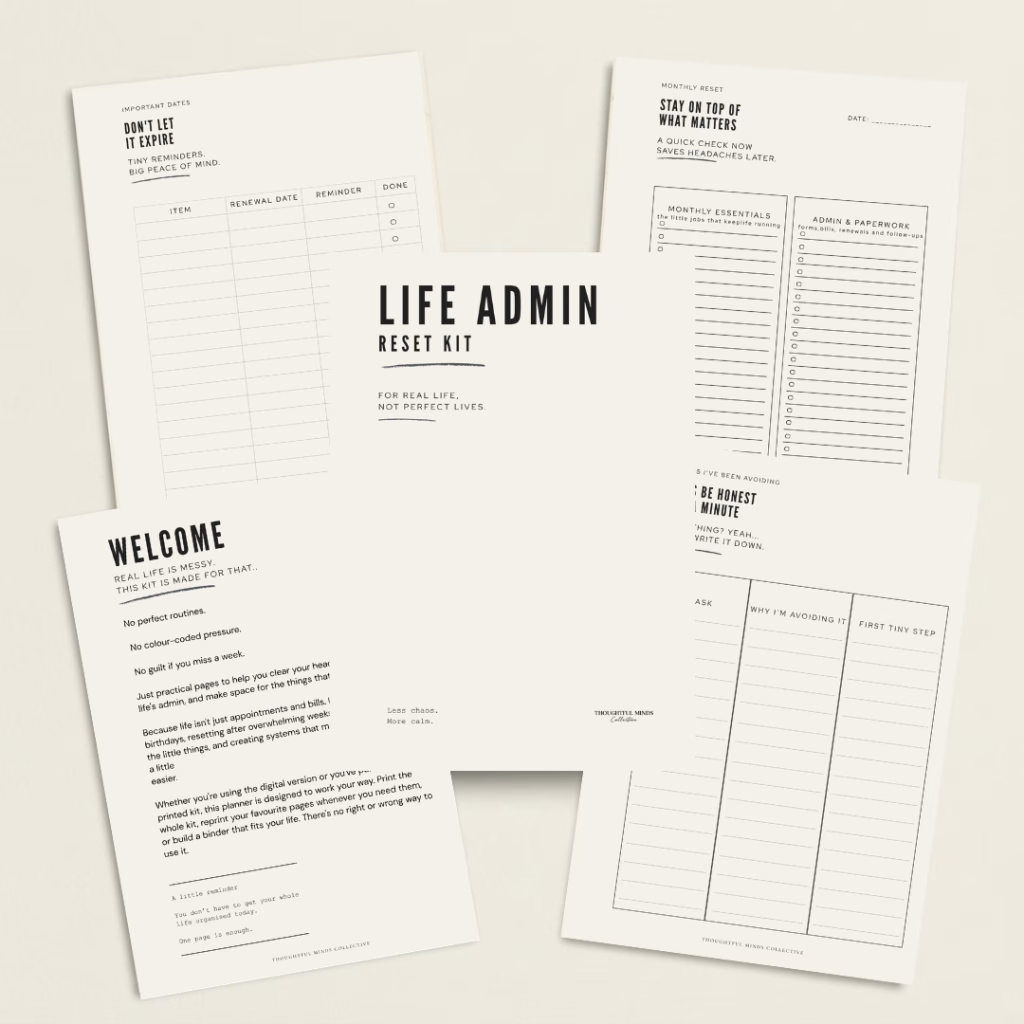
The Life Admin Reset Kit includes printable pages for organising bills, appointments, weekly priorities and all those jobs you keep meaning to deal with.
Print the pages you need, skip the ones you don’t and build a system that works with your actual life.
Instant Download A$12.95
Includes A4 + A5 sizes, plus an A4 low-ink version.
What If the Problem Isn’t Organisation?
Sometimes you know exactly what is coming in and going out, but money still brings up shame, fear, avoidance or conflict.
That requires a different kind of reflection.
If you want to explore the beliefs, memories and emotions influencing your financial habits, try these 15 money journaling prompts that reveal why you spend.
That article focuses on the emotional side of your relationship with money. This guide focuses on the practical side.
You may find that you need both but they are not the same job.
Final Thoughts: Make Your Money Easier to See
Money journaling won’t magically increase your income or make every expense predictable.
What it can do is stop your financial life from existing as a collection of half-remembered due dates, vague worries and unopened emails.
Start with one page.
Write down:
- What money you have available
- What needs to be paid next
- What future expense you need to prepare for
- One money task you can complete this week
That’s enough.
You aren’t trying to become a finance expert. You’re building a small, repeatable system that helps you notice what is happening and decide what to do next.
And that is far more useful than pretending you’ll remember it all.