

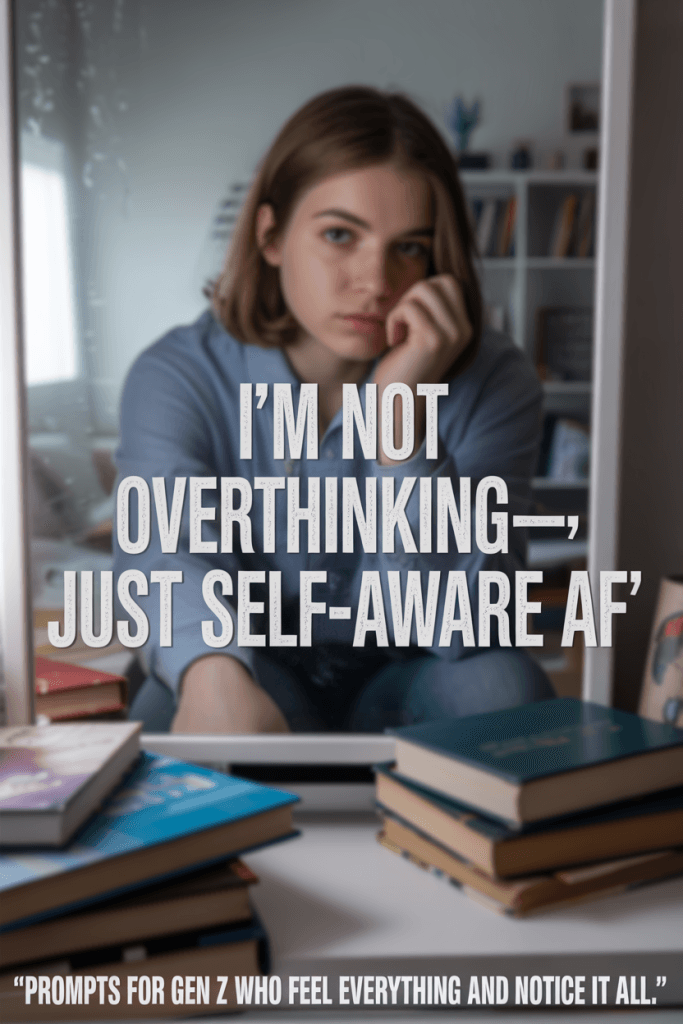
Gen Z might just be the most self-aware generation yet—and also the most emotionally exhausted. You can name all your attachment styles, your Enneagram number, your moon sign… but when it comes to actually dealing with your feelings, the spiral hits.
That’s where journaling comes in. Not the aesthetic kind. The scribbled-thoughts-at-2-AM kind.

Why We’re So Self-Aware (And Still Kinda Lost)
From TikTok therapy to emotional literacy becoming trendy, Gen Z grew up in a world of constant self-analysis. We’ve been trained to understand ourselves, but we haven’t always been taught how to hold what we find.
It’s easy to talk about trauma responses and red flags online. It’s harder to sit with our thoughts when we’re spiraling. Journaling offers a pause—a low-stakes, judgment-free zone to actually hear yourself.
This is especially helpful when your brain feels like a browser with 37 tabs open. Instead of trying to close all of them, you get to write each one out. No pressure to solve, just space to see.
Platforms like BetterHelp offer accessible therapy, but if that’s not in your budget right now, journaling is your free, low-pressure starting point. It meets you exactly where you are.
Why Journaling Helps When You’re Overthinking
Journaling helps you:
- Get your thoughts out of the mental echo chamber
- Notice what you repeat (a.k.a. what you really need to unpack)
- Show yourself patterns you might be too in-your-head to see
- Practice naming emotions instead of avoiding them
- Create mental space so you can think clearly again
You don’t need to write perfectly or every day. You just need to start.
15 Journal Prompts for the Chronically Self-Aware:
- What’s one thought I keep having on loop?
- What am I scared will happen if I stop overthinking?
- What version of me am I performing today?
- What emotion do I try to rationalize instead of feel?
- What would it mean to trust myself more?
- How do I define ‘being enough’?
- What do I want people to believe about me—and why?
- What do I do when I feel misunderstood?
- Who am I outside of other people’s expectations?
- What have I outgrown but haven’t let go of?
- What fear drives most of my decisions?
- What do I avoid feeling at all costs?
- If I stop trying to figure it all out, what could I enjoy more?
- What’s something I know about myself now that I didn’t last year?
- What do I actually need—not what I think I should need?
If you’re craving more ways to stop judging your thoughts and start listening to them, try this guide to journaling without self-judgment. You deserve to feel safe inside your own mind.
Also, check out this piece from Bent Health on Gen Z is reshaping the dialogue around mental health.

