

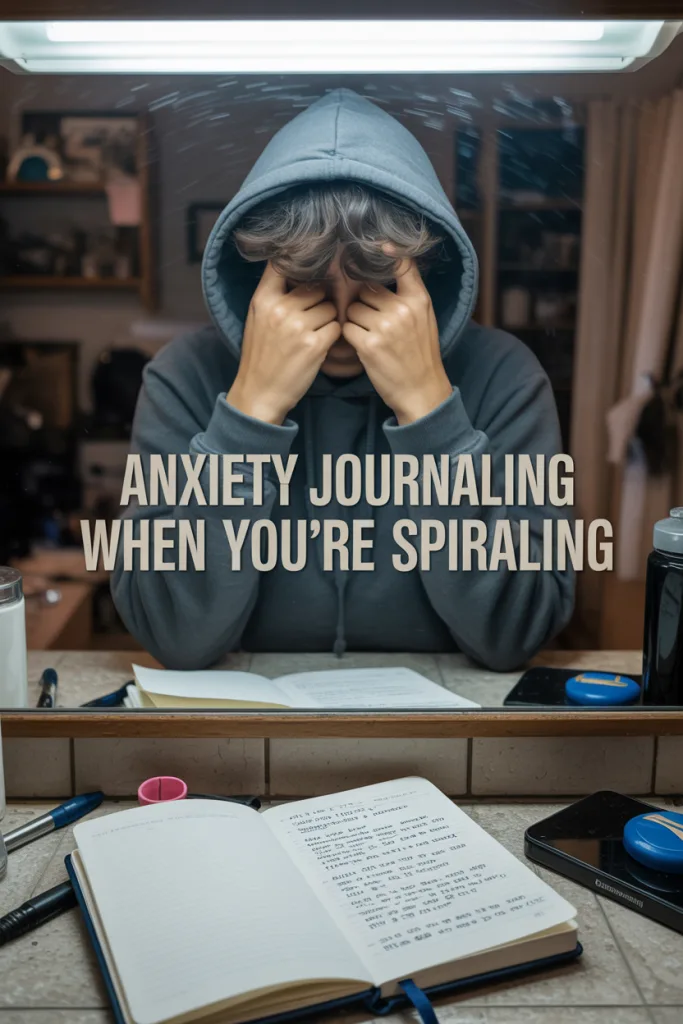
So here’s the deal: anxiety is loud. It’s constant mental tabs open. It’s the “what if” thoughts that won’t shut up, the racing heart at 2AM, the fake scenarios on loop, the need to control everything just to feel okay.
And if you’re reading this, you’ve probably heard journaling might help. But maybe you’ve also thought:
“How is writing in a notebook gonna fix this?”
Totally valid. But let’s break that down. This isn’t about writing the perfect journal entry or tracking every breath you take. This is about building a tool—one that helps your brain slow down, makes the spiral less sharp, and gives you a space to say the things you don’t want to say out loud.
Because sometimes the journal is the therapist.
Okay But… Does Journaling Really Help With Anxiety?
The short answer? Yes. The long answer? It’s not magic—but it works.
Writing down what you’re feeling helps your brain process it differently. According to Harvard Health Publishing, expressive writing can lower stress and help manage trauma responses. Basically, putting it on paper makes it feel a little less like it’s running your whole life.
Especially for Gen Z, who often feel like we’re stuck between “you’re too sensitive” and “just meditate,” journaling becomes a middle ground. It’s private. It’s real. And it’s free.
Not sure where to start? Here’s a full beginner’s guide to journaling that breaks down how to build a habit that actually sticks.
What Journaling Actually Does (That Helps Your Anxiety)
Let’s talk therapy tools—because journaling is one of them. Here’s how it helps:
🧠 1. It Slows the Spiral
When your thoughts are bouncing like a pinball machine, journaling acts like a slow-motion filter. You write one thing at a time. No multitasking. No chaos.
🔎 2. It Helps You Name the Thing
Ever feel anxious but can’t even explain why? That’s called emotional flooding. Writing helps name the feeling—because “I feel overwhelmed” hits differently than “I’m afraid I’ll fail and everyone will see.”
🧘♀️ 3. It Gives You Back Control
You can’t control your anxiety, but you can control how you respond to it. Writing is an action. It’s a way to respond with intention instead of just reaction.
🌡 4. It Tracks Patterns
When you journal consistently, you start seeing connections: what triggered you, what helped, what made it worse. And that’s data you can actually use.
Noticing your patterns is one of the first steps to building self-awareness—which is kind of a secret superpower when you’re trying to manage anxiety.
💬 5. It’s a Safe Place to Say Anything
The journal doesn’t judge. You can be irrational, angry, sad, dramatic, numb—whatever. You don’t have to filter. You don’t have to explain. You just write.
What Kind of Journaling Helps the Most?
There’s no one-size-fits-all. But for anxiety? Here are a few styles that work especially well:
✍️ Freewriting (aka Brain Dumps)
No structure. No prompt. Just go. Let your mind throw up on the page. This is ideal for when you’re overwhelmed and don’t know where to start.
🔄 Check-In Pages
Ask yourself:
- How’s my body feeling right now?
- What thoughts are stuck on repeat?
- What do I need today?
These act like a grounding pause—think of them as emotional hygiene.
🔁 Trigger + Response Logs
Track what set you off and what you did about it. Over time, this becomes your personal anxiety map.
🫶 Soothing Ritual Pages
Write a list of what helps: playlists, grounding techniques, reminders, safe people. Keep this close when things get loud.
You can find pages like these in our Mindful AF Journal Kit, which includes therapy-style prompts and reflection space for just $6.

10 Anxiety Journal Prompts for When Your Mind Won’t Shut Up
These aren’t cute. They’re not aesthetic. They’re real. Use them when you’re spiraling, when you’re numb, when you’re about to cancel everything:
- What’s actually happening right now—fact, not feeling?
- What’s the story my brain is telling me? Is it true?
- What triggered me today and how did I react?
- What do I not want to admit I’m scared of?
- What would I tell my best friend if they were feeling this?
- What’s one thing I can control right now?
- What does my body feel like right now? Can I name each sensation?
- What helped the last time I felt like this?
- What would “calm me” say to “panicked me”?
- What’s something I need, but don’t feel allowed to ask for?
If you’re more of a daily prompt person, check out our list of low-effort journaling prompts for when you just need to get something on the page.
Therapy Tools, But DIY
Look—therapy is amazing if you can access it. But it’s not always available. The cost, the waitlists, the nerves—it’s a lot. That’s where tools like journaling step in.
They’re not a replacement for professional care, but they are real. You can build your own coping system, page by page. You can create a journal that functions like a therapist: reflective, honest, and just there when you need it.
And you’re not alone in this. BetterHelp even lists journaling as one of the most effective self-guided practices for people dealing with anxiety and emotional overwhelm.
Want a Printable Anxiety Journal That Actually Gets It?
We made one. The Mindful AF Journal Kit includes:
- Body Feels Map (to track how anxiety shows up physically)
- Trigger Tracker
- Scribble pages for raw emotion
- Grounding toolkit
- Anxiety-specific prompts that don’t sugarcoat it
It’s printable, minimal, and it’s $6. Because healing should be accessible.
→ Grab the Mindful AF Kit here
Final Thought
You don’t have to write a novel. You don’t have to do it every day. You just have to start. One page. One moment of slowing the spiral. One breath between thoughts.
Because your journal doesn’t need to have the answers.
It just needs to hold the truth.
And that truth is: you’re allowed to feel this. And you’re allowed to heal from it.
🛑 Real Talk, Real Support
This article is for informational and emotional support purposes only.
It’s not medical advice or a replacement for professional mental health care. Journaling is a powerful tool—but if your anxiety is affecting your ability to function, reach out. You don’t have to go through it alone.
If you’re in crisis or need support, here are some global mental health helplines that can help:
🌍 Global Mental Health Resources
- Australia:
Lifeline – 13 11 14 (lifeline.org.au)
Beyond Blue – 1300 22 4636 (beyondblue.org.au) - United States:
988 Suicide & Crisis Lifeline – Call or text 988 (988lifeline.org) - United Kingdom:
Samaritans – 116 123 (samaritans.org) - Canada:
Talk Suicide Canada – 1-833-456-4566 (talksuicide.ca) - International (Text-Based Support):
Crisis Text Line – Text HOME to 741741 (US), 686868 (Canada), 85258 (UK)
(crisistextline.org)

