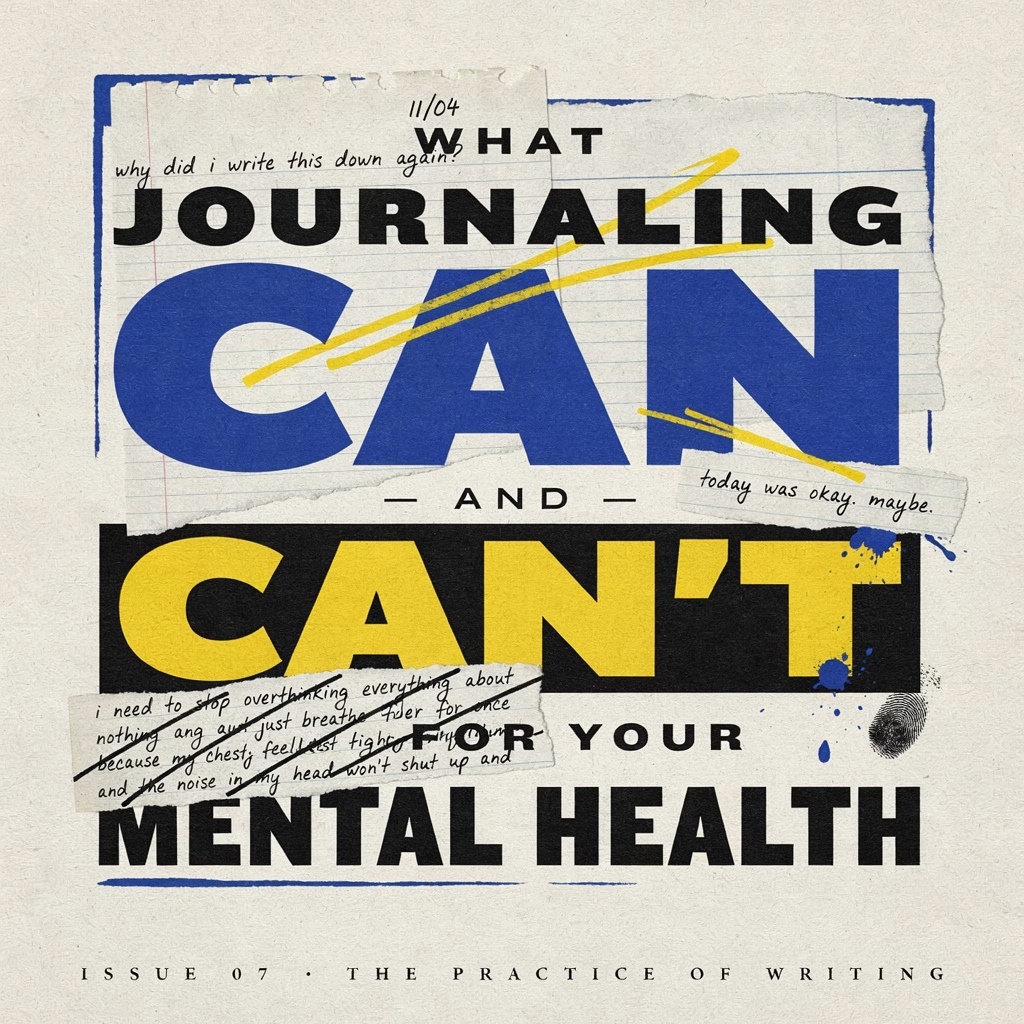
Sometimes journaling when your thoughts feel too messy, it feels impossible because your brain isn’t calm enough to make neat little reflections. I’ve had days where there were so many thoughts in my head that my brain basically short-circuited, and every time I opened a journal I immediately thought, “I don’t even know where to start.” If that’s where you’re at right now, this guide is for you.
Your Thoughts Don’t Need to Be Organized Before You Start
One of the biggest lies about journaling is that you need clarity before you begin.
You don’t.
A lot of people avoid journaling because they think they need:
- a deep insight
- a beautiful routine
- perfect handwriting
- calm emotions
- a structured format
Meanwhile your brain is buffering like an old laptop trying to survive 37 open tabs.
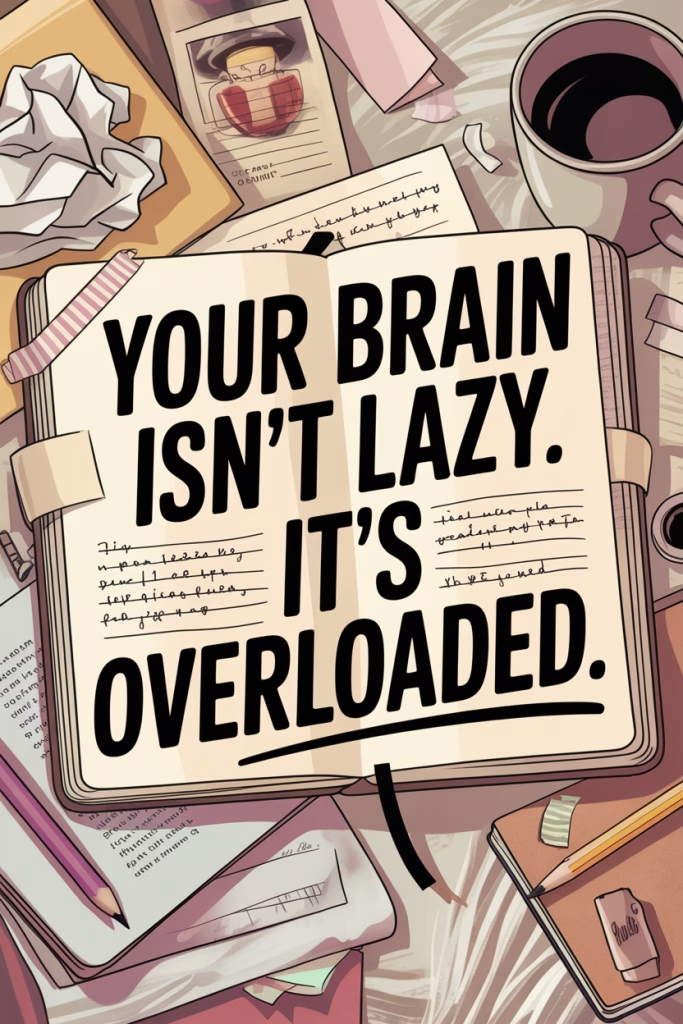
Messy thoughts are not a sign that you’re “bad” at journaling. They’re usually a sign that your brain is overloaded, overstimulated, emotionally backed up, or exhausted.
Sometimes writing is how you find the clarity not proof that you already have it.
If you’re still figuring out what kind of journaling actually works for your brain, our guide on different journaling styles for beginners can help you find a method that feels less overwhelming and more natural to stick with.
If you’re completely new to journaling, you might also like reading our guide on beginner-friendly styles: “Journaling Styles for Beginners: Find the Best One for You.”

Stop Trying to Make Your Journal Sound Smart
A lot of people accidentally turn journaling into performance art.
Your journal does not need:
- perfect grammar
- aesthetic paragraphs
- deep life lessons
- poetic metaphors
- productive takeaways
You can literally write:
“Everything feels weird and I don’t know why.”
That still counts.
Honestly, some of the most helpful journaling happens when you stop trying to sound insightful and just start being honest.
Your brain is probably already spending enough energy trying to hold everything together publicly. Your journal can be the one place where thoughts are allowed to exist unfinished.
Try a Brain Dump Instead of “Real” Journaling
If your thoughts feel tangled, structured journaling can feel overwhelming.
Instead, try a brain dump.
A brain dump is basically:
- no rules
- no structure
- no pressure
- no editing
You just write everything down exactly as it appears.
Examples:
- random worries
- unfinished thoughts
- things you forgot to do
- emotions you can’t explain
- weird little anxieties
- overstimulation
- resentment
- exhaustion
- “I don’t know why I’m upset” thoughts
Messy journaling is still journaling.
Actually, for overwhelmed people, it’s often the most useful kind.
According to the University of Rochester Medical Center journaling guide, expressive writing can help reduce stress, support emotional regulation, and improve mental clarity over time.
Start Smaller Than You Think
You do not need to fill pages.
You do not need a 45-minute morning routine.
You do not need a candle, matcha, five highlighters, and a spiritual awakening.
Sometimes all you need is:
- three sentences
- one honest paragraph
- a list
- a note in your phone
- one line before bed
Tiny journaling still counts.
This is especially important if you’ve been emotionally overwhelmed lately. Big routines can feel impossible when your nervous system already feels stretched thin.
If life has been feeling emotionally loud, overstimulating, or impossible to mentally keep up with lately, you might also connect with our guide called “The Everything Feels Too Loud Guide.”
Use Prompts That Feel Human
A lot of journaling prompts online feel robotic.
If your thoughts are messy, try prompts that sound more like real life.
Examples:
- What’s taking up the most emotional space in my brain right now?
- What am I avoiding thinking about?
- What’s been making me feel emotionally tired lately?
- What would feel comforting right now?
- What feels unfinished?
- What’s one thing I wish people understood about me lately?
- What emotion keeps following me around recently?
- What am I pretending doesn’t bother me?
You don’t need to answer perfectly.
Even partial answers help.
A lot of emotional overwhelm comes from avoidance building up slowly over time. If you’ve been feeling stuck, disconnected, or behind on life lately, “I’ve Been Avoiding My Life” might help you reset gently without turning your entire life upside down.
Your Journal Does Not Need to Be Positive
Not every journaling session needs to end with gratitude and personal growth.
Sometimes the healthiest thing you can do is admit:
- you’re overwhelmed
- your brain feels cluttered
- you’re emotionally exhausted
- things feel weird lately
- you don’t fully understand yourself right now
That honesty matters.
There’s a huge difference between journaling to process your emotions and journaling to perform emotional wellness.
Your journal is allowed to be messy, contradictory, frustrated, uncertain, emotional, numb, or unfinished.
That’s real life.
Try “Ugly Journaling”
Ugly journaling is exactly what it sounds like.
No aesthetic pressure.
No perfect layouts.
No Pinterest-worthy spreads.
Just honesty.
Cross things out.
Write sideways.
Use bullet points.
Write one sentence fifty times.
Switch topics halfway through.
The point is emotional release — not visual perfection.
Ironically, a lot of people become more consistent with journaling once they stop trying to make it look impressive.
If You Feel Emotionally Numb, Start With Physical Feelings
Sometimes your brain genuinely doesn’t know what it’s feeling emotionally yet.
That’s okay.
Instead of asking:
“How do I feel?”
Ask:
- Is my body tense?
- Do I feel heavy or restless?
- Am I mentally tired?
- Am I overstimulated?
- Do I feel emotionally flat?
- Have I been doomscrolling nonstop?
- What’s been draining me lately?
Starting with physical sensations can make journaling feel less intimidating.

You Don’t Need to “Fix Yourself” Before You Write
A lot of people delay journaling because they think they need to become:
- calmer
- more disciplined
- more emotionally stable
- more organized
before they begin.
But journaling is often the thing that helps create those shifts slowly over time.
Not perfectly.
Not instantly.
Not aesthetically.
Just honestly.
Some days your journal will contain deep reflections. Other days it’ll contain:
“I’m tired and everything feels annoying.”
Both are valid.
Final Thoughts
If your thoughts feel messy right now, you are not failing at journaling.
You are probably just overwhelmed, emotionally overloaded, mentally cluttered, or trying to process too much at once.
Your journal does not need to be beautiful to help you.
It just needs to be honest enough that you stop carrying every thought alone in your head.
Sometimes the first step isn’t finding clarity.
It’s finally giving your thoughts somewhere else to go.