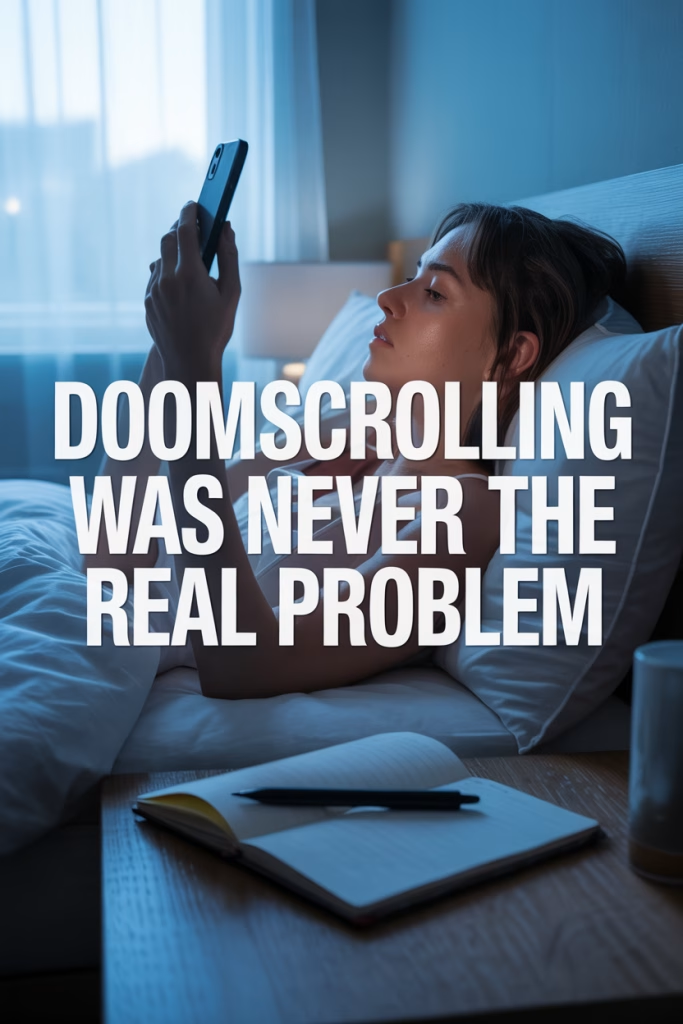
Sometimes I pick up my phone for one tiny thing and suddenly an hour disappears. I don’t even feel entertained afterward just weirdly flat, overstimulated, and more disconnected from myself than before. My brain starts feeling loud in that specific modern way where everything is moving too fast but somehow nothing meaningful is actually happening. If you’ve been feeling that too, this guide is for you.
We live online now. That’s just reality. Most of us wake up to notifications, scroll while eating, watch videos while trying to relax, and reach for our phones the second life gets quiet. It’s not a personal failure. Apps are literally designed to keep us there.
But eventually your brain starts asking for space.
Not productivity. Not optimisation. Just space.
Why Your Phone Suddenly Feels Exhausting
Phones aren’t just “bad because screen time.” The real issue is constant input.
Your brain barely gets a second to process anything anymore:
- emotions
- boredom
- grief
- stress
- identity
- loneliness
- creativity
The second discomfort appears, there’s another scroll waiting.
A recent piece from The Guardian explored how journaling helps people process emotions, slow racing thoughts, and reconnect with themselves in a world that constantly demands attention. That’s probably why so many people are turning back toward analogue habits lately not because they want to become perfect wellness influencers, but because they’re exhausted.
Researchers from American Psychological Association have discussed how constant digital stimulation affects emotional regulation and mental fatigue.
That’s why journaling can help so much here.
Not because it “fixes” you.
Because it interrupts the noise long enough for you to hear yourself think again.
Journaling Instead of Doomscrolling
The goal isn’t becoming one of those people who throws their phone into a lake and suddenly wakes up at sunrise doing yoga.
The goal is creating tiny moments where your brain can breathe.
Journaling works especially well because it slows your thoughts down physically. You stop consuming and start noticing.
Even five minutes helps.
Especially if you’re emotionally exhausted.
If you’re newer to journaling, you might also like my beginner guide:
The Ultimate Beginner’s Guide to Journaling
Signs Your Brain Might Need a Digital Reset
You don’t need to fully quit social media to recognise your nervous system is overloaded.
Some signs:
- you open apps automatically without thinking
- silence feels uncomfortable
- you feel mentally “foggy” all the time
- your attention span feels cooked
- you’re constantly comparing yourself to strangers online
- you consume content all day but still feel empty
- you struggle to sit with your own thoughts
- you feel emotionally numb after scrolling
A lot of people think burnout only comes from work. But emotional overstimulation can absolutely drain you too.
The “Get Off My Phone” Journaling Method
This doesn’t need to be aesthetic or deep.
Messy thoughts count.
Half sentences count.
Angry scribbles count.
Try this simple structure:
1. Brain Dump First
Write everything currently floating around in your head:
- thoughts
- worries
- random reminders
- things you’re avoiding
- emotions you haven’t processed
No structure needed.
Just empty the tabs.
2. Ask Yourself What You’re Actually Looking For
A lot of scrolling is emotional.
Sometimes we’re looking for:
- distraction
- comfort
- validation
- connection
- numbness
- inspiration
- escape
Try journaling honestly about this.
You might realise the app itself was never really the thing you wanted.
3. Replace One Scroll Session
Not all of them. Just one.
Instead of opening TikTok, Instagram, or YouTube automatically:
- journal for 10 minutes
- sit outside
- listen to music without multitasking
- make tea slowly
- write one page badly
Small interruptions matter.
Journal Prompts for Digital Overwhelm
Here are some prompts specifically for when your brain feels overstimulated:
- What emotions am I avoiding by staying online constantly?
- When do I reach for my phone the most?
- How do I feel after scrolling for an hour?
- What parts of myself feel disconnected lately?
- What would feeling “present” actually look like for me?
- What kind of content genuinely inspires me instead of draining me?
- When was the last time I felt calm without needing stimulation?
- What do I miss about myself lately?
- What would happen if I let myself be bored again?
- What am I craving emotionally right now?
If you enjoy deeper emotional prompts, you might also like:
Deep Prompts for When You’re in a Funk
You Don’t Need a Perfect Digital Detox
A lot of online advice turns healing into another performance.
Delete every app. Wake up at 5am. Become a minimalist forest person.
Realistically? Most of us just need healthier space between ourselves and constant stimulation.
Maybe your version looks like:
- no phone for 20 minutes after waking up
- journaling before bed instead of scrolling
- leaving your phone in another room sometimes
- taking “quiet walks” without content playing
- having one offline ritual each week
Tiny changes are still changes.
The Weird Thing About Quiet
At first, less scrolling can feel uncomfortable.
That’s normal.
When constant stimulation disappears, thoughts and emotions get louder before they settle down.
A lot of people mistake that discomfort as failure and immediately return to distraction.
But sometimes your brain is finally catching up with itself.
And honestly? That’s where journaling becomes powerful.
Not because it makes you instantly healed or productive.
Because it gives your thoughts somewhere to land besides the internet.
Final Thoughts
You don’t need to completely disappear offline to reconnect with yourself again.
You probably just need more moments where your brain isn’t being pulled in fifty directions at once.
A journal can become that space.
Not curated. Not perfect. Just real.
And maybe that’s the thing a lot of us are actually craving right now.