There was a point where I started searching for soft productivity because traditional productivity advice was making me feel worse instead of helping me.
Every video, article, planner, and “that girl” morning routine made it seem like everyone else had somehow unlocked the secret to life while I was drowning in tabs open in my brain. Wake up at 5am. Meditate. Journal perfectly. Drink green juice. Answer emails. Exercise. Build a business. Read ten pages. Meal prep. Stay consistent. Don’t waste time. Don’t fall behind.
Meanwhile, some days I was just trying to answer one text message and remember where I left my water bottle.
If your brain has been feeling overloaded lately, you might also relate to our “Everything Feels too Loud Guide” on slowing down when everything feels mentally noisy and emotionally overwhelming.
The truth is, a lot of us aren’t lazy. We’re overloaded.
We’re trying to function in a world that constantly demands more attention, more output, more optimization, more hustle, more urgency. Somewhere along the way, productivity stopped being about supporting our lives and started becoming a performance.
That’s where soft productivity comes in.
Soft productivity isn’t about “doing nothing.” It’s about creating systems that help you function realistically without treating yourself like a machine. It’s productivity that leaves room for exhaustion, emotions, rest, mental health, bad days, and actual human life.
And honestly? That’s probably why it works better.
What Is Soft Productivity?
Soft productivity is a gentler, more sustainable approach to getting things done.
Instead of forcing yourself into rigid systems that leave you burnt out after three days, soft productivity focuses on realistic routines, flexible structure, energy awareness, and consistency over perfection.
It asks questions like:
- What actually helps me function?
- What systems reduce stress instead of creating more?
- How can I support myself instead of constantly trying to “fix” myself?
Soft productivity still values goals, habits, creativity, and growth. But it removes the pressure to become a perfectly optimized human being.
Because you are not a startup.
You are a person.
Soft Productivity vs Toxic Productivity
A lot of us grew up absorbing productivity advice that was quietly rooted in shame.
If you weren’t productive enough, disciplined enough, organized enough, or successful enough, the assumption was that you just weren’t trying hard enough.
Soft productivity challenges that mindset completely.
| Toxic Productivity | Soft Productivity |
|---|---|
| Hustle constantly | Rest intentionally |
| Your worth = your output | Your worth exists regardless |
| Rigid routines | Flexible systems |
| Push through exhaustion | Listen to your energy |
| Perfection or failure | Small progress counts |
| Productivity as identity | Productivity as support |
Soft productivity says:
You do not need to destroy yourself to prove you care about your life.
Why Traditional Productivity Systems Fail So Many People
The reality is that many productivity systems were built for ideal circumstances.
Perfect sleep. Stable energy. Quiet environments. Unlimited focus. No emotional exhaustion. No overstimulation. No mental health struggles. No doomscrolling. No burnout.
Real life is not like that.
A lot of people are trying to function while carrying:
- emotional exhaustion
- digital overwhelm
- anxiety
- mental load
- financial stress
- burnout
- overstimulation
- constant notifications
- pressure to always be available
- comparison culture online
And then productivity culture tells them to simply “try harder.”
Research has increasingly linked chronic stress and digital overload to burnout, emotional exhaustion, and difficulty concentrating in everyday life.
Psychology Today – Is Digital Overload Increasing Your Anxiety
That’s why so many people end up stuck in the same cycle:
- Feel behind
- Panic
- Overwork
- Burn out
- Collapse
- Recover
- Repeat
It’s not a motivation problem. It’s a sustainability problem.
This is especially common for people stuck in cycles of avoidance, exhaustion, and emotional overwhelm something we talk more about in our realistic “I’ve Been Avoiding My Life” reset guide for people who feel disconnected from their own lives.
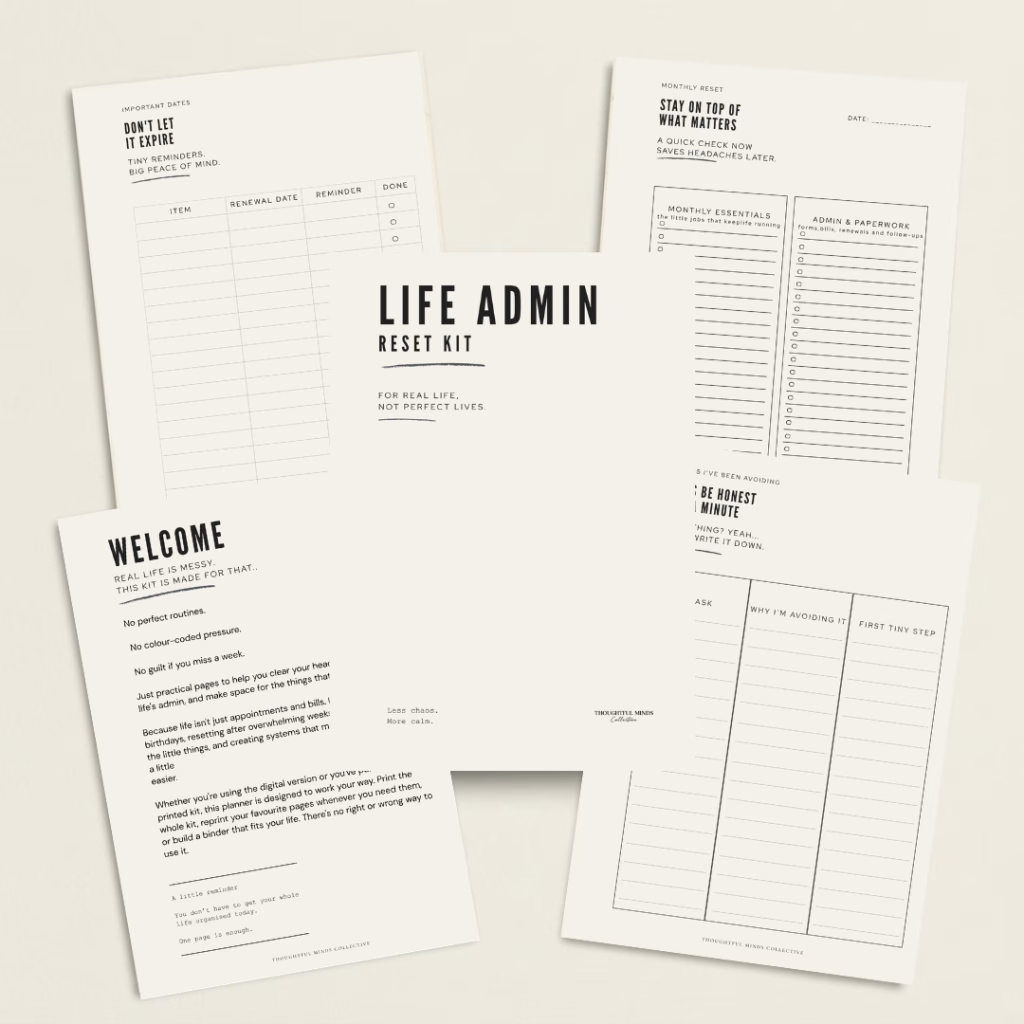
WANT TO GET YOUR LIFE ADMIN SORTED WITHOUT THE PRODUCTIVITY OVERHAUL?
The Life Admin Reset Kit gives you simple printable pages to get the bills, appointments, forgotten tasks and mental clutter out of your head and work through them at your own pace.
Less pressure. Less mental clutter. More done.
Signs You Might Need a Soft Productivity Approach
You might benefit from soft productivity if:
- your to-do list makes you anxious
- you constantly feel “behind”
- you’re productive for a few days, then crash
- planners stress you out more than they help
- rest makes you feel guilty
- you avoid tasks because they feel emotionally overwhelming
- your brain shuts down under pressure
- you spend more time organizing your life than living it
- productivity content makes you feel inadequate
- you tie your self-worth to how much you achieve
A softer approach doesn’t mean lowering your standards for your life.
It means creating standards that don’t destroy your nervous system.
The Core Principles of Soft Productivity
1. Work With Your Energy, Not Against It
Not every day will feel the same.
Some days you’ll have focus and motivation. Other days your brain will feel like static noise. Soft productivity stops expecting identical performance every single day.
Instead of asking:
“How do I force myself to perform?”
Ask:
“What kind of support do I need today?”
Maybe high-energy days are for deep work.
Maybe low-energy days are for admin tasks, tidying, voice notes, or rest.
That still counts.
2. Small Progress Is Still Progress
One of the biggest mindset shifts in soft productivity is learning that tiny actions matter.
Replying to one email matters.
Folding one basket of laundry matters.
Writing one paragraph matters.
Drinking water matters.
Toxic productivity tells us that if we can’t do everything, there’s no point doing anything.
Soft productivity rejects that entirely.
Small progress compounds quietly.
3. Rest Is Part of Productivity
Rest is not a reward you earn after becoming useful enough.
Rest is maintenance.
Your brain cannot operate well when it’s permanently overstimulated, exhausted, or emotionally overloaded. Rest improves creativity, decision-making, focus, emotional regulation, and memory.
Mental health experts consistently emphasize that rest and recovery are essential for long-term wellbeing — not something people need to “earn.”
Psychology Today – Ready, Set…Relax
And honestly? Sometimes the most productive thing you can do is stop forcing yourself for five minutes.
4. Systems Should Reduce Shame
A lot of productivity systems accidentally become tools for self-criticism.
Miss one habit? Failure.
Skip a routine? Failure.
Fall behind? Failure.
Soft productivity focuses on systems that support you instead of punishing you.
A good system should help you recover when life gets messy — not make you feel worse for being human.
5. Consistency Matters More Than Intensity
You do not need to reinvent your life every Monday morning.
Soft productivity values sustainable consistency over dramatic bursts of motivation.
Because realistically?
A gentle routine you can maintain for six months will change your life more than an extreme routine you quit after six days.
Soft Productivity Habits That Actually Help
The 3-Task Rule
Instead of overwhelming yourself with a giant list, choose three realistic priorities for the day.
Not ten.
Three.
This creates clarity without triggering panic.
Brain-Dump Journaling
Sometimes productivity problems are actually overwhelm problems.
Try dumping everything in your head onto paper:
- tasks
- worries
- reminders
- unfinished thoughts
- random mental tabs
Your brain was not designed to hold everything at once.
This is also why journaling and productivity often work so well together.
Related:
- “The ‘Everything Feels Too Loud’ Guide”
- “A Guide to Journaling Without Judging Your Own Thoughts”
- “The Ultimate Beginner’s Guide to Journaling”
Low-Energy Productivity Lists
Create a separate list for low-energy tasks.
Examples:
- replying to one message
- organizing files
- watering plants
- deleting screenshots
- tidying one surface
- listening to a podcast while cleaning
This helps prevent the “I can’t do everything so I’ll do nothing” spiral.
Phone-Free Mornings (Even Brief Ones)
You don’t need a perfect two-hour wellness routine.
Even ten minutes without immediately consuming content can help your brain settle before the chaos of the internet floods in.
One small thing that’s genuinely helped me is checking the time on my phone when I wake up, but not letting myself fully pick it up until I’ve made my coffee first. It sounds tiny, but it interrupts the automatic habit of lying in bed scrolling before my brain has even properly woken up. I’m not perfect at it, but even delaying that flood of notifications, videos, opinions, and noise by fifteen minutes makes my mornings feel calmer and more intentional.
Many wellness researchers now believe constant digital stimulation contributes to attention fatigue and emotional overwhelm, especially when people rarely get uninterrupted mental quiet.
The Guardian – Even without social media, phones have a subtle, damaging effect on our mental health
You do not need to wake up and immediately enter everyone else’s thoughts.
If your screen time has been making your brain feel louder instead of calmer, this guide to getting off your phone without guilt might help.
Tiny Reset Rituals
Soft productivity often works better through transitions instead of strict control.
Examples:
- lighting a candle before working
- making tea before journaling
- putting music on while tidying
- taking a short walk before starting tasks
- resetting your desk for five minutes
These tiny rituals help your brain shift modes more gently.
The Relationship Between Productivity and Mental Load
One of the reasons so many people feel exhausted isn’t because they’re “bad at time management.”
It’s because they’re mentally carrying too much.
Mental load includes:
- remembering things
- emotional processing
- planning ahead
- managing responsibilities
- constant notifications
- social pressure
- invisible labour
- unfinished thoughts
Modern life rarely gives our brains genuine quiet anymore.
We are constantly consuming:
- content
- opinions
- messages
- updates
- urgency
- stimulation
That’s why soft productivity focuses less on maximizing output and more on reducing friction.
Sometimes productivity isn’t about becoming more disciplined.
Sometimes it’s about becoming less overwhelmed.
Productivity Without Burnout Is Possible
Burnout doesn’t always look dramatic.
Sometimes it looks like:
- losing interest in everything
- emotional numbness
- procrastinating constantly
- feeling guilty while resting
- doomscrolling for hours
- struggling to start simple tasks
- feeling tired no matter how much you sleep
The World Health Organization officially recognizes burnout as an occupational phenomenon connected to chronic workplace stress that hasn’t been successfully managed.
WHO.int – Burn-out an “occupational phenomenon”
A lot of people try to solve burnout by becoming more productive.
But burnout is often a sign that your current systems are unsustainable.
Soft productivity asks:
“How can I build a life I don’t constantly need to recover from?”
That question changes everything.
What Soft Productivity Looks Like in Real Life
Soft productivity is not aesthetic perfection.
It might look like:
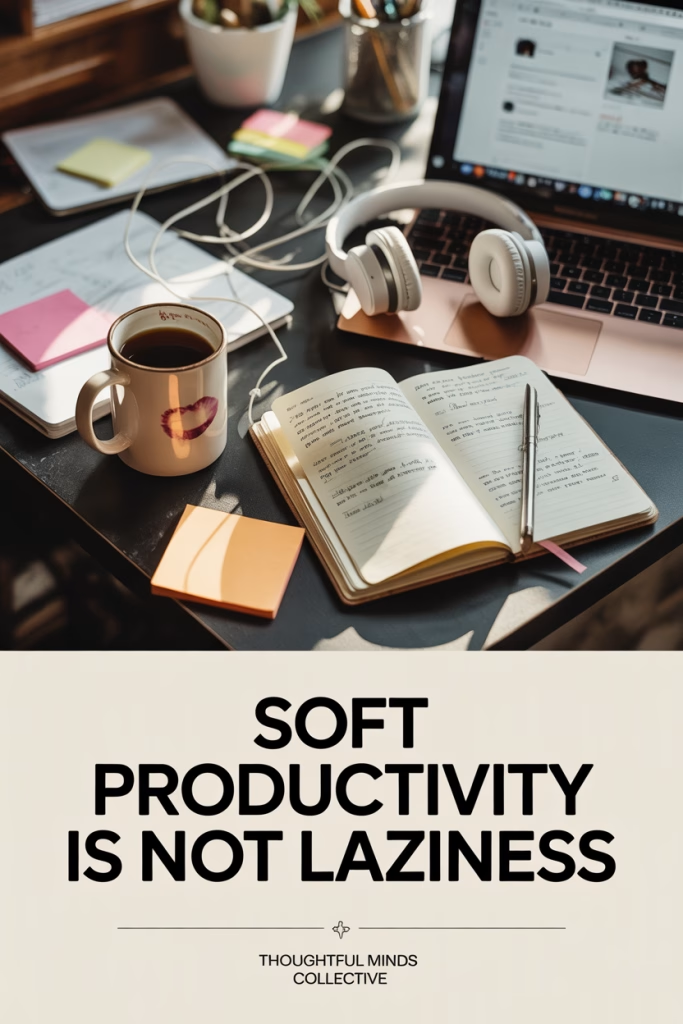
- a messy desk but a finished assignment
- using sticky notes instead of an expensive planner
- taking breaks without guilt
- unfinished laundry during a busy week
- flexible routines
- slow mornings
- resetting after bad days instead of quitting entirely
- building systems around your actual personality
It’s realistic.
And honestly, realism is underrated online.
That’s also why we love realistic productivity approaches for Type B personalities — routines that support your actual life instead of demanding perfection from it.
- “The Chill Girl’s Guide to Getting Sh*t Done”
- The Type B Productivity Guide to Getting Things Done (Without Adding Guilt)
How to Create Your Own Soft Productivity System
Step 1: Identify What Actually Drains You
Not every task drains people equally.
For some people it’s decision fatigue.
For others it’s overstimulation.
For others it’s perfectionism.
Notice your patterns without judging yourself.
Step 2: Build “Bad Day” Systems
Most productivity advice only works on good days.
Soft productivity plans for hard days too.
Ask yourself:
- What can I realistically manage when overwhelmed?
- What helps me restart after burnout?
- What routines feel supportive instead of restrictive?
A sustainable system should survive imperfect days.
Step 3: Reduce Friction
Tiny obstacles can become massive barriers when you’re mentally overloaded.
Examples:
- keep notebooks visible
- simplify routines
- reduce unnecessary decisions
- make tasks easier to start
- prepare things ahead of time gently
Productivity often improves when life becomes less complicated.
Step 4: Stop Treating Yourself Like a Failure
This one matters most.
You cannot shame yourself into long-term wellbeing.
You cannot bully yourself into sustainable productivity.
A softer inner voice often creates better results than constant self-pressure ever did.
Journaling Prompts for Soft Productivity
If you want to reflect on your relationship with productivity, try these prompts:
- When did productivity start feeling emotionally heavy for me?
- What kind of routines actually support me?
- What drains my energy the fastest?
- What unrealistic expectations am I carrying?
- What would a sustainable life look like for me?
- What helps me feel calm and capable?
- What does “enough” look like today?
You don’t need perfect answers.
You just need honesty.
You Do Not Need to Earn Rest
The internet will probably continue telling you to optimize yourself forever.
There will always be another routine, another planner, another system, another trend, another person waking up at 4:30am claiming they’ve solved life.
But you are allowed to build a softer life than that.
You are allowed to work slowly sometimes.
You are allowed to rest before you completely break down.
You are allowed to need support.
You are allowed to be ambitious without destroying yourself in the process.
Sometimes the healthiest thing you can do is stop trying to “fix” yourself and start building routines that feel sustainable enough to stay with long-term.
Soft productivity is not about giving up on your goals.
It’s about reaching them in a way that still leaves you feeling like a human being when you get there.