There are seasons where life doesn’t fall apart all at once. It just slowly slips out of your hands. It can feel impossible to reset your life when overwhelmed.
The dishes pile up. Messages go unanswered. Your routines disappear. You stop opening the journal that once helped you feel grounded. Your screen time climbs while your energy drops. Everything feels noisy, heavy, and strangely far away.
I know this because I’ve lived it recently.
For about six months, I let almost everything go into survival mode. My routines disappeared. My creativity disappeared. Even this website sat mostly untouched for a while. I wasn’t building healthy habits or chasing goals. I was just trying to get through the day without completely shutting down.
And honestly? Sometimes survival mode is necessary.
But eventually, I hit the point where I realized I didn’t need to completely reinvent myself. I just needed a soft reset. Not a dramatic glow-up. Not a “5AM morning routine.” Just small moments that helped me feel human again.
If you’ve been sitting there thinking, I need to get my life together, this is for you.

First: You’re Probably More Burnt Out Than Lazy
A lot of overwhelmed people think they’ve become lazy, unmotivated, or “bad at life.”
But burnout often looks like:
- doomscrolling for hours
- avoiding small tasks
- emotional numbness
- sleeping too much or not enough
- feeling constantly behind
- losing interest in things you used to enjoy
- struggling to start anything
According to Psychology Today, chronic overwhelm and stress can push people into emotional exhaustion and avoidance behaviours that make even basic tasks feel impossible.
Your brain isn’t always refusing to work. Sometimes it’s trying to protect you.
That realization changed a lot for me.
Stop Trying to Fix Your Entire Life in One Weekend
This was one of my biggest mistakes.
Every time I felt overwhelmed, I’d try to “reset” by:
- reorganizing everything
- creating perfect routines
- planning huge goals
- making unrealistic schedules
It would last about three days before I crashed again.
Real resets are smaller than that.
A soft reset is less about becoming a new person and more about slowly returning to yourself.
The Tiny Things That Helped Me Start Again
When I started pulling myself out of survival mode, I didn’t start with productivity hacks.
I started with tiny moments that made life feel less chaotic.
1. I stopped reaching for my phone immediately
One small habit genuinely helped more than I expected.
I stopped checking my phone the second I woke up.
Now I try to make my coffee first before I touch it. Even if I still end up scrolling later, delaying that first hit of noise gives my brain a quieter start to the day.
It sounds ridiculously simple, but it helped break the automatic cycle of waking up stressed and overstimulated.
If doomscrolling has been eating your attention span lately, Harvard Health Publishing has some useful research around stress, overstimulation, and mental fatigue caused by constant digital input.
2. I made my space feel softer, not perfect
I used to think resetting my life meant deep-cleaning the entire house.
Now I focus on making one corner feel calm.
That might mean:
- lighting a candle
- clearing my desk
- changing my sheets
- putting music on
- opening the windows
Small environmental shifts matter more than people realize.
Journaling Helped Me Hear Myself Again
One of the hardest parts of overwhelm is that you stop hearing your own thoughts clearly.
Everything becomes reaction mode.
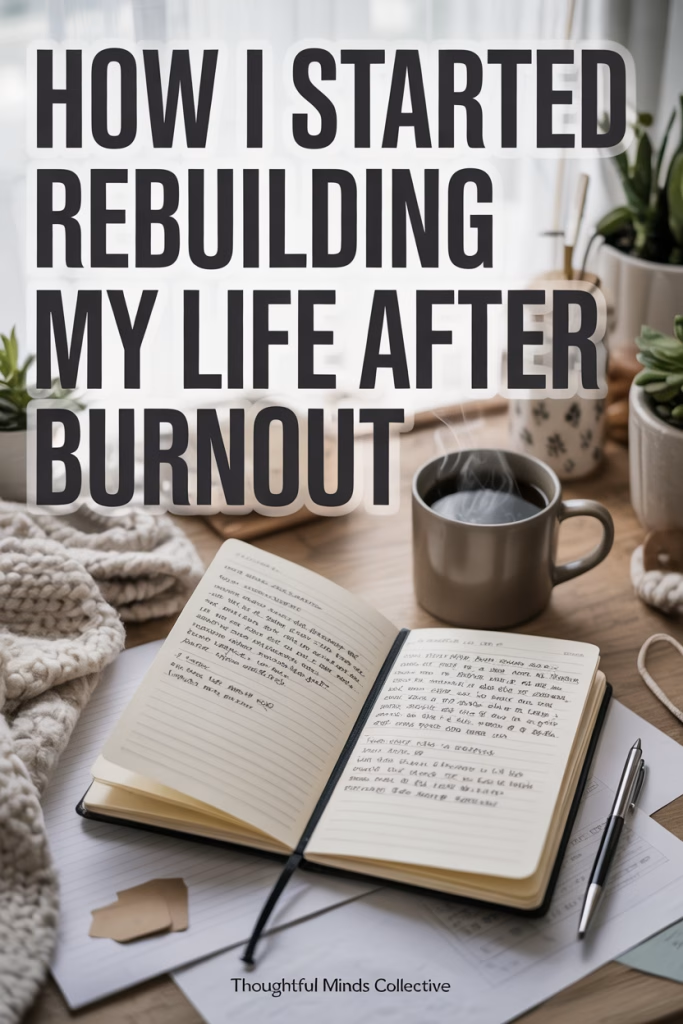
That’s where journaling quietly helped me reconnect with myself again.
Not aesthetic journaling.
Not “perfect healing girl” journaling.
Just honest writing.
Some nights I’d literally write:
“I don’t know what’s wrong with me lately.”
And weirdly, that honesty helped more than forcing positivity ever did.
If you’re new to journaling, my article on beginner journaling ideas can help you start without pressure:
Thoughtful Minds Collective – Easy Journaling Ideas for Beginners
You can also explore:
- Mindful AF: The Ultimate Journal Practice Hub for Real Life
- The Ultimate Beginner’s Guide to Journaling
Your Reset Does Not Need to Be Beautiful
Social media has convinced people that healing always looks aesthetic.
In reality, recovery often looks like:
- reheating the same meal three nights in a row
- finally replying to one email
- drinking water after forgetting all day
- taking a shower after struggling to move
- writing one honest paragraph in your journal
That still counts.
You do not need to earn rest by becoming productive first.
A Gentle Reset Routine That Actually Feels Realistic
If life feels like too much right now, start here:
Morning
- Don’t check your phone immediately
- Open a window
- Drink something cold or warm
- Write down one thing your brain keeps circling around
Afternoon
- Pick one task that would make tomorrow easier
- Put on music instead of scrolling
- Step outside for five minutes
Night
- Clean one small surface
- Journal without trying to sound wise
- Ask yourself: What would help me feel 2% better tomorrow?
That’s it.
Not a full transformation.
Just momentum.
You Haven’t Failed at Life
This part matters.
If you’ve disappeared for a while…
If your routines collapsed…
If your goals stalled…
If you stopped creating…
If you went quiet…
That does not mean you failed.
Sometimes people go into survival mode because life genuinely became too heavy for a while.
What matters is noticing when you’re ready to slowly come back.
That’s where I’m at now too.
Not fully healed.
Not perfectly productive.
Not magically transformed.
Just rebuilding gently instead of forcing myself into burnout again.
And honestly? I think that approach might last longer this time.