There’s a weird kind of silence that happens when you slowly disappear from your own life.
Not in a dramatic movie-scene way.
More like unopened messages. Half-finished ideas. Routines quietly falling apart. Days blurring together until suddenly months have passed and you barely recognize yourself anymore.
That’s what happened to me.
For about six months, I stopped showing up for almost everything that used to make me feel like me. I wasn’t chasing goals. I wasn’t building momentum. I wasn’t “glowing up.” Most days, I was just trying to get through them.
And honestly? I thought I’d ruined everything.
I thought disappearing meant I’d failed.
But coming back taught me something different.
Sometimes survival mode changes you. And sometimes the version of you that comes back isn’t the same person who left.
That isn’t always a bad thing.

Survival Mode Doesn’t Always Look Dramatic
I think a lot of people imagine burnout or emotional exhaustion looking obvious.
Like breakdowns. Crisis. Rock bottom moments.
But sometimes it looks incredibly normal from the outside.
You still reply to a few things.
You still scroll.
You still make coffee.
You still tell people you’re “just tired.”
Meanwhile, internally, everything feels disconnected.
Your motivation disappears first. Then your routines. Then your confidence. Then eventually the idea that you even can get your life back together.
That part hit me hardest.
Not the exhaustion itself the shame around it.
The feeling that everyone else kept moving while I quietly disappeared in the background.
According to Psychology Today, prolonged stress and burnout can create emotional numbness, withdrawal, and difficulty reconnecting with normal routines. Sometimes your brain isn’t being lazy. Sometimes it’s overwhelmed.
I wish more people talked about that.
I Kept Waiting to “Feel Ready” Again
For months, I thought the comeback moment would arrive dramatically.
I thought I’d wake up motivated one morning and suddenly become productive, organized, inspired, and emotionally stable again.
That never happened.
Instead, coming back looked small.
Really small.
Opening my laptop again.
Writing badly at first.
Cleaning one corner of a room.
Going outside more.
Making coffee before looking at my phone.
Starting things before I felt confident in them.
None of it felt impressive.
But it counted.
I think we underestimate how powerful tiny returns to ourselves actually are.
Starting Again Is Uncomfortable
Nobody really talks about this part either.
When you come back after disappearing for a while, there’s grief attached to it.
You notice how much time passed.
You notice what changed.
You notice the version of yourself you used to be.
And sometimes you expect yourself to restart exactly where you left off.
But life doesn’t really work like that.
You don’t come back as the same person.
You come back more aware. More tired in some ways. Stronger in others. Less interested in pretending.
That shift changed the way I see “self-improvement” completely.
I don’t want a life that looks perfect online anymore.
I want one that actually feels sustainable to live in.
The Comeback Didn’t Look Like a Glow-Up
Honestly, I think social media has warped the way we think about rebuilding our lives.
Everything becomes a transformation montage.
New routines. New wardrobe. New mindset. New body. New apartment. New aesthetic.
But real recovery is usually quieter than that.
Sometimes rebuilding your life just means:
- replying to people again
- eating properly again
- reconnecting with creativity
- remembering what you enjoy
- letting yourself care about the future a little bit more
That’s still progress.
Research from Mind UK talks about how recovery often happens gradually through small manageable steps, not overnight transformations. I think people need to hear that more.
Because slow progress still changes your life.
Journaling Helped Me Reconnect With Myself Again
One thing that genuinely helped me come back to myself was writing.
Not perfectly.
Not consistently.
Not in an aesthetic “5AM perfect morning routine” way.
Just honestly.
Some days it was one paragraph.
Some days it was messy notes in my phone.
Some days it was literally just:
“I don’t know what’s wrong with me lately.”
But writing gave shape to thoughts that were making me feel stuck.
It helped me notice patterns.
It helped me slow down enough to hear myself think again.
It helped me realize I wasn’t broken I was overwhelmed.
If you’re trying to reconnect with yourself after a hard season, journaling can genuinely help. You might like my articles on:
- How to Start Journaling When You Don’t Know What to Write
- A Guide to Journaling Without Judging Your Own Thoughts
What I Know Now
I used to think disappearing meant the story was over.
Now I think some seasons are just quieter than others.
Some seasons are for surviving.
Some are for rebuilding.
Some are for slowly finding your way back to yourself.
And honestly? I’m still figuring things out.
But I’m here again.
I’m creating again.
I’m trying again.
I’m caring about my life again.
That counts for something.
Maybe more than I realized.
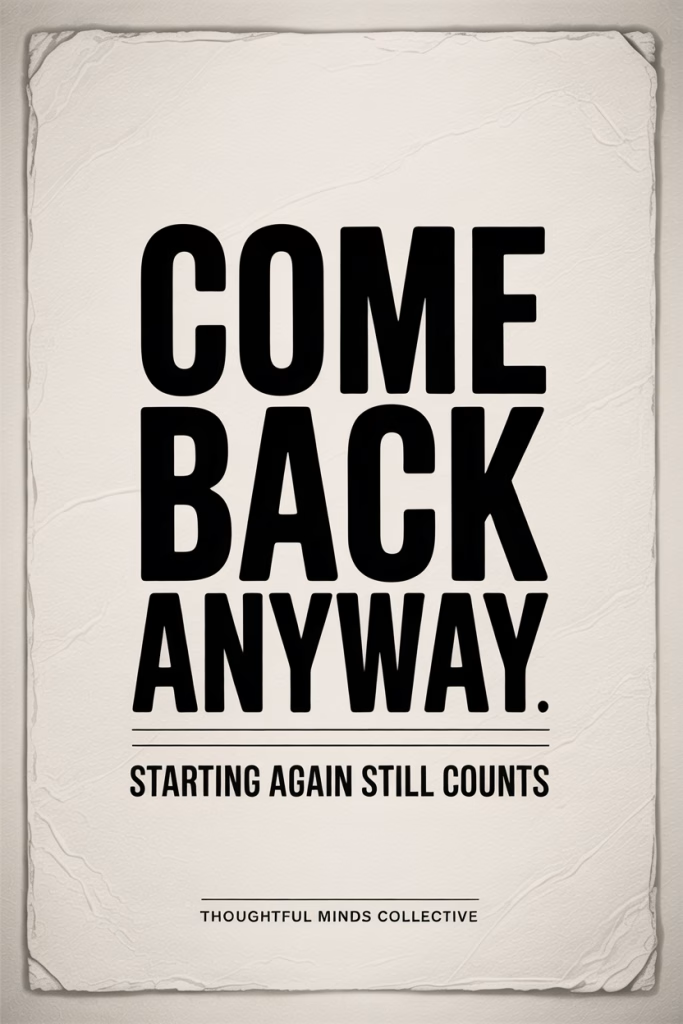
If You Feel Like You’ve Fallen Behind
This is what I wish someone told me earlier:
You are not permanently ruined because you disappeared for a while.
You are not weak because life overwhelmed you.
You are not failing because rebuilding is taking longer than expected.
Sometimes people survive first and rebuild second.
And if you’re in the middle of that rebuilding right now even slowly you’re probably doing better than you think.