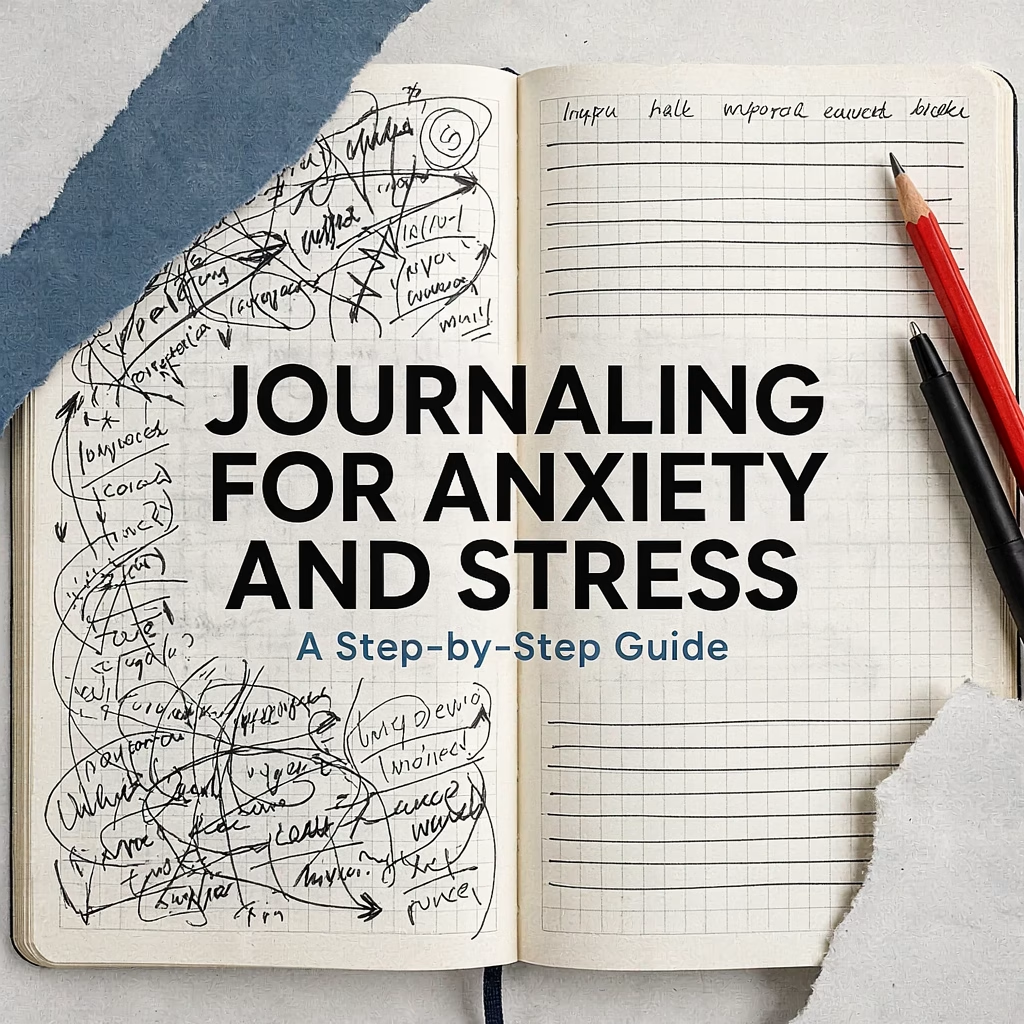
Journaling for Anxiety and Stress: A Step-by-Step Guide
When your brain is replaying the same worry for the fifteenth time, “just stop thinking about it” isn’t especially useful advice.
You may know that your thoughts are spiralling. You may even know that the thing you’re worried about probably won’t happen. But knowing that doesn’t always make your mind go quiet.
This is where journaling for anxiety and stress can help.
Writing won’t magically remove anxiety or solve every problem. What it can do is give all those thoughts somewhere else to go. Instead of trying to hold worries, unfinished tasks, imagined conversations and worst-case scenarios in your head at once, you can place them on the page and look at them individually.
That little bit of distance can make things feel more manageable.
Journaling may also help you identify stressors, notice recurring thought patterns and organise what you want to discuss with a doctor or mental health professional. The University of Rochester Medical Center describes journaling as one tool that may help people prioritise concerns, recognise triggers and identify unhelpful thoughts and behaviours.
You don’t need a beautiful notebook, a carefully planned routine or the perfect words. You just need somewhere to begin.
A gentle note: Journaling can support your mental wellbeing, but it isn’t a replacement for professional care. If anxiety is persistent, overwhelming or interfering with everyday life, Healthdirect recommends speaking with a doctor or mental health professional.
First, Work Out What You Need From the Page
Not every anxious moment needs the same kind of journal entry.
Sometimes you need to release everything you’re thinking. Sometimes you need to solve one specific problem. Other times, writing more about a worry only sends you further into it.
Before you begin, ask:
What would help me most right now?
You might need to:
- empty your head
- understand what triggered the feeling
- separate facts from fears
- decide what to do next
- prepare for a difficult conversation
- record symptoms to discuss with a professional
- focus on something steady and familiar
- stop analysing and return to the present moment
This question gives your journal entry a job. It also reminds you that you don’t have to investigate every thought just because it appeared.
Step 1: Make Starting Ridiculously Easy
When you’re already anxious, creating an elaborate journaling ritual can turn one helpful activity into another thing you’re failing to do properly.
Keep it simple.
Use the notebook already sitting nearby. Open a blank document on your phone. Write on the back of an envelope if that is what you have. Set a timer for three minutes rather than promising yourself that you’ll fill three pages.
A calm setting can be lovely, but it isn’t a requirement. You do not need candles, matching stationery or half an hour of uninterrupted silence. Your journal should meet you where you are—even if that is sitting in the car before an appointment or writing two sentences in bed.
Try beginning with:
Right now, my mind keeps returning to…
Then write whatever comes next.
If getting started is the hardest part, these ideas for how to start journaling when you don’t know what to write can help you get past the blank page.
Step 2: Get the Noise Out of Your Head
An anxious brain is often trying to hold too many things at once.
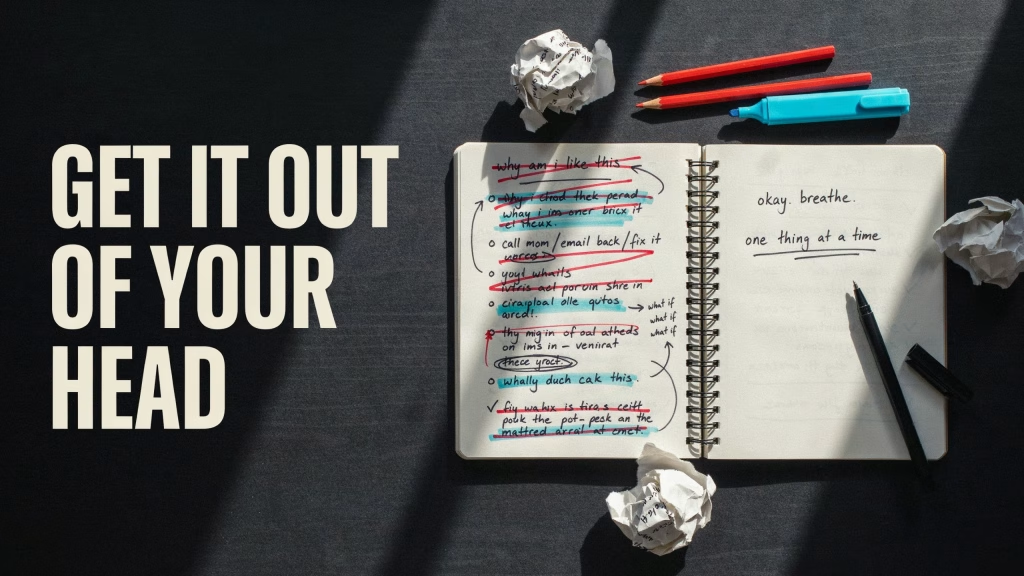
There may be one genuine problem buried underneath reminders, predictions, imagined disasters and things you suddenly remembered from 2014. A brain dump gives you somewhere to put all of it.
Write down everything taking up mental space without trying to organise it:
- things you need to do
- conversations you keep replaying
- decisions you’re avoiding
- physical sensations you’ve noticed
- things you’re afraid might happen
- tiny tasks that feel strangely enormous
- questions you don’t have answers to
Spelling, grammar and complete sentences do not matter. No one is grading this.
If you prefer a less structured approach, stream-of-consciousness journaling lets you follow each thought as it arrives without stopping to edit or explain it.
Once the thoughts are on paper, pause. You do not have to deal with every item immediately. The first goal is simply to stop carrying them all at the same time.
Step 3: Separate What Is Happening From What Your Anxiety Is Predicting
Anxiety can make a possibility feel like a certainty.
Something uncomfortable happens, and your mind races ahead:
I made a mistake. They’ll think I’m incompetent. I’m going to lose the opportunity. Everything is ruined.
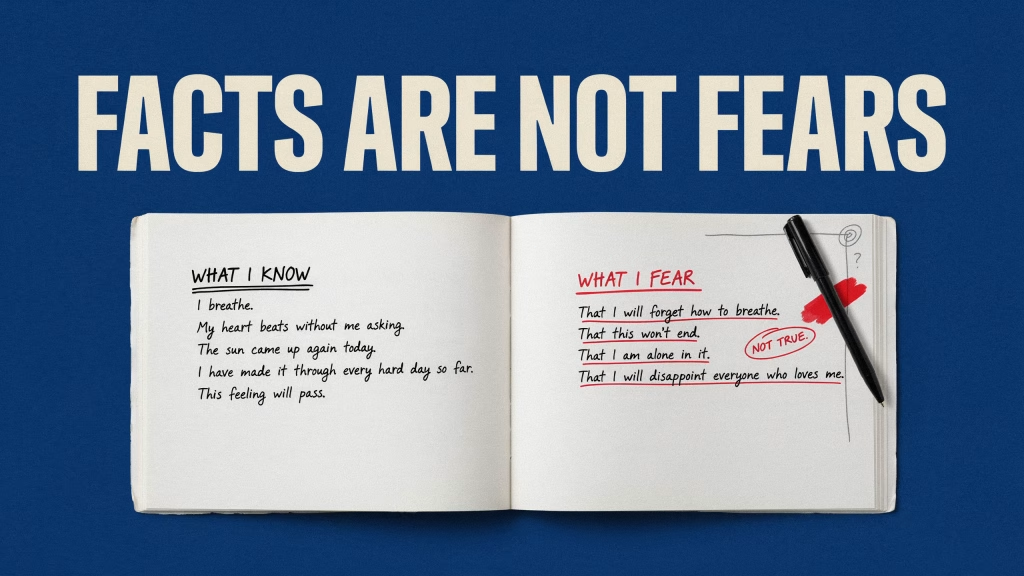
Try dividing a page into three parts:
What happened?
Write only what you know.
For example:
I sent the email and haven’t received a reply in two days.
What am I afraid this means?
Let yourself name the prediction honestly.
They hated my idea. I annoyed them. They don’t want to work with me.
What else could be true?
You don’t need to force a wildly positive explanation. Look for realistic alternatives.
They may be busy. They may not have read it yet. The email might require a longer response. I don’t have enough information to know what the silence means.
The aim is not to prove that everything will be fine. It is to notice the difference between a fact and a fear.
That distinction can create a little breathing room.
Step 4: Sort Your Worries Into “Now, Later or Not Mine”
Once you have written down what is worrying you, place each concern into one of three categories.
Now
Something you can act on soon.
This might be making an appointment, sending a follow-up email or paying a bill. Choose one small next step rather than trying to solve the entire situation.
Later
Something real that does not need your attention at this moment.
Write down when you will return to it. Giving a worry a time and place can make it easier to set aside temporarily.
Not mine
Something you cannot control—or something that belongs to another person.
You might care deeply about it, but caring does not always mean you can change it. Write what is within your control, even if it is only how you respond or where you place your energy next.
This method turns a page full of worries into a smaller set of choices. You may not be able to fix everything, but you can often identify the next useful move.
Step 5: Notice What Your Body Is Telling You
Anxiety isn’t only a collection of thoughts. It can show up physically as a racing heart, tense shoulders, dizziness, sweating, stomach discomfort, trembling or difficulty sleeping.
Try a quick body check-in:
- Where do I feel tension?
- Is my breathing fast, shallow or held?
- Am I hungry, thirsty, tired or overstimulated?
- Have I had more caffeine than usual?
- What would make my body feel 5% safer or more comfortable?
Your answer might be to unclench your jaw, eat something, step outside, reduce noise or put both feet firmly on the floor.
If writing is making you more distressed, stop. Look around and name five things you can see, four things you can feel and three things you can hear. Healthdirect includes grounding, slow breathing and present-moment techniques among the strategies that may help manage anxious symptoms.
You are allowed to close the journal before reaching a revelation.
Step 6: Try the Right Kind of Journaling for the Moment
There is no single “correct” way to journal for anxiety and stress. Different approaches work for different days.
A three-minute brain dump
Write every thought as quickly as possible. Stop when the timer finishes.
Best for: mental clutter and racing thoughts.
A worry reality check
Write the worry, the evidence you have and what you do not yet know.
Best for: worst-case-scenario thinking.
A tiny next-step list
Choose one problem and write the smallest action you could take.
Best for: overwhelm and avoidance.
A feelings check-in
Complete these sentences:
- I feel…
- I think this began when…
- What I need right now is…
- One kind thing I can do for myself is…
Best for: naming emotions that feel tangled or unclear.
A “what is okay right now?” list
Rather than forcing yourself to feel grateful, notice what is steady, safe or simply okay in this exact moment.
Perhaps the room is quiet. Your tea is warm. The difficult phone call is over. Someone checked in on you. You made it through the day.
Best for: gently returning your attention to the present without pretending everything is wonderful.
If none of these fits, explore these beginner-friendly journaling styles and choose the one that feels least demanding.
Journaling Prompts for Anxiety and Stress
You don’t need to answer all of these. Choose the question that feels most useful today.
- What is taking up the most space in my mind?
- What happened, and what am I assuming happened?
- What am I afraid will happen next?
- What evidence do I have for that fear?
- What information am I missing?
- Is this a problem I can act on today?
- What is the smallest useful step?
- What am I trying to control that isn’t mine to control?
- What would I say to a friend who had this worry?
- What does my body need right now?
- Is there something I need to ask for?
- What can wait until tomorrow?
- What has helped me through a similar moment before?
- What feels steady or okay right now?
- What do I want to remember when this feeling passes?
What If Journaling Makes You Feel Worse?
Sometimes writing helps. Sometimes it turns into twenty minutes of documenting every possible disaster in exhausting detail.
If you finish an entry feeling more agitated, trapped or ashamed, that does not mean you have failed at journaling. It may mean that this approach—or this particular moment—isn’t helping.
Try giving the entry a firm ending:
- The thought I am choosing to leave on this page is…
- The next thing I am going to do is…
- I do not need to solve this tonight because…
- The person I can speak to about this is…
You can also switch from analysing to grounding. Draw what is around you, list objects you can see, describe the weather or write out the steps of an ordinary task.
And sometimes the right decision is to put the pen down completely.
A journal is a tool, not a test of how well you are coping.
How Often Should You Journal for Anxiety?
There is no perfect schedule.
You might write for five minutes every morning, use your journal only when you notice yourself spiralling or keep a brief record of symptoms and triggers. Consistency can help you identify patterns, but “consistent” does not have to mean daily.
A useful routine might be:
- Name what you’re feeling.
- Write what triggered it.
- Separate facts from predictions.
- Choose one small next step.
- End with something grounding.
If that takes two minutes, it still counts.
How Do You Know If It Is Helping?
Journaling working does not necessarily mean you feel calm after every entry.
You may notice its effects elsewhere. Perhaps you recognise a familiar pattern earlier, explain your feelings more clearly or catch yourself before agreeing to something you don’t have the capacity for.
You might also:
- spend less time mentally rehearsing the same problem
- identify common triggers
- make decisions you have been circling
- ask for help sooner
- communicate more clearly
- recognise when you need rest
- arrive at an appointment better able to explain what has been happening
The page does not have to produce a breakthrough. Sometimes it simply helps you understand what you need next.
When Journaling Isn’t Enough
Stress and occasional anxiety are part of being human. But if anxious feelings are ongoing, feel out of proportion to the situation or make it difficult to sleep, concentrate, complete everyday tasks or do things you normally enjoy, it is worth seeking professional support.
Writing down your symptoms, possible triggers and how anxiety is affecting your life may help you explain your experience to a GP or mental health professional.
For Australian information and support options, visit the Thoughtful Minds Collective Mental Health Resources page or Healthdirect’s anxiety guide.
If you or someone else is in immediate danger, call 000. For 24-hour crisis support in Australia, call Lifeline on 13 11 14.
Final Thoughts
Journaling for anxiety and stress isn’t about writing the perfect entry or forcing yourself to find a positive lesson in a difficult day.
It is a way to slow the rush of thoughts long enough to see what is actually there.
Some days, the page might help you uncover a pattern. Other days, it might give you one practical next step. And sometimes all it will do is hold the thoughts you’re tired of carrying.
That is enough.
Start with one honest sentence:
This is what feels difficult right now.