A Note from Me (aka the Girl Behind Thoughtful Minds Collective)
Admitting you need a break isn’t always easy, especially when the world wants you to be “healed” already. I didn’t start journaling because I was calm I started because I was a whirlwind. My brain felt like a browser with 52 tabs open, and I had no idea which one was playing music. So, I grabbed a notebook, wrote “positives” on the front, and hoped it would help me find some.
This isn’t a guide for perfect journaling. It’s for the ones who try, pause, and try again. If that’s you welcome. This space is for us.
- What You’ll Find in This Hub:
- Mindful Journaling 101: Where to Begin
- Messy Day Journaling: Prompts for the Chaos
- One Line a Day Keeps the Chaos Away
- Gentle Morning + Night Journal Rituals
- Anxious AF? These Prompts Get It
- Journal Aesthetic Options That Actually Feel Like You
- How to Build Realistic Mindful Journaling Habits
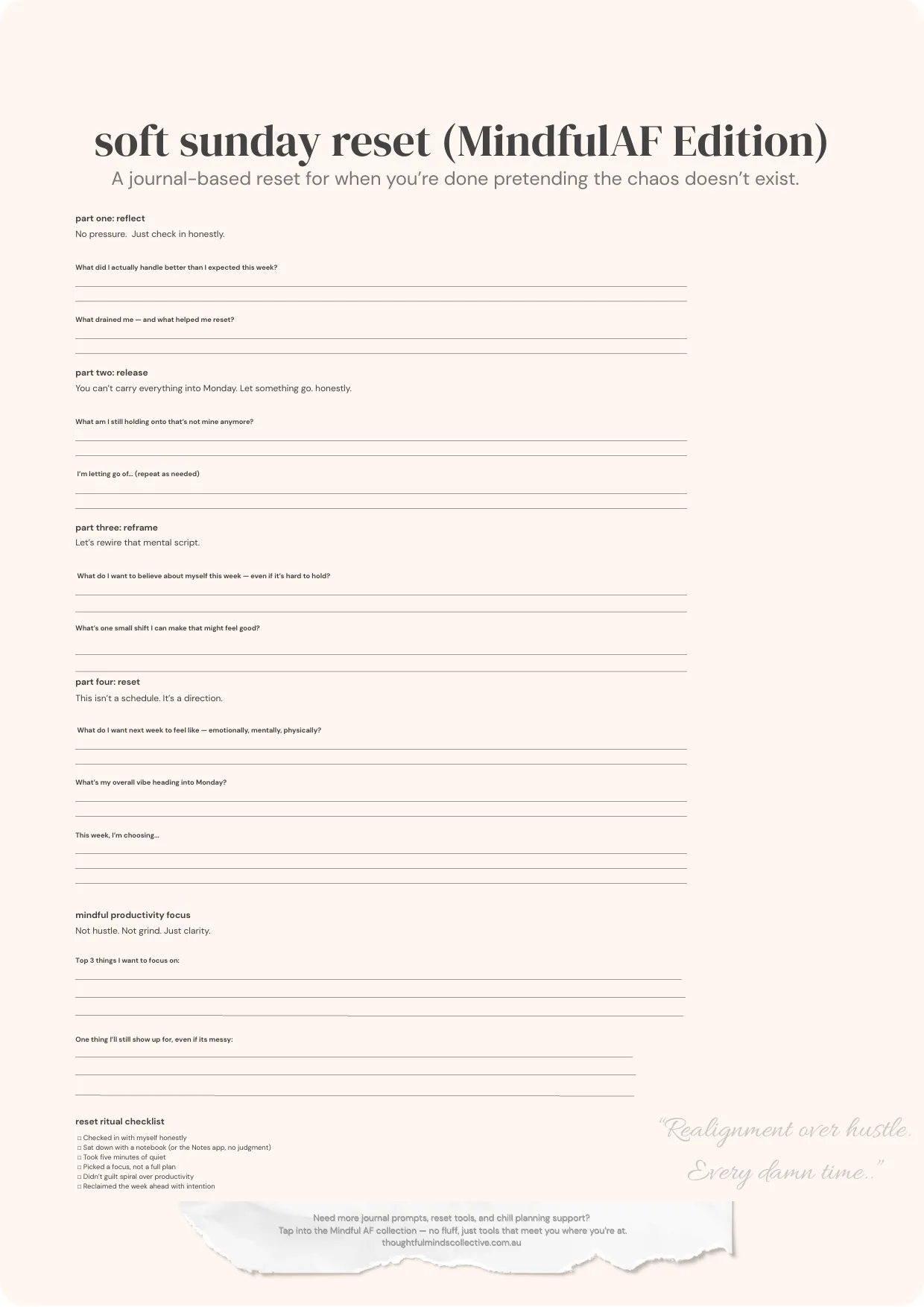
- 📄 Get the Free "Mindful AF" Soft Sunday Productivity Reset
- 📝 The Mindful AF Series (Full List)
- Why This Works (Science-Backed Calm)
- Mindful Journaling FAQs
- Pin This Space: Mindful AF on Pinterest
- Final Thought
Mindful AF Means Real. Not Perfect
Mindful journaling doesn’t have to look a certain way. If you’re showing up with a spiral brain and no motivation, that’s still valid. This is your space to breathe, reset, and write without pressure. No toxic positivity just real prompts, tools, and practices to help you feel grounded.
Whether you’re starting your journey or picking it back up for the 100th time, this hub has your back.
What You’ll Find in This Hub:
- Journaling Ideas for Anxious, Messy Days
- Prompts for Grounding, Not Performance
- Mindful AF Inspiration That Doesn’t Try Too Hard
- Links to Everything in the Mindful AF Series
- Science-Backed Reasons Why This Helps
- How to Build a Mindful Journaling Habit
- FAQs for Beginners
Mindful Journaling 101: Where to Begin
If you’re new to mindful journaling, don’t stress about having the “perfect” practice. The beauty of journaling is in its flexibility, and it’s more about expressing yourself honestly than doing it “right.” Start small: grab a notebook (or open your phone’s Notes app) and set a timer for just 5 minutes. You don’t need to worry about structure or form—just let your thoughts flow onto the page. Whether it’s a quick brain dump or reflecting on how you’re feeling in the moment, mindful journaling helps clear mental clutter and promote self-awareness.
One of the best ways to begin is by writing without judgment. Let go of any expectations and give yourself permission to be imperfect. If you don’t know what to write, try exploring how you feel physically or mentally at the moment. Need inspiration? Check out this guide from The Greater Good Science Center on why expressive writing is so powerful for mental well-being.
Try this: setting a 5-minute timer. Let whatever needs to come out, come out. You’re not writing for anyone else you’re writing to let your now-self breathe.
Messy Day Journaling: Prompts for the Chaos
When your brain feels like it’s shaking up a soda can, stress-dump journaling can help. These unfiltered prompts are designed for emotional honesty, not for perfection.
We all have those days when our thoughts feel like they’re running a marathon without a finish line. On those days, journaling can be a way to release the pressure and make sense of the chaos. Messy day journaling is all about being unfiltered and honest. There’s no need for perfect handwriting, neat paragraphs, or profound insights. The goal is simply to get the mental clutter out of your head and onto the page. You can write down everything from frustrations and anxieties to small wins and moments of clarity.

One of the easiest ways to start is by asking yourself: What’s taking up the most space in my mind right now? Once you have an answer, let it all pour out. If you’re stuck, prompts like “What do I wish I could say out loud?” or “What am I pretending doesn’t bother me?” can help dig deeper. The key is to be kind to yourself and avoid overthinking—just let your thoughts flow. For more on the benefits of writing during tough moments, check out this article from Psychology Today.
Go-To Prompts
- What’s taking up the most space in my mind right now?
- What do I wish I could say out loud?
- What do I feel in my body?
- What am I pretending doesn’t bother me?
You don’t need to write profound things. You just need to show up.
One Line a Day Keeps the Chaos Away
Some days, you may feel too drained or foggy to write pages of reflection. And that’s totally okay. One-line journaling is perfect for when you need to check in with yourself but don’t have the energy to dive deep. Just one sentence can be enough to capture how you’re feeling, acknowledge a small win, or set an intention. The simplicity of this practice can help you feel grounded without overwhelming you, especially when life feels chaotic.
To get started, choose a prompt that feels easy and effortless. It could be as simple as: A feeling I had today: _______, or Something I handled better than usual: _______. These tiny reflections may not seem like much, but over time, they build up into a powerful record of your thoughts and growth. If you want to dive deeper into how journaling can improve emotional well-being, check out this helpful article from Psychology Today.
Examples
- A feeling I had today: ________
- Something I handled better than usual: ________
- A small win: ________
Tiny reflections add up, even when it doesn’t feel like they do in the moment.
Gentle Morning + Night Journal Rituals
Creating a gentle journaling routine can help you ease into the day or unwind at night, especially if you’re not into the pressure of long, complicated practices. These rituals are designed to be soft yet effective—perfect for when you need structure without feeling overwhelmed. In the morning, try writing down three things you want to focus on and one thing you’re grateful for. This helps set a positive tone for your day, even if you’re not feeling completely energized yet. At night, reflect by noting one thing you’re letting go of and one moment that made you feel something. This simple routine can create a sense of closure, helping you leave the day behind without carrying the weight into your rest.
The beauty of these rituals lies in their simplicity. They don’t require an entire hour or a specific place. You can do them anywhere—at your kitchen table, on your couch, or in bed. And, you don’t need to have a perfect routine every day. The point is to gently check in with yourself. For more ideas on how to cultivate a mindful morning routine, check out this article from Mindful.org.
Example Structure
- Morning: 3 things I want to focus on – 1 thing I’m grateful for
- Night: 1 thing I’m letting go of – 1 moment that made me feel something
These rituals are about finding softness in your routine without making it feel like another task.
Anxious AF? These Prompts Get It
When anxiety hits, it can feel like everything is too much. Journaling is a great way to slow down and ground yourself when your mind is spinning. These prompts are designed to help you face the chaos without the pressure to “fix” everything right away. The goal here isn’t to solve your anxiety, but to acknowledge it and give it a safe space to exist.
Anxiety-Soothing Prompts:
- What’s taking up the most space in my mind right now?
- How does my anxiety feel in my body today?
- What am I afraid of right now?
- What would make me feel safe in this moment?
- If I could talk to my anxious self, what would I say?
- What’s one thing I can do to calm my nervous system right now?
- What do I need to let go of?
- When was the last time I felt completely at peace?
Expressive writing has been shown to regulate your nervous system and reduce stress even if your journaling looks like word vomit.
Journal Aesthetic Options That Actually Feel Like You
Your journaling practice doesn’t have to look a certain way. In fact, it shouldn’t. The best journal aesthetic is the one that feels authentic to you. Whether you love clean, minimalist pages or chaotic, mixed-media collages, your journal should reflect your mood and personality, not some idealized “perfect” style. Don’t worry about following trends—journal in a way that allows you to express yourself freely, even if it means bending the rules of conventional aesthetics.
Journal Aesthetic Ideas to Try:
- Grungy Brown Kraft Paper + Ink Smudges: For a raw, imperfect vibe. Add some stickers or tape to make it feel like a scrapbook.
- Clean Minimalism: Simple, neat pages with one-line truths or reflections. Use a single color for accents and let the words stand out.
- Mixed Media + Chaotic Collaging: Layer different materials like photos, tickets, magazine clippings, or fabric for a more textured and vibrant look.
- Bullet Journaling: If you’re into structure but still want a personal touch, try using bullet journaling to create mood trackers, daily logs, or habit trackers that suit your style.
- Watercolor or Abstract Art: Express yourself through colorful washes of watercolor or splattered ink. This can be a relaxing, meditative practice in itself.
The key is to find an aesthetic that feels like you—one that reflects your mood, your vibe, and your energy. There are no “rules” in mindful journaling, so embrace whatever feels right for you.
All of these options count. Journaling is about finding your style and owning it—no rules.
How to Build Realistic Mindful Journaling Habits
You don’t need to journal every day to call it a habit. Journaling is like checking in with a friend: even if you skip a few days, the relationship still holds.
3 Ways to Build a Sustainable Practice
- Set a Tiny Commitment – Try journaling for 2 minutes or 3 sentences instead of 30 minutes.
- Tie it to an Existing Habit – Journal right after brushing your teeth or while your coffee brews.
- Celebrate the Messy Days – If all you did was write “ugh,” that still counts.
Mindfulness isn’t about perfection; it’s about noticing.
📄 Get the Free “Mindful AF” Soft Sunday Productivity Reset
Stuck? Download the Mindful AF printable a soft focussed reset for when your brain’s all over the place. Low effort, high clarity.
No spam, just helpful pages straight to your inbox.
📝 The Mindful AF Series (Full List)
This hub links to every post in the series so far. More are coming soon!
- Journaling for Beginners
- Overcoming the Blank Page: Journaling Tips for Beginners
- Journal Prompts for Anxiety
- Morning Pages
- One-Line Prompts
- Mindful AF Sunday Reset
- Journaling Styles for Beginners
- Journal Styles
Why This Works (Science-Backed Calm)
Mindful journaling isn’t just some trendy practice—it’s actually rooted in science. Writing down your thoughts and feelings can help regulate your emotions, reduce stress, and improve overall mental well-being. According to the Greater Good Science Center, expressive writing can help people process their emotions and even improve physical health by lowering blood pressure and heart rate. When you write, you’re not just getting things off your chest, you’re giving your brain a chance to organize chaotic thoughts, making them feel more manageable.
The act of journaling helps create space between your emotions and your reactions, allowing you to approach situations with more clarity. Even on days when you don’t know what to write, just putting pen to paper (or fingers to keys) helps. It’s like giving your anxious thoughts a place to land, instead of letting them swirl in your head. For more on the science behind journaling, check out this article from The National Library of Medicine.
Mindful Journaling FAQs
Q: Do I need to journal every day for it to work?
A: Nope. Even occasional journaling offers mental health benefits.
Q: What if I don’t know what to write?
A: Start with how you feel in your body. Or just write “I don’t know what to write” until something else comes out.
Q: Can I journal on my phone?
A: 100%. Journaling is about honesty, not stationery.
Q: What if journaling makes me feel worse?
A: That happens sometimes. If you start spiraling into self-criticism, take a pause. Try grounding yourself or write for calm instead of analysis.
Pin This Space: Mindful AF on Pinterest
Looking for journal ideas that feel like exhaling? Follow the Mindful AF Pinterest board for fresh prompts, aesthetic inspo, and that soft chaos vibe you love.
Final Thought
Mindfulness isn’t a checklist; it’s a feeling. It’s the quiet moments where you pause, reflect, and notice. Whether you journal every day or just when you need to release some tension, your practice is valid. You’re not behind, and you’re definitely not broken. You’re simply human, navigating life’s highs and lows with a little more self-awareness. And that’s something worth celebrating.
Remember, this space is always here for you. When you need a moment to exhale or a place to release your thoughts, your journal is waiting no perfection required. Keep showing up for yourself, even on the messy days. You’re doing just fine.
You’re not broken. You’re not behind.
You’re just human and this page is here when you need it.