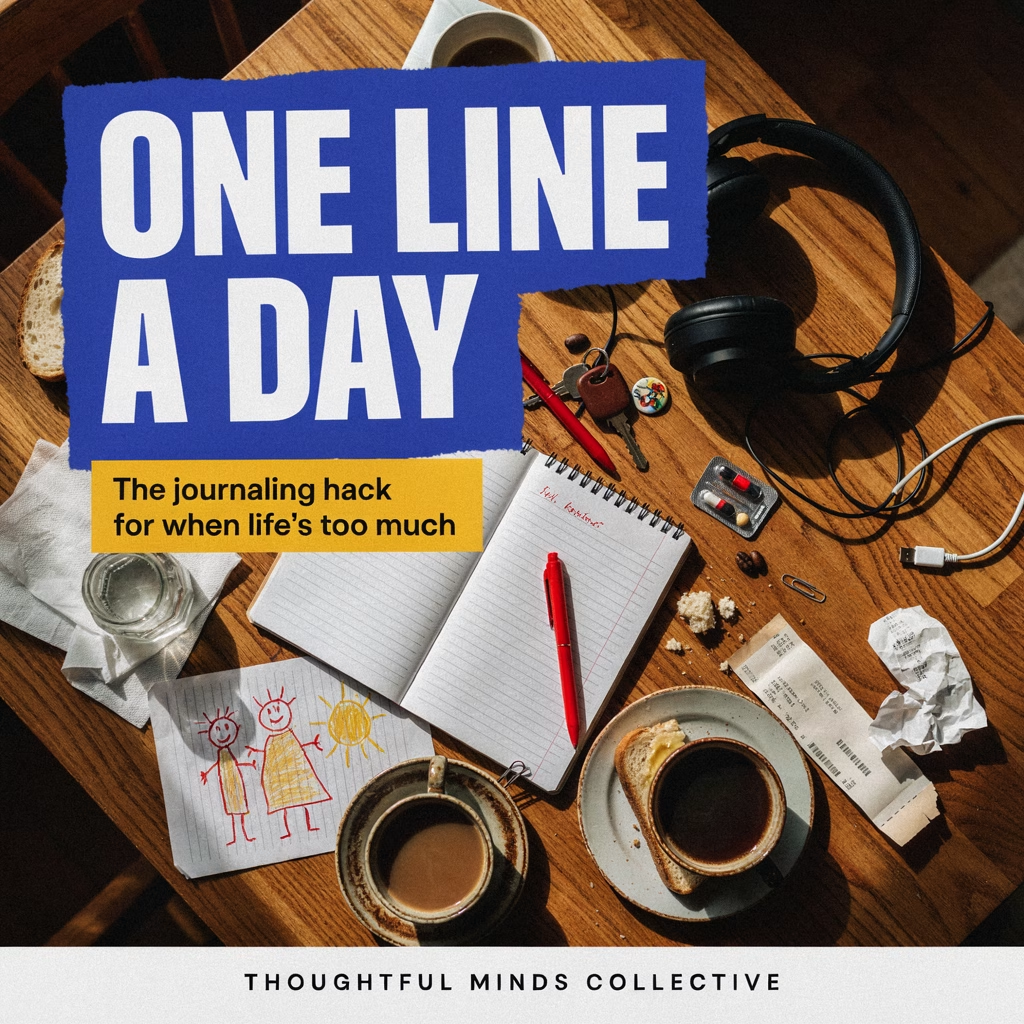
The Power of One Line a Day: A Journaling Hack for When Life’s Too Much
Because your life is still happening even when you don’t have time to write about it properly.
Some days, a full journal entry is simply not happening.
You’re tired. The day has already taken more from you than expected. The notebook is somewhere under a pile of things you meant to put away, and the thought of sitting down to thoughtfully unpack your emotions feels like one more task.
So you write nothing.
Then one busy day becomes a busy week. The week disappears into a month, and when you look back, you can remember that life was happening—but not necessarily what it felt like to be inside it.
That’s where one line a day journaling comes in.
The idea is almost ridiculously simple:
Write one sentence about your day. Then stop.
Not a summary of everything that happened. Not a perfectly phrased reflection. Just one detail you’d like to carry with you.
A magpie sat outside the kitchen window while I made toast, and for some reason it made the whole morning feel better.
That’s enough.
One line isn’t a lesser journal entry. Over time, it becomes a trail of small moments a record of a life that might otherwise blur.

What Is One Line a Day Journaling?
One line a day journaling is a minimalist way of keeping a diary.
Once a day or whenever you remember you record a single sentence about something you experienced, noticed, thought or felt.
Your line might capture:
- What happened
- How you felt
- Something unexpectedly funny
- A tiny detail you don’t want to forget
- What occupied your thoughts
- The best or worst part of the day
- An ordinary moment that somehow mattered
It can be factual:
Took the long way home because the evening was too lovely to waste.
Emotional:
I spent the day feeling behind, even though nobody was asking me to hurry.
Or wonderfully uneventful:
Had pasta, watched rubbish television and went to bed early.
The purpose isn’t to make every day sound meaningful.
It’s to notice that even the most ordinary days contained something.
Why One Line Can Be Enough

There’s a strange all-or-nothing attitude around journaling.
If you can’t fill several pages, reflect deeply and uncover a profound truth about yourself, it can feel as though the session doesn’t count.
But journaling doesn’t have to extract meaning from every experience. Sometimes it can simply leave a marker:
I was here. This happened. This is what I noticed.
One sentence lowers the barrier enough that you can write on tired, busy or emotionally cluttered days. You don’t have to find a peaceful hour or wait until you have something important to say.
That tiny entry also gives your future memory something to work with.
In a fascinating long-term case study, a researcher tested his own memory against 2,691 brief diary notes recorded across 24 years. The entries contained experiences he had once considered worth noting but many were no longer accessible through memory alone. The study is only one person’s experience, so it can’t tell us what journaling will do for everyone, but it beautifully illustrates how much of an ordinary life can disappear without a prompt to bring it back.
A single line may not preserve the whole day.
But years later, it could be enough to reopen it.
The Real Benefits of One Line a Day Journaling
It’s small enough to keep doing
A practice that takes under a minute is easier to return to than one requiring time, energy and the right mood.
That doesn’t mean you’ll write every day. It simply means there is less resistance when you do.
It captures the details memory discards
We tend to remember major events: weddings, holidays, moves, breakups and beginnings.
But a life is also made from repeated jokes, strange weather, comforting meals, annoying commutes, songs played obsessively and the way someone you love used to say a particular word.
One-line journaling gives those apparently minor details somewhere to live.
It can reveal patterns without demanding a deep dive
One entry might not tell you much. Thirty entries can.
When you look back, you may notice:
- The same situation repeatedly drains you
- Certain people make your days feel lighter
- You feel better on the days you go outside
- Work has occupied every line for three weeks
- Something you thought was “just a bad day” has become a pattern
- A difficult season has slowly started to soften
You don’t have to analyse yourself every night. Sometimes the pattern becomes visible because you kept the record.
It removes the pressure to perform
There’s very little room in one sentence to sound wise, healed or aesthetically pleasing.
That can be freeing.
Your line doesn’t have to end with gratitude. It doesn’t need to turn a terrible experience into a lesson. It can simply say:
Today was hard and I don’t want to explain why.
That counts too.
What Should You Write in a One-Line Journal?
The easiest approach is to write the detail that feels most alive when you think back over the day.
Ask yourself:
If I could keep only one thing from today, what would it be?
It doesn’t need to be the most important event. Often, the specific and seemingly insignificant detail becomes the most evocative later.
Compare:
I had a good day.
With:
We ate hot chips in the car because it started raining the moment we reached the beach.
The second line gives your memory somewhere to go.
Try including a concrete detail:
- A place
- A person
- A sound
- A smell
- Something somebody said
- What you were wearing
- A tiny surprise
- The thing that made the day different from yesterday
You are not writing for an audience. Awkward, unfinished and oddly specific are all welcome.
Five Ways to Keep a One-Line Journal
“One line a day” doesn’t have to mean keeping the same kind of entry forever. Choose a format that matches what you want to remember.
1. The moment
Capture one scene from the day.
Mum laughed so hard at dinner that she couldn’t finish the story.
This is especially good for preserving ordinary memories and the people inside them.
2. The mood
Name how the day felt and, if you know, why.
Restless all day—too many unfinished things competing for space in my head.
Over time, mood lines can help you notice emotional patterns without creating a complicated tracker.
3. The tiny win
Record something you managed, especially when the day was difficult.
Answered the email I’d been avoiding for two weeks.
This isn’t about forcing positivity. It’s about recognising effort that might otherwise go unnoticed.
4. The ordinary detail
Write down something so unimportant that you know you’ll forget it.
The supermarket was playing the song we used to dance to before we had children.
These entries can become surprisingly precious later.
5. The honest headline
Give the day a one-sentence headline.
Nothing went to plan, but the takeaway noodles were excellent.
This format leaves room for humour, contradiction and days that refuse to fit neatly into “good” or “bad.”
This tiny daily-record approach also shares something with the Japanese Hobonichi philosophy: your journal doesn’t have to contain a profound reflection every day. It can hold a meal, a passing thought, a ticket, a sketch or one small detail from ordinary life.
If you like the idea of journaling as a way of noticing rather than constantly analysing yourself, explore six Japanese ideas that can completely change how you think about journaling.
How to Start One Line a Day Journaling
Choose the easiest possible home for it
You don’t need a special five-year diary unless you genuinely want one.
Try:
- A small notebook beside your bed
- One monthly page in your bullet journal
- Your phone’s Notes app
- A private document
- A calendar with space beneath each date
- A note attached to your daily reminder
- A voice-to-text entry when writing feels like too much
The best system is the one available when the day is nearly over and your motivation has left the building.
Attach it to something you already do
You might write your line:
- After brushing your teeth
- While plugging in your phone
- With your morning coffee about the previous day
- After getting into bed
- While waiting for the kettle
- Before closing your laptop
The timing doesn’t matter. Giving the practice an existing cue simply makes it easier to remember.
Decide whether you want a focus
You can write about anything, or use the same question each day.
For example:
- What do I want to remember?
- What surprised me?
- How did today feel?
- What was the best ordinary moment?
- What took most of my energy?
- What made today different?
- What am I carrying into tomorrow?
A repeated question removes the nightly decision about what to write.
Stop after one line
You are always allowed to write more—but you never have to.
That distinction matters.
If your one sentence turns into a page because something needs to come out, follow it. If you write nine words and close the notebook, the practice still worked exactly as intended.
20 One Line a Day Journal Prompts

For the nights when your brain produces absolutely nothing:
- Today felt like…
- The moment I want to remember is…
- Something unexpectedly good was…
- The hardest part of today was…
- I kept thinking about…
- Today I needed…
- Something that made me laugh was…
- I’m proud that I…
- The most ordinary moment worth keeping was…
- Something somebody said today was…
- I felt most like myself when…
- I felt least like myself when…
- Today would have been easier if…
- The song, food or place that defined today was…
- One thing I noticed was…
- I wish I had said…
- Today taught me…
- The headline for today is…
- If I could replay one minute, it would be…
- The truth about today is…
For days when one line doesn’t feel like enough, these creative journal prompts can take you somewhere less predictable.
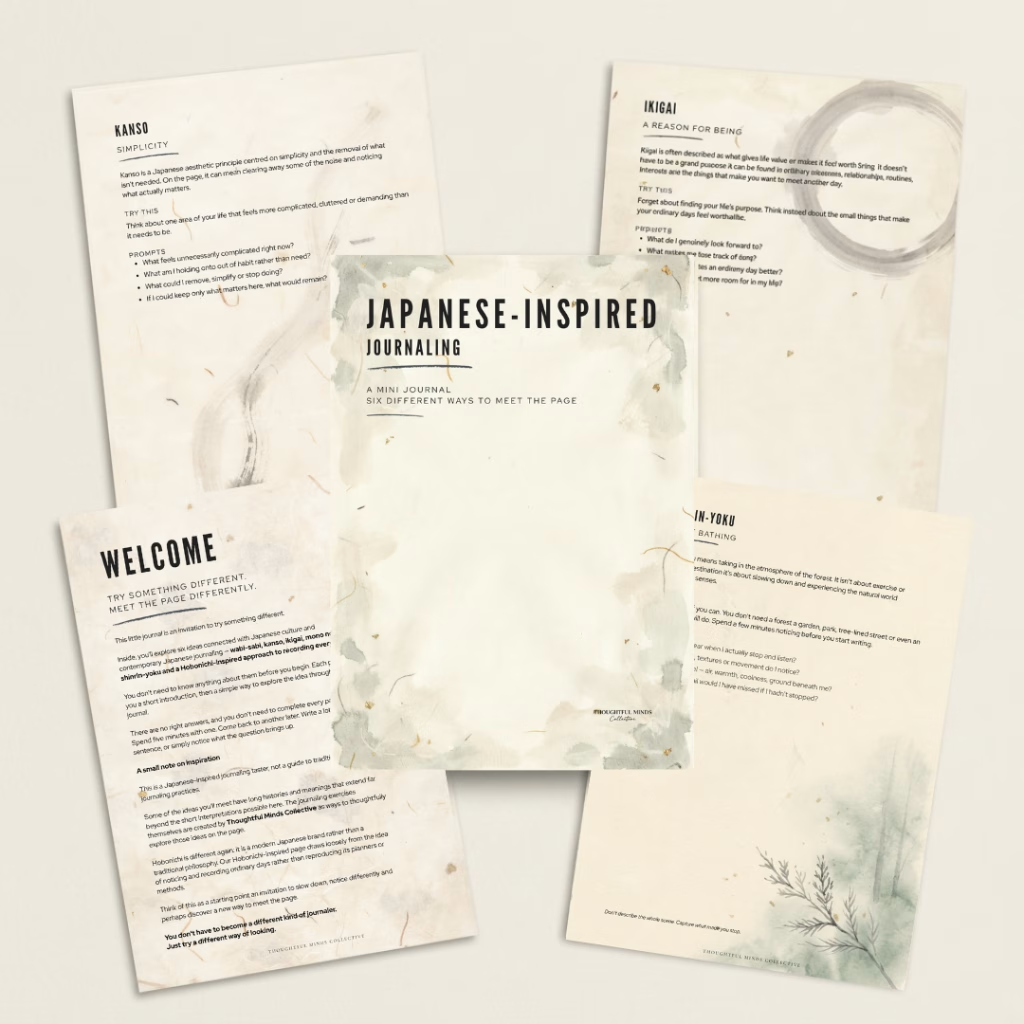
Want to Explore a Different Way of Journaling?
The Japanese Mini Journal turns six Japanese-inspired ideas— including Hobonichi, wabi-sabi and mono no aware—into simple pages you can try for yourself.
It’s gentle, practical and designed for noticing your life without turning journaling into another demanding routine.
9 beautifully designed A4 pages · Printable PDF · $6.95 AUD
One-Line Examples for Completely Ordinary Days
Not every day supplies a beautiful memory or emotional breakthrough. Here are some examples that don’t try to make ordinary life sound profound:
The washing dried before the rain started, which felt like today’s main achievement.
Worked, cooked dinner, scrolled too long and wondered where the evening went.
The dog refused to walk past the neighbour’s bins again.
Wore the new boots and regretted them by lunchtime.
Nothing memorable happened, but I felt peaceful.
The kids argued all morning and built an elaborate blanket fort together by three.
Bought strawberries that actually tasted like strawberries.
Spent most of today waiting for tomorrow.
That last one may tell you more about your life than a carefully polished paragraph ever could.
What If You Miss a Day or Twelve?
Leave the space blank.
You don’t need to reconstruct every missing day from photographs, messages and calendar appointments unless doing that sounds enjoyable.
You can simply begin again:
Missed eleven days. Back today.
A one-line journal is supposed to reduce pressure, not create a tiny daily debt.
There is also no rule that says you must write at night. If you remember something from yesterday while making breakfast, write it then. If you record three lines on Sunday covering the moments you remember from the week, they still count.
Consistency can make the journal richer, but perfection is not the price of keeping it.
When One Line Isn’t the Right Tool
One-line journaling is excellent for capturing life with very little effort. It isn’t necessarily enough when you need room to process something complicated.
If you’re navigating grief, anger, anxiety, a difficult decision or a thought that keeps circling, one sentence may feel more like a lid than a release.
On those days, let the line become a doorway:
I’m more upset about that conversation than I want to admit.
Then keep going if you can.
You might write a full entry, try stream-of-consciousness journaling or speak to someone you trust.
The “one line” rule exists to make starting easier. It should never stop you from writing what needs to be written.
What Happens After a Year?
You won’t necessarily emerge with perfect clarity or a transformed mindset.
You will have something quieter: approximately 365 glimpses of your life.
You may find yourself remembering a joke you had completely forgotten. You might see when a friendship began to change, when a difficult period first appeared in your entries or when you quietly started becoming happier.
You’ll also find plenty of takeaway dinners, bad weather, annoying errands and days when nothing much happened.
Keep those too.
The value of a one-line journal isn’t that every entry is meaningful on its own. It’s that ordinary lines gather meaning when placed beside one another.
Together, they say:
This was my life. This is how it felt. These are the things I noticed while I was here.
Start With Today
You don’t need to buy anything or prepare a new journaling routine.
Open a notebook or the Notes app on your phone and finish this sentence:
The moment from today I want to keep is…
Write the first honest thing that comes to mind.
Then stop.
You’ve journaled.