6 Japanese Ideas That Will Completely Change How You Think About Journaling
Hint: it has almost nothing to do with beautiful handwriting.
If you searched Japanese journaling expecting the impossibly beautiful notebooks seen across Pinterest, Instagram and YouTube, you might be surprised.
Yes, Japan is famous for elegant planners, minimalist stationery and notebooks that make grocery lists look like works of art. But the most fascinating part isn’t the pens, stickers or perfect handwriting.
It’s a different way of thinking about why we keep a journal in the first place.
While much Western journaling focuses on productivity and self-improvement, Japanese ideas can offer something quieter: noticing today, accepting imperfection, appreciating small moments and capturing memories before they disappear.
There isn’t one official Japanese journaling method. Instead, centuries-old philosophies and modern practices can inspire a calmer, more meaningful way to journal—without expensive supplies, artistic talent or a perfect daily routine.
Here are six Japanese ideas that could completely change how you think about journaling.
Let’s begin with one of Japan’s most-loved journals…
1. Hobonichi: The Journal That Doesn’t Care If You’re Perfect
If you’ve ever fallen down the rabbit hole of Japanese stationery, chances are you’ve come across the Hobonichi Techo.
At first glance, it looks like a beautifully designed planner with a page for every day.
But its appeal is something much simpler:
Freedom.
People use their Hobonichi in completely different ways. One person might write a full journal entry. Another might sketch their morning coffee, record the weather, stick in a train ticket or write one sentence about their day.
Every page can look different because every life looks different.
So… what exactly is a Hobonichi?
Hobonichi (ほぼ日) means “almost every day.” The Hobonichi Techo was created by the Japanese company Hobonichi as a flexible daily planner rather than a journal with one prescribed way to fill it.
And there’s a lovely journaling lesson in that.
Instead of asking:
“Did I journal properly today?”
Try asking:
“Did I notice something worth remembering today?”
Some days you’ll write half a page. Some days you’ll write one sentence. Some days it might simply be:
“I’m exhausted today.”
That still counts.
Years later, those ordinary entries can become some of the most interesting — not because they were beautifully written, but because they remind you who you were.
Try Hobonichi tonight
Forget about writing a complete journal entry.
Answer one question:
What’s one tiny thing that happened today that I don’t want to forget?
Maybe it was a conversation. A song playing in the supermarket. The smell of fresh coffee. The way your dog greeted you at the door.
One sentence is enough.
If you’re worried there isn’t a “right” way to keep a journal, our Journal Styles for Beginners guide explores different approaches so you can find one that feels natural rather than forced.
You can also visit the official Hobonichi website to see how people around the world use the same planner in completely different ways.
2. Wabi-Sabi: Why an Imperfect Journal Is Often the Most Beautiful One
Imagine finding your journal twenty years from now. The cover is faded. The corners are bent. There are coffee stains on a few pages. Some entries are rushed. Others are crossed out completely. There’s a pressed leaf tucked between two pages and a shopping list you’ve forgotten about.
Most people would look at that journal and see imperfections.
The Japanese philosophy of wabi-sabi sees something else entirely.
A life that was lived.
What is wabi-sabi?
Wabi-sabi is a traditional Japanese philosophy that finds beauty in imperfection, simplicity and the natural changes that happen over time.
Think about a favourite old jumper that has softened and faded with years of wear. Its imperfections don’t necessarily make it less valuable. Sometimes they’re precisely what makes it feel like yours.
The same can be true of a journal.
Why does this matter for journaling?
It’s easy to buy a beautiful notebook and then become too scared to “ruin” it.
Wabi-sabi offers a different way to look at the page.
Your handwriting doesn’t need to be neat. Crossed-out words can stay crossed out. A coffee stain doesn’t need hiding. A rushed entry still counts.
Years from now, you probably won’t care whether your handwriting was straight.
You’ll care about what you wrote.
Instead of asking:
“How can I make this page look better?”
Try asking:
“How can I make this page more honest?”
Try Wabi-Sabi tonight
Open your journal and let one page be imperfect.
Write quickly. Cross something out instead of erasing it. Tape in a receipt. Draw a terrible sketch. Write sideways in the margin.
Then leave it alone.
Tomorrow, look at it again and ask:
Does this page feel real?
That’s the invitation of wabi-sabi: not a perfect record of your life, but evidence that you were actually living it.
If you’ve ever stared at a blank notebook because you were afraid of writing the “wrong” thing, our guide to How to Start Journaling When You Don’t Know What to Write can help you get past that first-page pressure and simply begin.
For a thoughtful introduction to the philosophy, BBC Culture has an excellent explainer on wabi-sabi and why many people find beauty in things that are imperfect and incomplete.
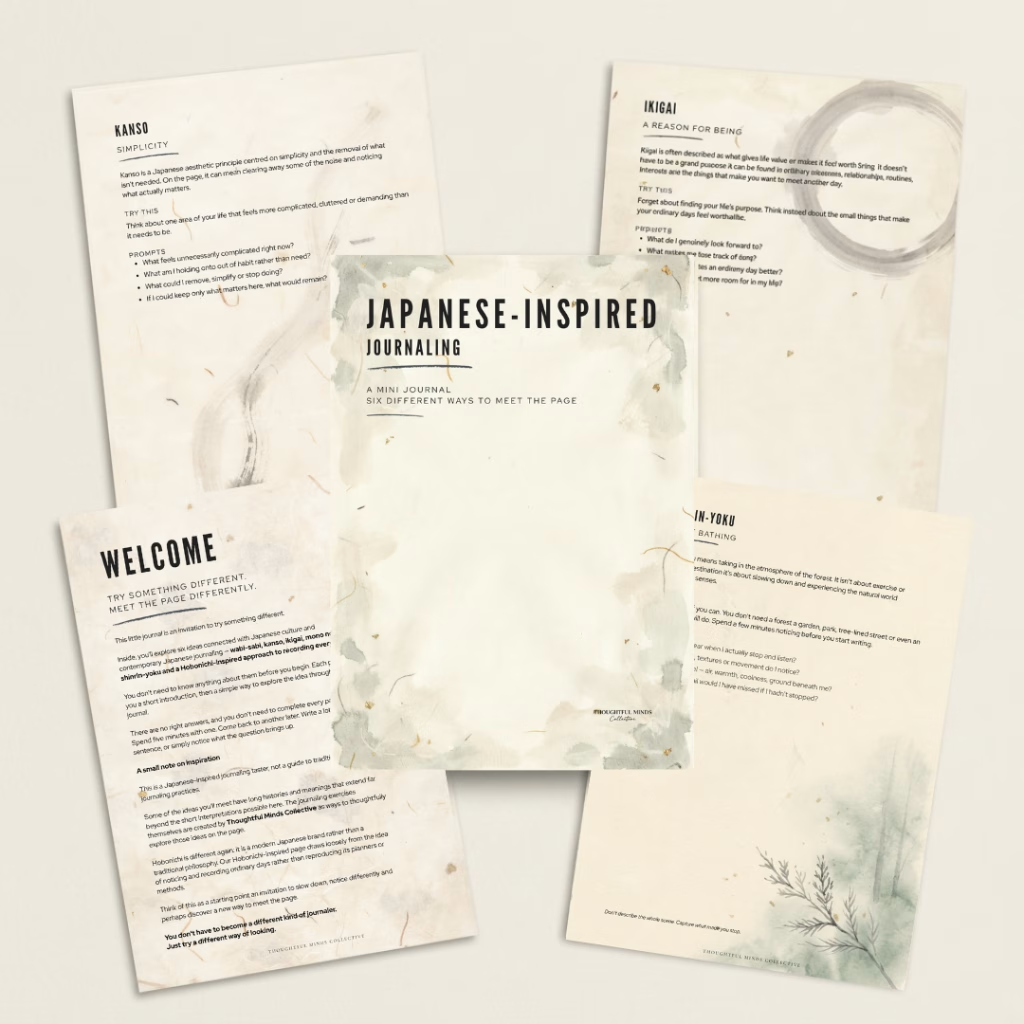
Want to Try These Ideas on the Page?
I created the Japanese-Inspired Journaling Mini Journal to help you explore six of these ideas for yourself through simple prompts and plenty of space to write.
9 beautifully designed A4 pages · Printable PDF · $4.95 AUD
3. Ikigai: Stop Looking for Your Purpose—Start Looking for the Clues
If you’ve spent any time on self-improvement blogs, you’ve probably seen ikigai presented as a colourful Venn diagram promising to reveal your life’s purpose.
The reality is quieter — and perhaps much more useful.
What is ikigai?
Ikigai roughly translates to “reason for being” or “that which makes life worth living.”
It doesn’t have to mean finding one enormous purpose or perfect career. Meaning can live in ordinary things: tending a garden, walking your dog, sharing dinner with family, making coffee exactly the way you like it or reading before bed.
Instead of asking “What is my one true purpose?”, ikigai invites us to notice what already makes our lives feel worthwhile.
What does this mean for your journal?
Your journal quietly collects evidence.
Maybe entries where you felt calm often follow time outside. Perhaps your happiest days involve good conversations. Maybe your travel entries say less about famous landmarks and more about tiny cafés, unexpected detours and people you met.
Those patterns are clues.
Try noticing:
- When did I lose track of time today?
- What made me smile unexpectedly?
- Who or what gave me energy?
- What keeps appearing in my journal?
One entry probably won’t reveal much. But over weeks and months, patterns begin to emerge.
Your journal isn’t telling you who you should become.
It’s showing you what already matters to you.
Try Ikigai tonight
At the bottom of today’s entry, answer one question:
What gave me energy today?
Don’t overthink it.
Maybe it was making something, laughing with a friend, listening to music while cooking or watching rain through the window.
Ask yourself the same question regularly. After a month, read your answers back.
You might discover that the things making your life meaningful weren’t hidden at all.
You simply hadn’t noticed the pattern yet.
If you’re curious about why writing can help us recognise patterns in our thoughts and experiences, our Science of Journaling article explores the research behind reflective writing.
For a deeper exploration of ikigai beyond its popular internet interpretation, Japan House London is a useful place to explore the concept in its Japanese cultural context.
4. Mono no Aware: The Japanese Secret to Remembering the Moments That Matter
Have you ever looked back at a holiday and realised you remember the famous landmarks…
…but you’ve completely forgotten the tiny moments that made the trip unforgettable?
The café where you escaped the rain. The song that seemed to play in every shop. The stranger who helped you find the right train. The smell of fresh bread drifting down a quiet street.
Those are often the first memories to disappear.
And that’s what makes the Japanese idea of mono no aware so interesting.
What is mono no aware?
Mono no aware roughly describes an awareness of life’s impermanence — and the emotion that comes from recognising that things don’t last forever.
Cherry blossoms bloom and disappear. Summer becomes autumn. Children grow up. Trips end. Even ordinary Tuesdays eventually become memories.
It can sound sad, but the idea isn’t simply about mourning what passes.
It’s about appreciating something because it won’t last forever.
What does this mean for your journal?
We tend to record the big things: birthdays, holidays, breakups, new jobs and major decisions.
But what about everything in between?
The joke that made you laugh until you cried. The neighbour’s dog greeting you. The afternoon light across your living room. The playlist you couldn’t stop playing.
Those moments can seem too ordinary to write down.
Until they’re gone.
Journaling gives them somewhere to live — not because they’re extraordinary, but because they’re yours.
Try Mono no Aware tonight
Before you close your journal, answer one question:
What almost slipped past me today?
Don’t choose the biggest event. Choose something small.
Maybe it was the smell of rain. A kind smile from a stranger. Your dog resting their head on your knee. Something someone said that made you stop and think.
Your journal can’t stop time.
But it can help you remember how a moment felt while it was still yours.
This philosophy pairs beautifully with our Forgetful Travel Journal, designed to capture the tiny conversations, unexpected detours and little details that photos often miss.
For a real-world example of appreciating beauty precisely because it’s temporary, the Japan National Tourism Organization explores seasonal traditions such as cherry blossom viewing (hanami).
5. Kanso: Why Your Journal Doesn’t Need to Be Beautiful to Be Meaningful
Walk into a stationery shop and it’s easy to believe you need everything before you can start journaling.
The expensive notebook. The matching pens. The stickers. The washi tape. The highlighters. The perfect handwriting.
Somewhere along the way, journaling became another hobby we felt we had to be good at.
The Japanese idea of kanso quietly asks:
What if you removed everything that wasn’t essential?
What is kanso?
Kanso is a Japanese aesthetic principle centred on simplicity and the absence of unnecessary clutter.
It isn’t simply about having less. It’s about removing distractions so that what matters has room to stand out.
Applied to journaling, that idea becomes wonderfully practical.
What does this mean for your journal?
It’s surprisingly easy to spend more time preparing to journal than actually writing.
Another notebook. Another YouTube video. Another Pinterest layout saved for later.
Meanwhile, the page stays empty.
Kanso reminds us that journaling isn’t about collecting supplies.
It’s about collecting moments.
The notebook is simply the container. The words are what matter.
Sometimes an entry needs nothing more than today’s date and three honest sentences.
The simpler your journaling practice becomes, the easier it is to return to it.
Try Kanso tonight
Strip tonight’s journal entry right back:
- Today’s date
- One thing you’re grateful for
- One thing you noticed
- One thing you’re looking forward to
That’s it.
No decorative headings. No elaborate layout. No pressure to make the page worthy of Pinterest.
When you’re finished, ask yourself:
Did making it simpler make it easier to begin?
Because sometimes the journal you’re most likely to keep isn’t the most beautiful one.
It’s the one that feels easy enough to use.
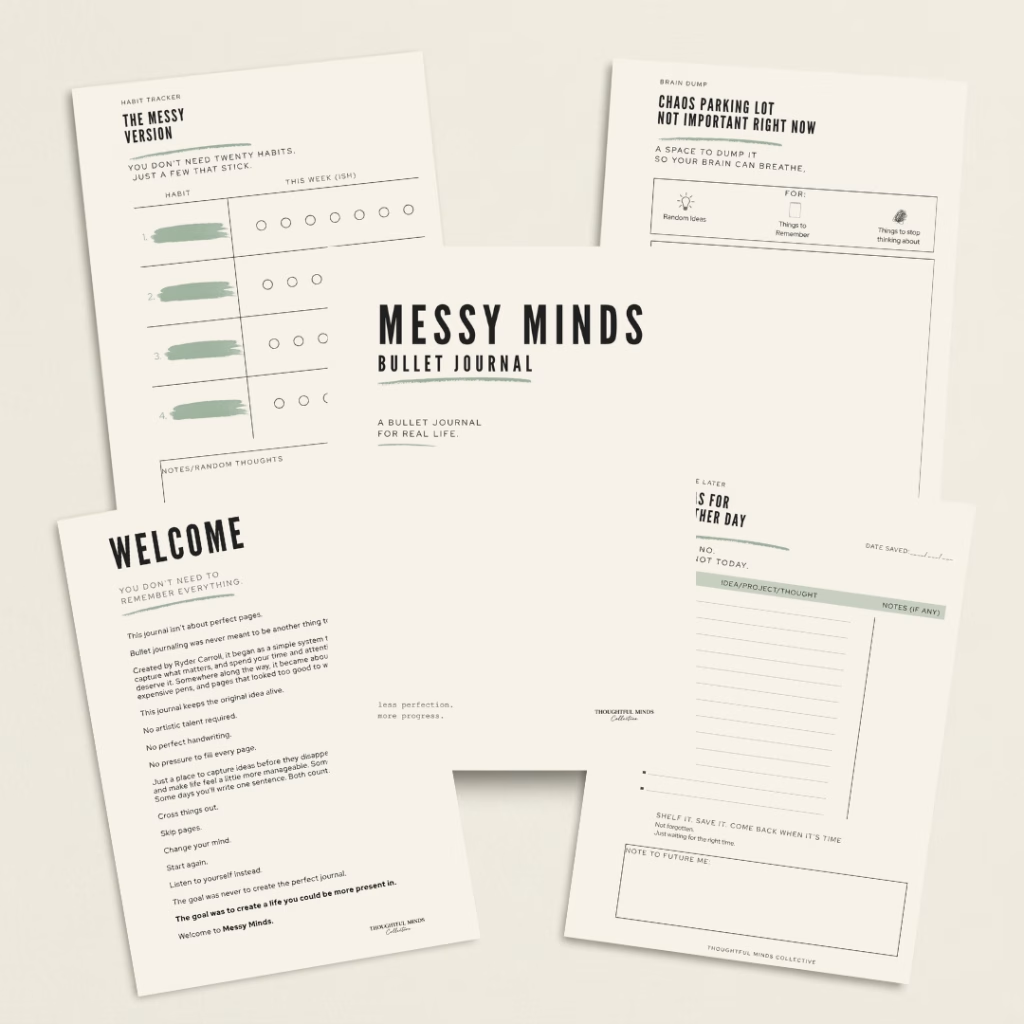
If complicated spreads and elaborate layouts have put you off bullet journaling, our Bullet Journal for Messy Minds was designed around the same idea: simple systems are often the ones we actually stick with.
For a deeper look at simplicity in Japanese aesthetics, Japan House London is a useful starting point for exploring concepts such as kanso and Japanese design.
6. Shinrin-yoku: The Simple Habit That Can Completely Change Your Journal
When was the last time you wrote in your journal…
…outside?
Not at your kitchen table. Not on the couch. Not with the television playing in the background. But somewhere you could hear birds. Feel a breeze. Watch leaves moving in the trees.
That’s where the Japanese practice of shinrin-yoku gives us a completely different way to think about journaling.
What is shinrin-yoku?
Shinrin-yoku literally translates to “forest bathing.”
Despite the name, there’s no swimming involved. The term emerged in Japan in the 1980s and describes spending slow, attentive time in forests and other natural environments.
The goal isn’t reaching a destination or getting a workout.
It’s noticing where you already are.
Birds calling. The smell of eucalyptus after rain. Sunlight through leaves. Grass beneath your feet.
What does this mean for your journal?
Take the same notebook outside and your attention can shift.
Instead of analysing everything going on in your head, you start noticing what’s happening around you.
And you don’t need a forest.
A local park, your backyard, the beach, a bench beneath a tree or even an open window can give you something new to notice.
Try asking:
- What can I hear?
- What can I smell?
- What colours can I see?
- What’s moving around me?
- What has changed since I sat down?
Sometimes changing your surroundings is enough to change what appears on the page.
Try Shinrin-yoku tonight
Take your journal outside if you can.
Leave your headphones behind, put your phone away and spend five minutes noticing what’s around you before you write.
Then begin with:
“Right now, I notice…”
Don’t write about tomorrow. Don’t analyse yesterday.
Just record this moment.
You might be surprised by how much there is to notice when you’re not trying to find something profound to say.
Sometimes the best journal prompt isn’t a question.
It’s simply paying attention.
If you enjoy noticing the tiny details while travelling, our Forgetful Travel Journal includes prompts for capturing the sights, sounds and moments photographs often miss.
For more on shinrin-yoku and its relationship with forests and wellbeing in Japan, the Forest Society of Japan is a useful place to explore further.For many Japanese people, nature isn’t just somewhere to visit. It’s somewhere to slow down. And that’s the idea behind shinrin-yoku.
Conclusion: Maybe We’ve Been Thinking About Journaling All Wrong
When you first clicked on this article, you might have expected to learn about beautiful handwriting. Or expensive notebooks. Or perfectly decorated journal pages. Instead, Japan offers something much more valuable. A different way of thinking.
Instead, these six Japanese ideas offer something much more interesting.
A different way of paying attention to your life.
Hobonichi encourages us to show up. Wabi-sabi gives us permission to be imperfect. Ikigai helps us notice what gives life meaning. Mono no aware reminds us to capture what won’t last forever. Kanso strips away the unnecessary. And shinrin-yoku asks us to slow down long enough to notice what’s around us.
None of them require expensive stationery or perfect handwriting.
They ask us to notice, remember and appreciate.
Perhaps that’s why these ideas feel so refreshing when applied to journaling. Journaling doesn’t have to be another self-improvement challenge or habit to optimise.
It can simply be a way of becoming a better witness to your own life.
Years from now, you probably won’t care whether your headings were perfectly centred.
You’ll be grateful you captured the conversation that made you laugh.
The holiday memory that almost disappeared.
The ordinary Tuesday you didn’t realise you’d one day miss.
The tiny details photographs could never quite hold onto.
A journal can’t slow time. But it can stop moments from quietly slipping away.
And maybe that’s what journaling was supposed to be all along.The six ideas we’ve explored aren’t really about journaling at all. They’re about paying attention to life.
Where to Go Next
If today’s article has inspired you to pick up a journal, here are a few places to continue your journey:
- New to journaling? Start with our Journal Styles for Beginners guide to discover different ways to keep a journal without feeling overwhelmed.
- Not sure what to write? Read How to Start Journaling When You Don’t Know What to Write for simple prompts that make the first page much less intimidating.
- Curious about the science? Explore The Science of Journaling to learn how reflective writing can support memory, emotional wellbeing and self-awareness.
Wherever you begin, remember this: You don’t need the perfect notebook. You just need to start noticing. And that might be the most powerful journaling habit of all.
Want to take this offscreen?
Not another journals. Something you can make your own. Printable journal kits for real life use the pages you need, skip the ones you don’t, use the ideas in your own journal and print them again whenever you want.
Make it yours.